"Active Village" Programme - Up to PLN 15,000 for First Aid Training for Municipalities and Volunteer Fire Departments
Kinga Górka4 min read
Update: the application window for the 2026 call closed on 30 April 2026. The details below describe that call. If you are planning a similar first aid training project, contact us and we will help you prepare it.
The Minister of Agriculture and Rural Development launched an open call for proposals under the “Active Village” (Aktywna Wieś) programme. Task No. 3, rural safety, covers funding for first aid training and the equipment needed to deliver it. For municipalities and Volunteer Fire Department (OSP) units operating in areas with up to 20,000 residents, it is a straightforward and accessible way to secure public funding.
At EHS VR, we help you design a training project that meets the requirements of the call and implement VR training that both fits the grant’s objectives and genuinely works for participants.
What the “Active Village” programme is and how much funding is available
The key parameters of the 2026 call:
funding: up to PLN 15,000 per project
who can apply: municipalities and entities operating in municipalities with up to 20,000 residents, including OSP units
Task No. 3: rural safety events, first aid training, purchase of equipment necessary to carry out the task, and other justified costs
application window: 30 March – 30 April 2026
results announced: by 15 May 2026 at the latest
how to apply: by email to aktywnawies@minrol.gov.pl or by post to the Ministry of Agriculture and Rural Development
The full competition documents are published on the ministry’s website (gov.pl/rolnictwo).
What can be funded under Task No. 3
Task No. 3 focuses on rural safety. Within this framework, an offer can include:
first aid training for local residents or OSP members
purchase of equipment required to deliver the training, including VR headsets and simulation devices
other costs directly related to the task, provided they are justified in the application
The last point is particularly important: it opens the door to funding modern training tools, such as VR applications for practising first aid, as part of a project that genuinely builds skills rather than simply meeting a formal requirement.
Why VR training works well for this type of project
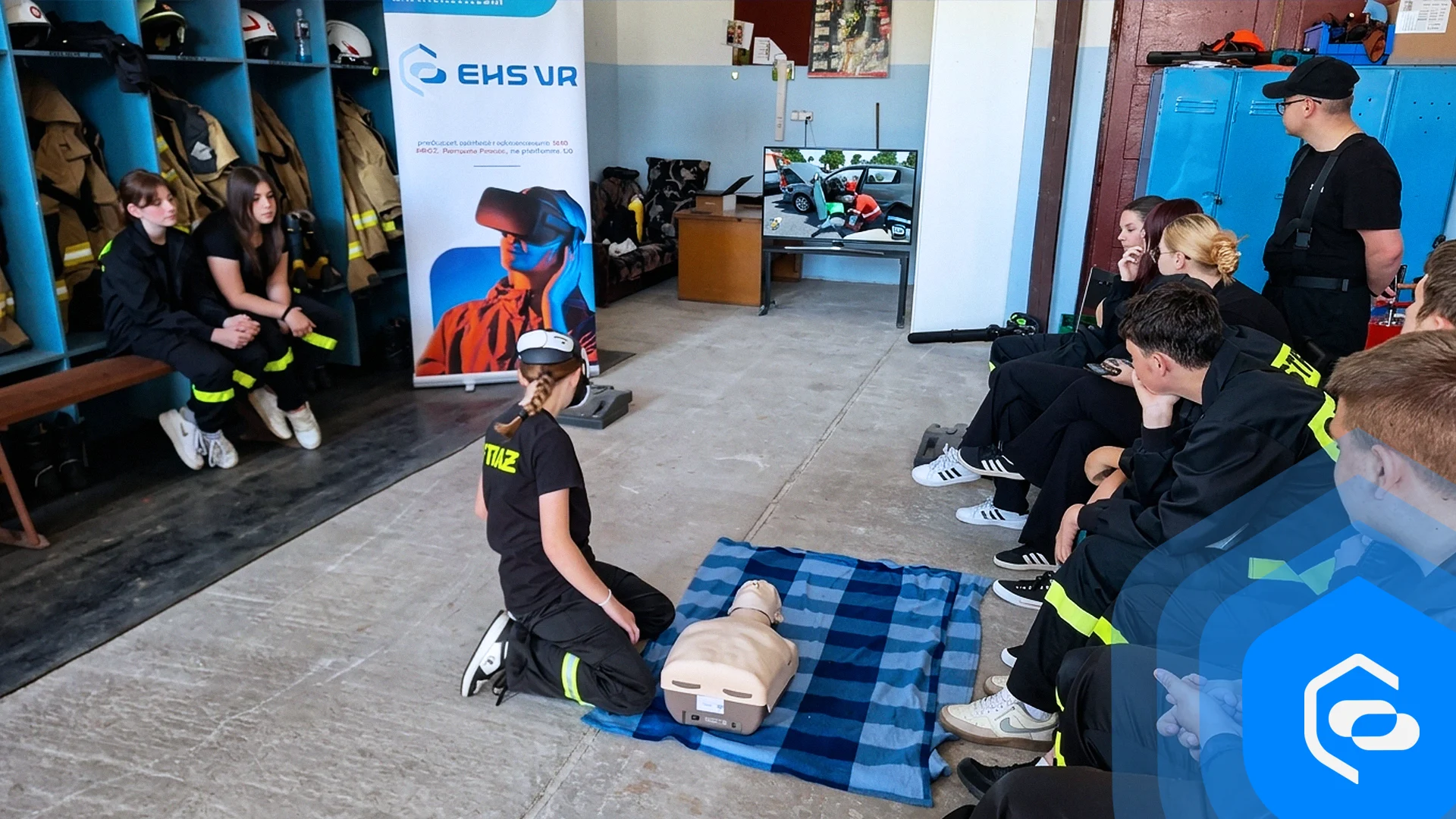
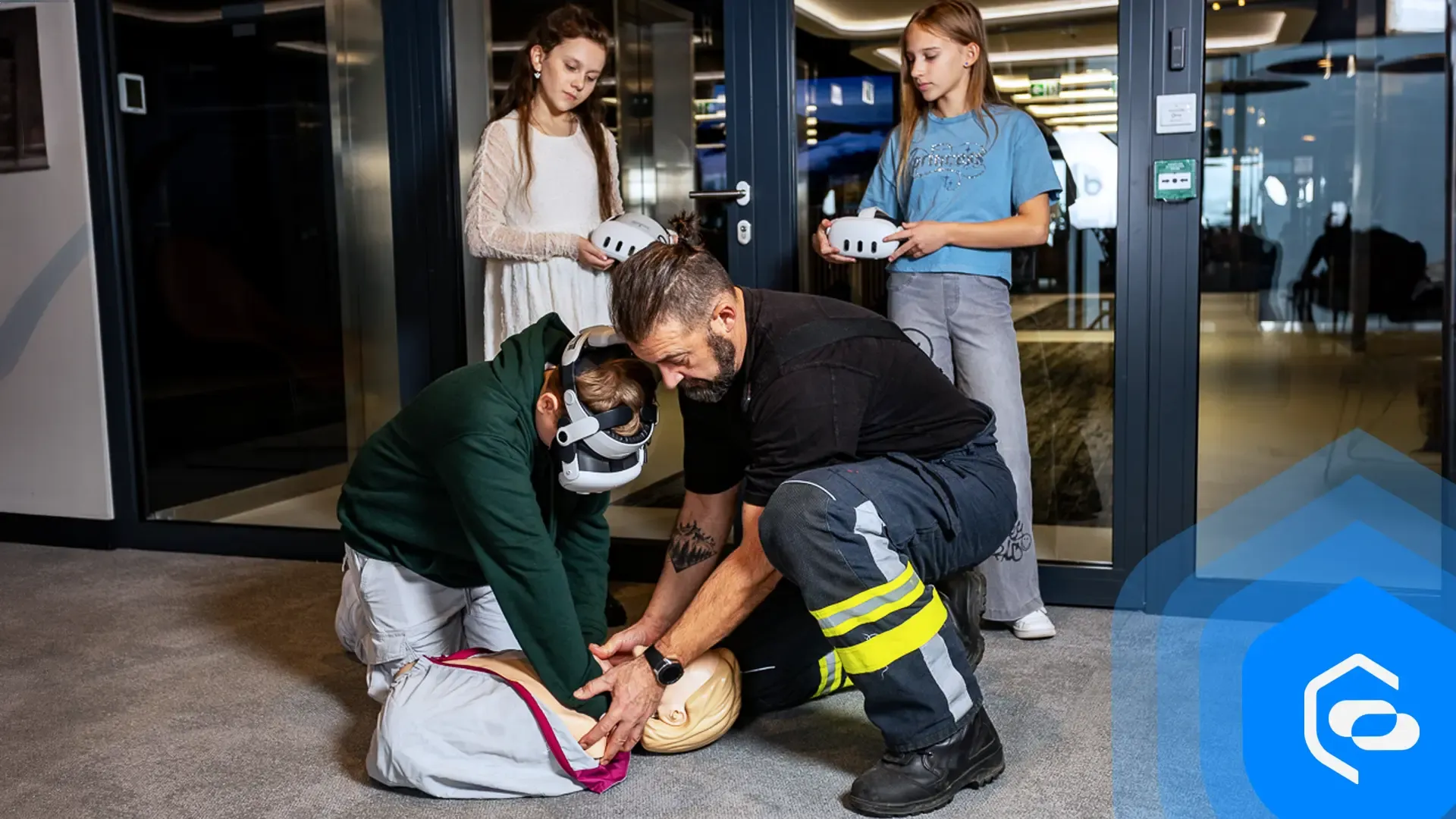
VR first aid training does not replace hands-on practice with a manikin. Its strength is that participants can safely repeat procedures and scenarios many times, without risk and without a medical instructor having to be present at every session.
In rural communities and OSP units, this matters because:
training can be delivered regularly, not just as a one-off event
the same scenario can be run with successive groups of participants
participants practise the correct sequence of actions and decision-making instead of just memorising theory
the instructor has a ready-made scenario and can focus on the debrief after each session
Which training topics EHS VR applications cover
For a project under Task No. 3, three training areas tend to work best:
first aid: the correct sequence of actions, providing assistance until emergency services arrive, common mistakes and how to avoid them
fire safety: responding to a threat, evacuation, correct use of a fire extinguisher
safe behaviour: teamwork, communication in a crisis, responsibility for the people around you
These topics can be practised repeatedly without the logistical costs of field-based training, and they align directly with the purpose of the programme.
What a grant-ready project with EHS VR looks like
If you want to secure funding and use it for VR training, we help you build a training solution tailored to the requirements of the call.
This is how we approach it:
1) We align the project with the goal of Task No. 3
We start with the end result: how many sessions, for how many participants, which skills and what outcomes. Based on this, we select the training topics and structure.
2) We design the training programme
We provide a ready-made structure for the training cycle: session length, participant rotation, introduction and wrap-up, and a method for running debriefs after each scenario.
3) We supply materials that make writing the application easier
We prepare information you can use directly in the activity description: which scenarios, which competences, which results, and how the training will be delivered.
4) We implement the solution and support your team
We help you launch the training so that it is easy to deliver, from setting up the equipment to running the first sessions with your groups.
What a municipality or OSP unit gains with EHS VR
Beyond the sessions themselves, the practical benefits are:
scenario-based exercises that can be repeated and used to track progress over time
fast implementation of a structured training programme for the local community
procedures that can be repeated many times, without risk and without operational pressure
a tool that gives the instructor a clear session structure to follow
In short: the grant funds the project, and your community gains a modern, scalable way to deliver regular, effective safety training.
Planning a first aid training project?
The 2026 application window ran from 30 March to 30 April 2026. If you represent a municipality or an OSP unit and are considering a similar project, contact EHS VR. We will help you design a project with clear outcomes and a real impact on safety in your community.
Łódzkie Voivodeship’s 2026 call offered volunteer fire departments up to PLN 10,000 for children and youth fire protection education. Submissions closed on 6 March 2026.
In the 5th edition of the "Safe Eaglets" program, EHS VR offered PSP units a ready-made application template and cost estimate. Applications closed on 17 August 2025.
With your consent we use cookies and similar tools from Google and Meta to measure traffic and improve our ads, and we load the Pipedrive chat. You decide: the site works fully without them. Privacy policy
 Kinga Górka