Refresher training
Regular refresher training that people take part in, not just sign off.
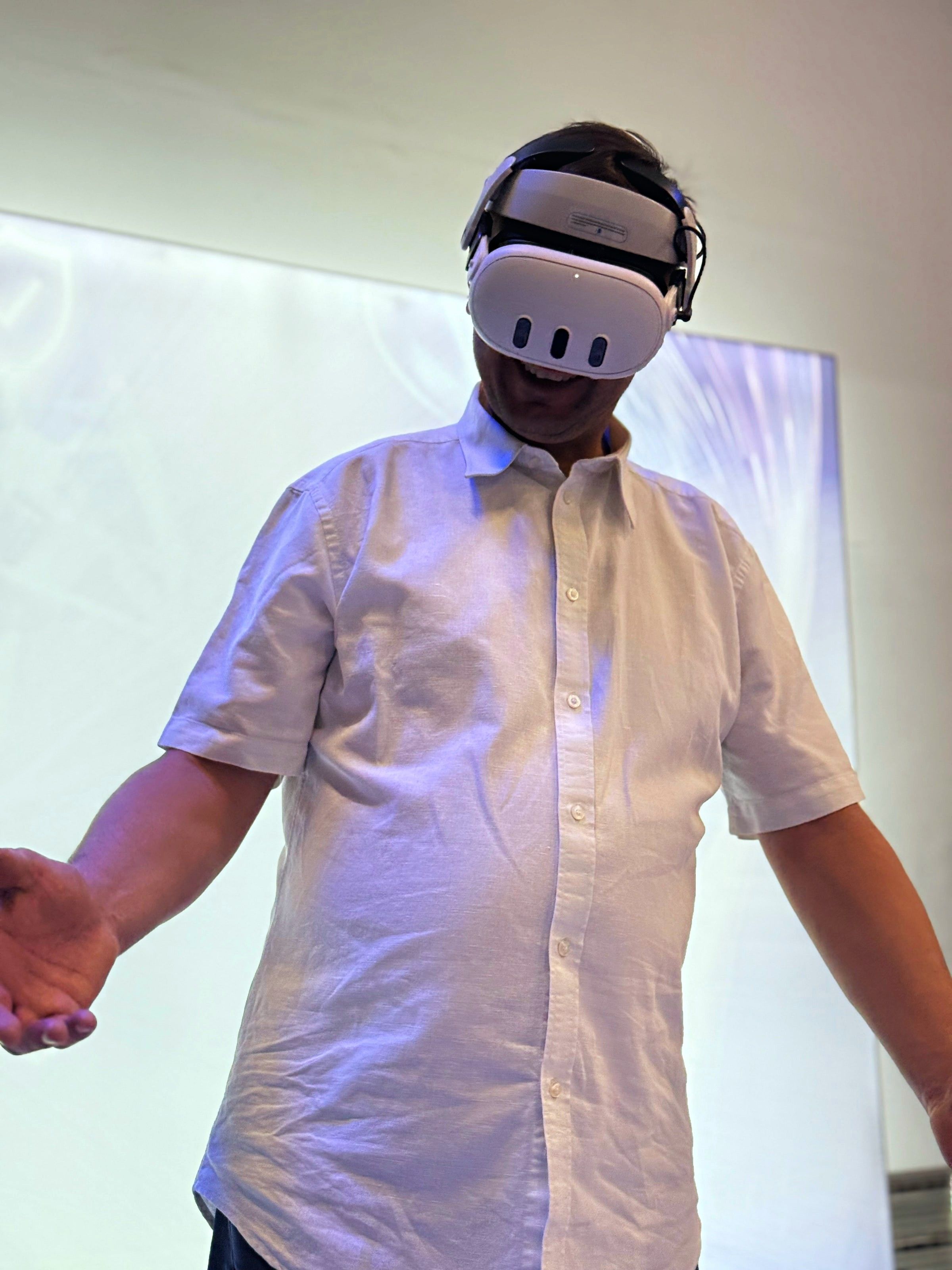
- Hands only
- 2 × 2 m space
- Hands only
- 2 × 2 m space
Refreshers keep safety rules fresh
OHS regulations require regular refresher training so that employees remember key safety rules, including first aid, evacuation, work in high-risk conditions and the operation of equipment and machinery.
Organizing this periodic training takes a company significant time and money.
Refresher training often feels like a formality
Without VR
- Employees treat refreshers as a formality, so engagement is low.
- Recurring sessions cost money and take time from daily work.
- Few chances to practice procedures, especially emergencies.
- Lectures do not ensure that knowledge sticks.
- Shift workers and other sites get unequal access to training.
With EHS VR
- Train at any time, without group sessions.
- The interactive format keeps employees engaged.
- Practicing crisis scenarios makes training more effective.
- Results are documented automatically for legal requirements.
- Each person learns at their own pace, so more knowledge sticks.
Apps that solve this problem
 First aid
SAMPLE AI First Aid
AI-powered VR first aid - realistic training with interactive interviews.
 High-risk work
Chemical Spill Response
Respond to chemical spills safely in VR - PPE, containment, and compliance.
How to organize it
VR lets people practice procedures hands-on, in a realistic but safe environment. Here is what you need to run it in your organization.
Easy setup
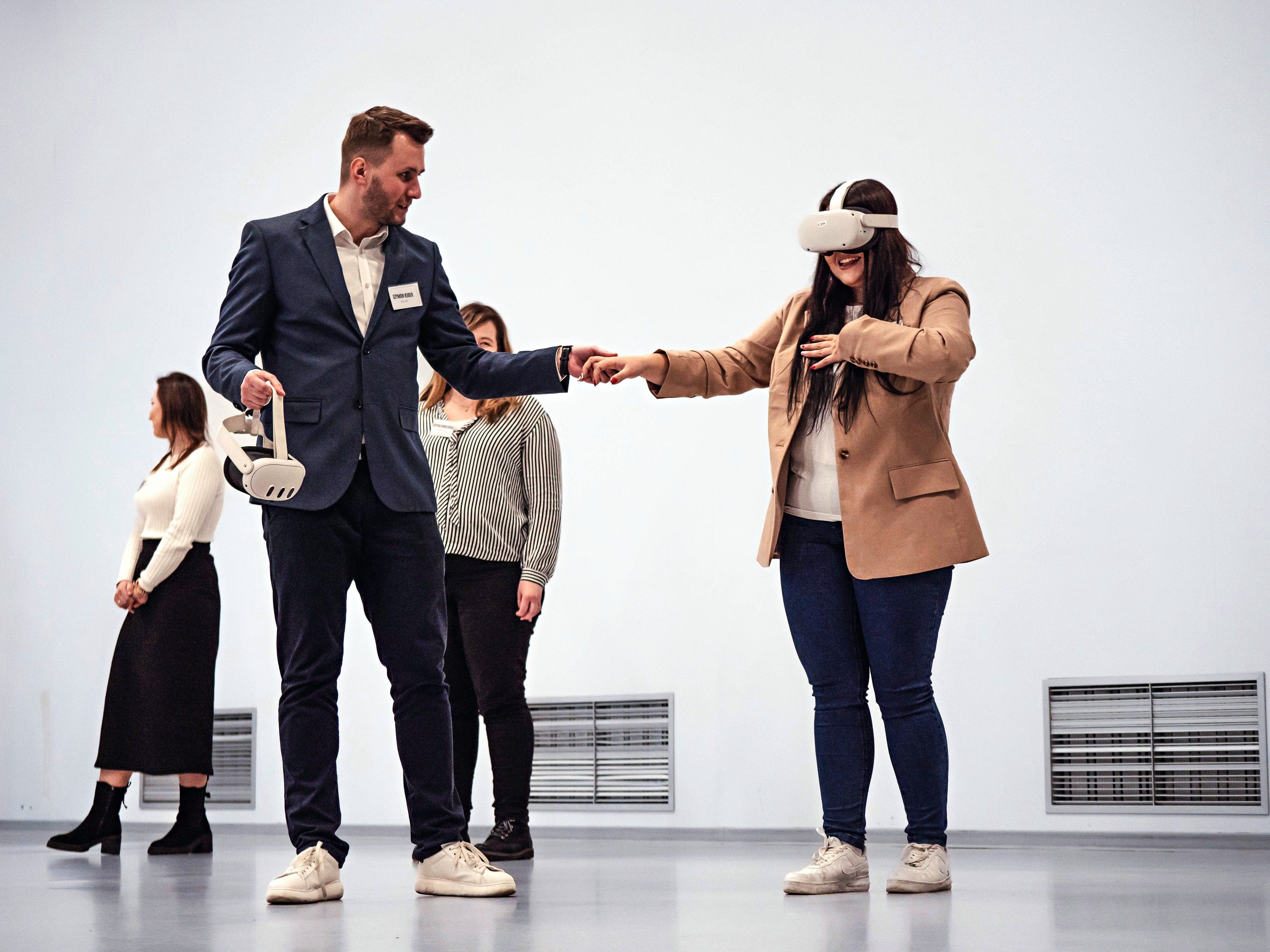
All you need is VR headsets and a subscription to our apps. Each package gives unlimited access to its training modules. The apps run on Meta Quest headsets; selected apps also run on Pico and HTC.
Hands-on learning
Employees train in realistic scenarios with their own hands, no controllers needed. The apps work offline, except SAMPLE AI, which needs an internet connection for its AI-driven conversation.
Indoors or outdoors
Each participant needs about 2 × 2 m of free space. Several trainees can share one headset by taking turns, while the others follow the session on a shared screen.
How many headsets you need
We recommend one headset per 4–5 participants trained on the same day. If employees rotate over a longer period, 1–2 headsets are enough. Extra batteries and straps are available for longer sessions.
Trackable progress
Follow each employee’s results and progress, and see where people need more practice.
Customizable and cost-effective
VR reduces the need for external trainers, physical setups and complex logistics. Modules can be tailored to your industry and to specific safety and operational needs.
Other use cases
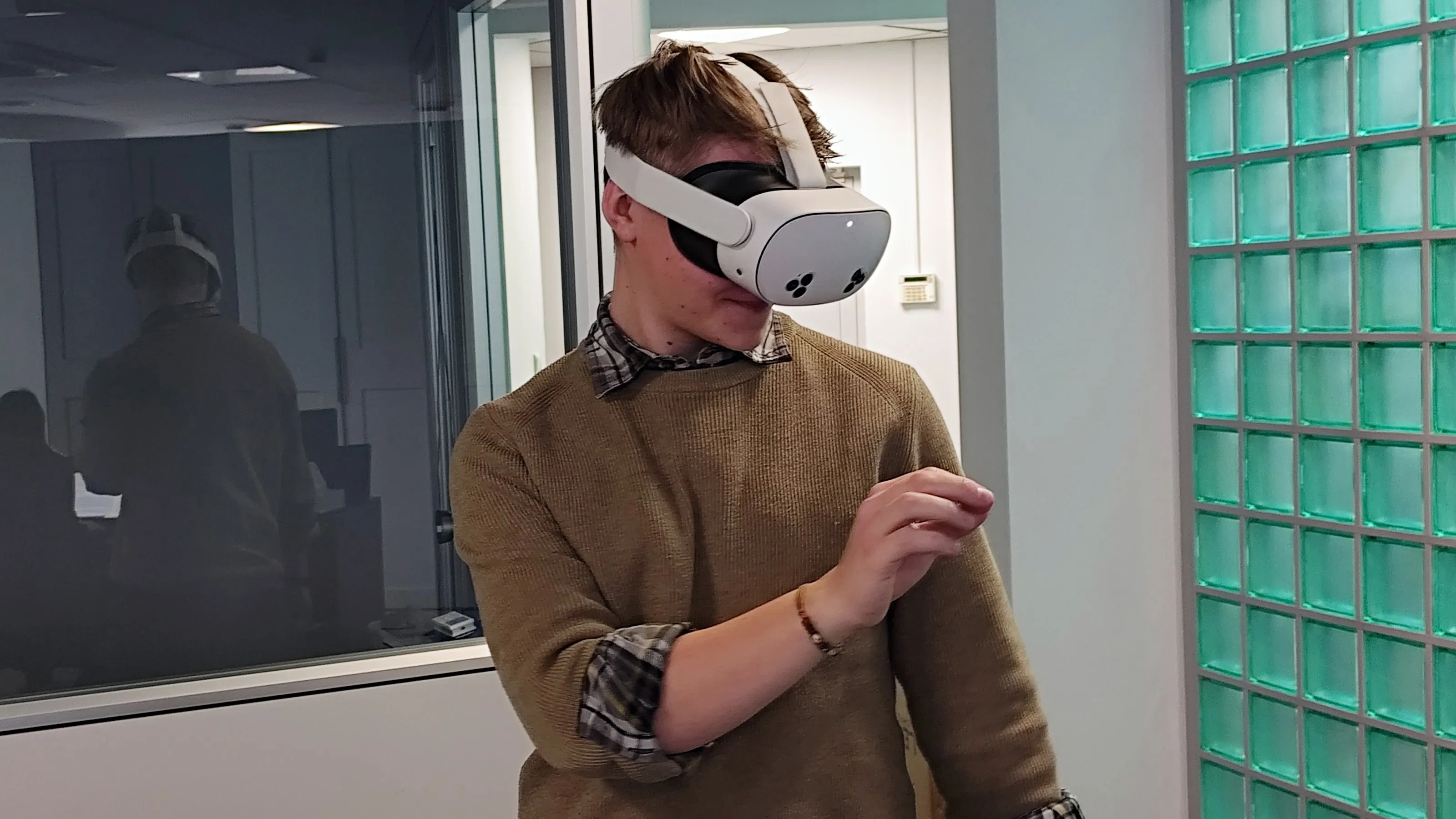
Initial training
Initial OHS training that keeps quality consistent, engages new employees and documents results.
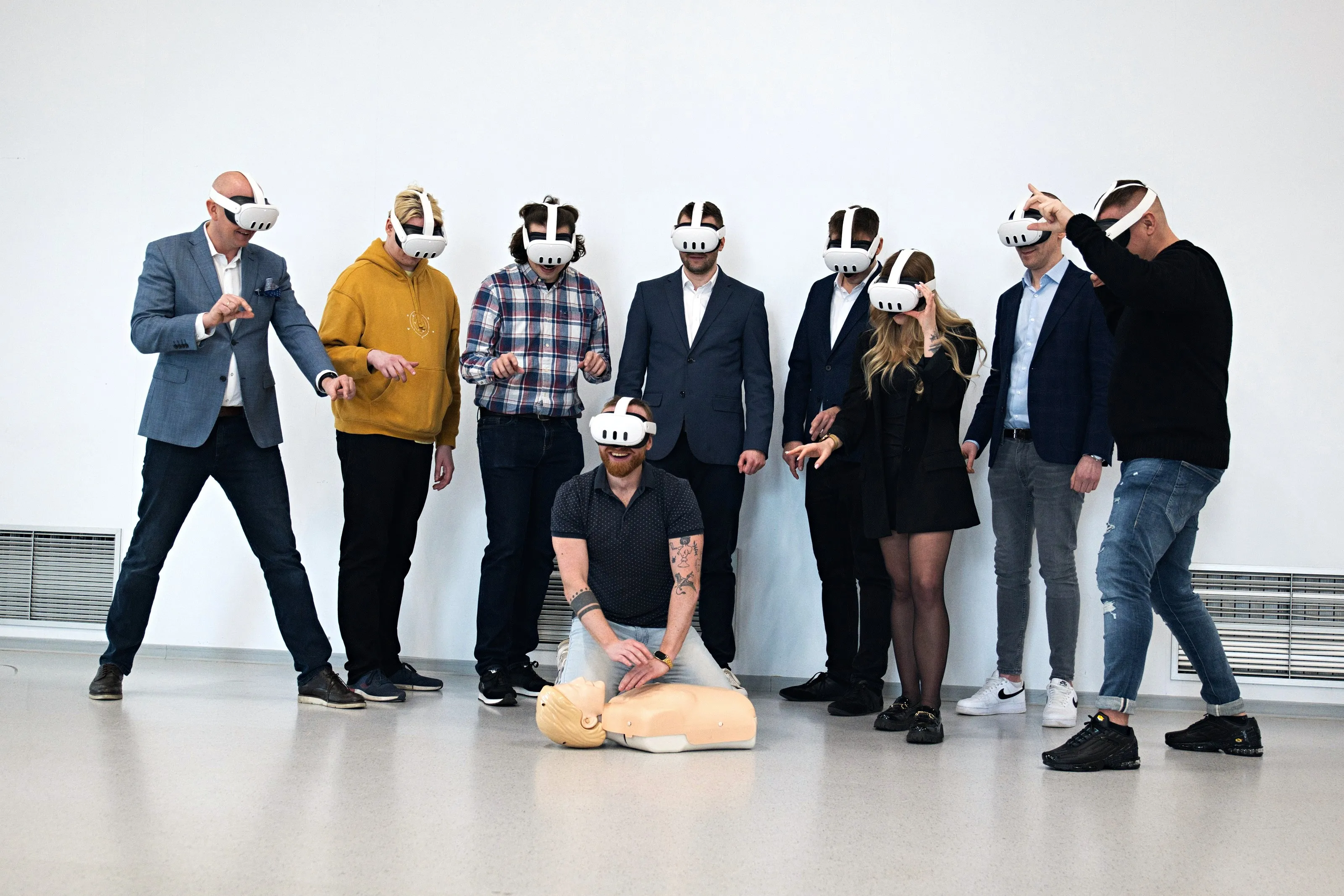
Safety Day
Safety Days and HSE events with realistic VR scenarios: first aid, fire safety and evacuation.
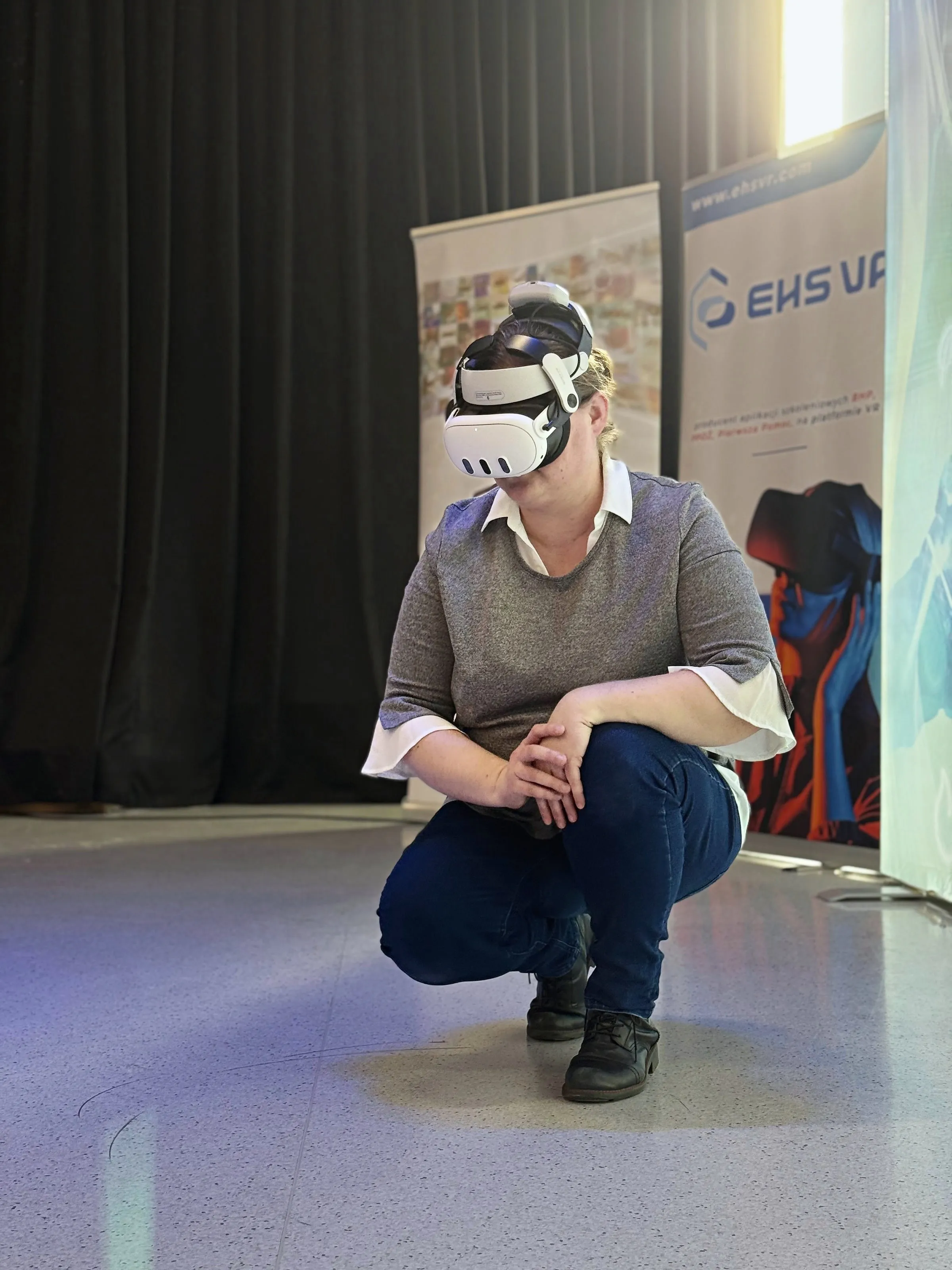
On-the-job training
Practical job training in VR: machine operation, emergency procedures and hazardous work without stopping production.
How would you like to start?
I don’t have a headset
We send you a headset with all the apps. You test for 5 business days, and we cover shipping both ways.
Get a test headsetI have my own headsets
Install in a few minutes and test all the apps for 7 days. No card, no commitment.
Test on my headsetsI’d rather talk
30 minutes online: we show you scenarios for your industry and answer your questions about rollout.
Book a call