Cooking Oil Fires: Key Safety Guidelines and How to Effectively Train Employees
Artur Kamiński3 min read
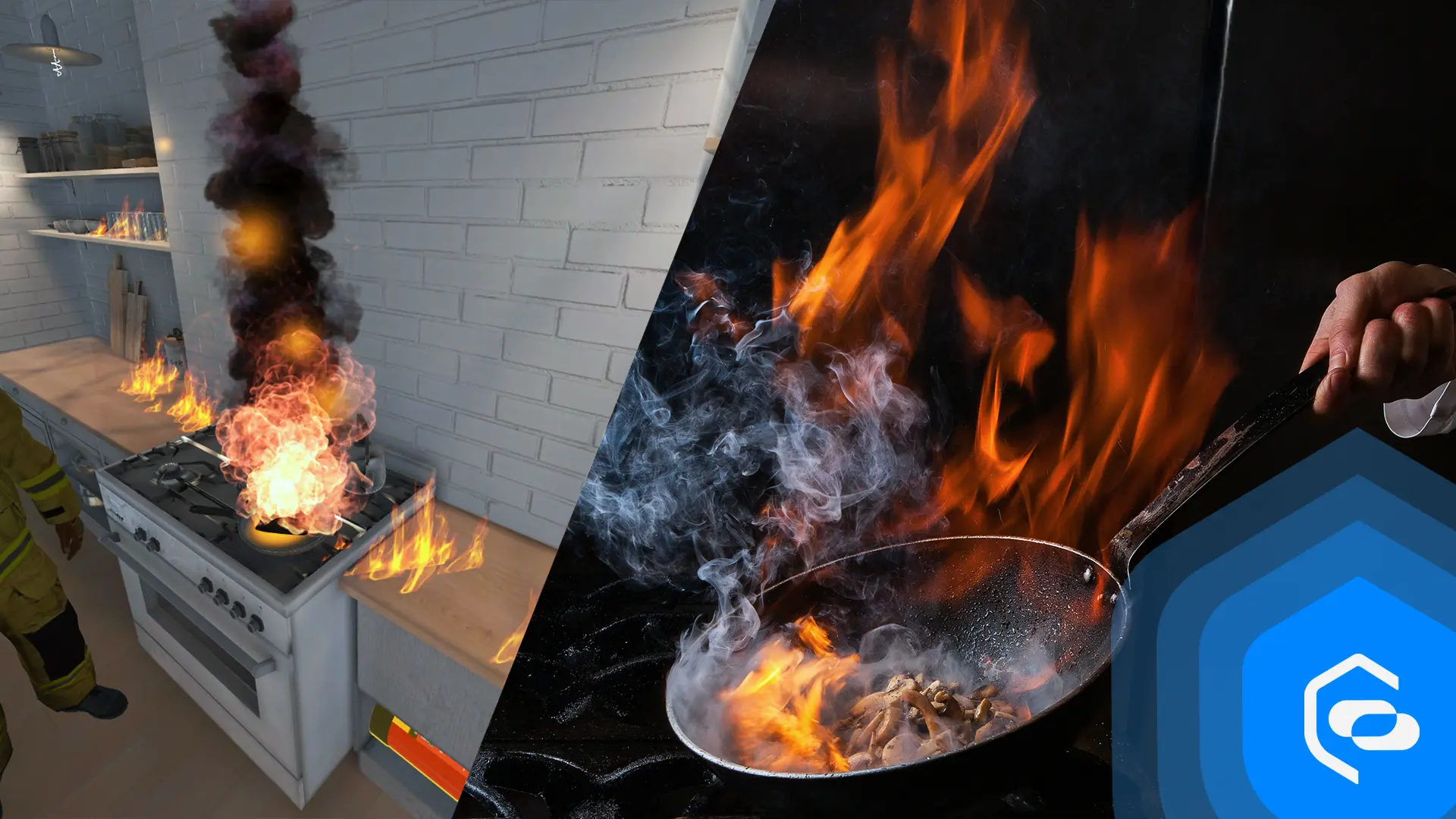
In Poland and around the world, cooking is one of the most common causes of fires in homes and commercial kitchens. Cooking oil and fat fires are a serious threat both at work and at home. According to the National Fire Protection Association (NFPA), 49% of all home fires start in the kitchen.
Although the risk is widely known, many people still make mistakes when they face such a fire. This article explains how to respond properly to an oil fire and how to train employees effectively to reduce the risk of serious accidents.
The most common mistake: water
The most common mistake during an oil fire is trying to put it out with water. It leads to violent flare-ups and burns.
Why water is not the solution
The ignition temperature of cooking oil is around 370°C. When water touches oil that hot, it instantly turns into steam and throws burning oil into the air.
The sudden expansion of steam creates a rapid rise in pressure, producing a ball of burning oil that can reach several meters and endanger everyone nearby.
How to put out an oil fire properly
Lid: the safest method is to turn off the heat and cover the pan with a lid. This cuts off the oxygen supply and stops the burning.
Class F fire extinguisher: kitchens, especially commercial kitchens, should have Class F fire extinguishers, designed specifically for oil and fat fires. Other extinguishers may be ineffective or even dangerous on burning oil.
Specialized extinguishing agents: in some cases, extinguishing agents designed for fats and oils, such as foam or powder agents, can be useful.
Safety training: key procedures
Employees, particularly in food service, must be properly trained to recognize and respond to oil fires. Most accidents can be prevented with hands-on training that teaches effective procedures for emergencies.
Traditional OHS training: challenges and limitations
Traditional safety training often relies on lectures or theoretical exercises. Multimedia presentations and video demonstrations can pass on basic knowledge, but they do not teach the right reaction under real stress.
With an oil fire, the reaction in the moment is what counts. Mistakes that seem trivial can have dramatic consequences, from burns to the complete destruction of the workplace.
VR simulations in safety training
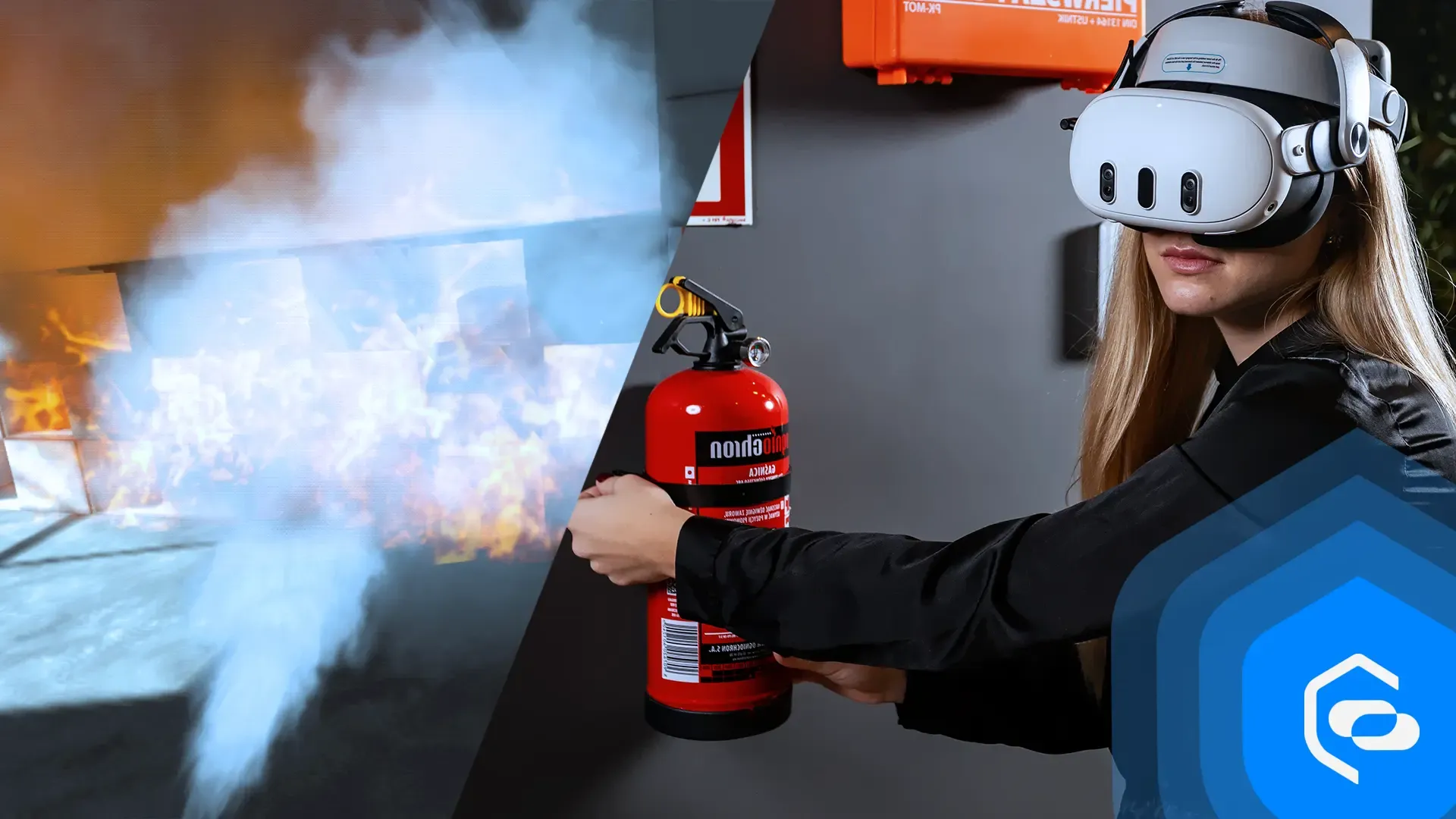
VR technology is increasingly used to train people for crisis situations. Virtual reality realistically simulates a fire, so employees can practice the correct reaction in a controlled environment.
How VR simulations work in oil fire training
The VR application developed by EHS VR offers:
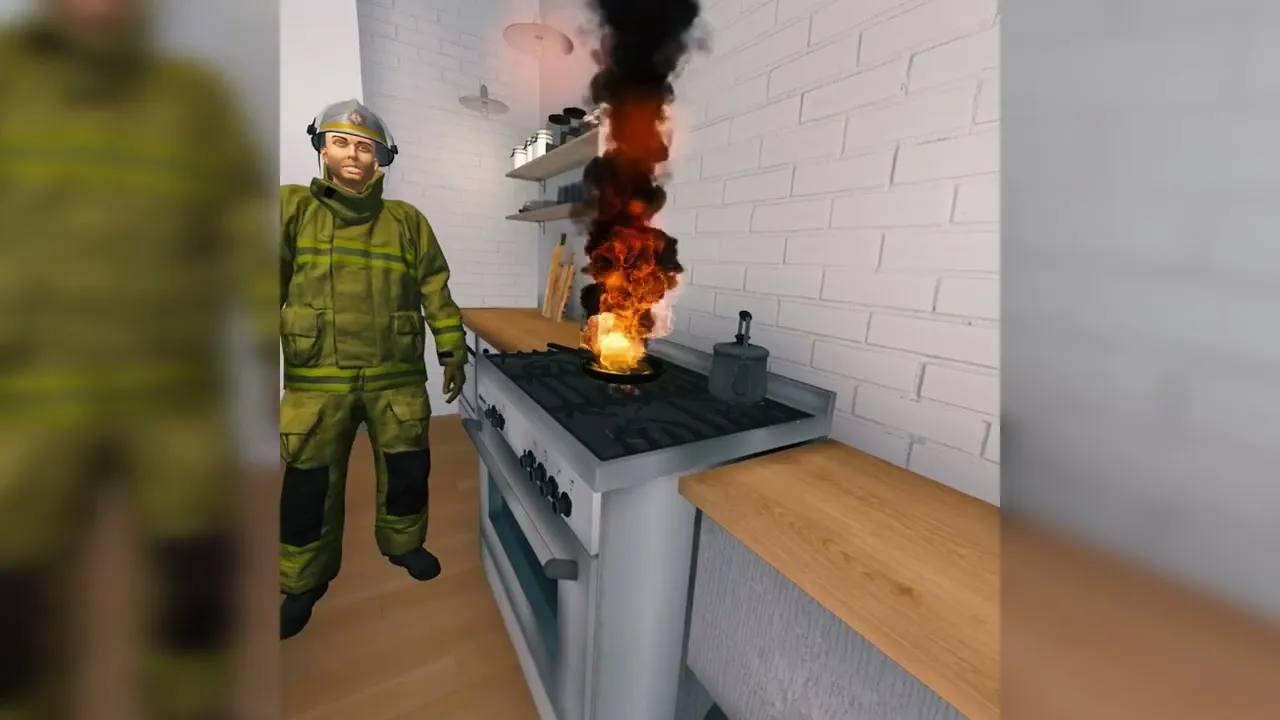
Realistic kitchen fire scenarios with burning oil, smoke, noise and rising stress.
Interactive decision-making: the user decides how to put out the fire and the system gives immediate feedback.
Automated performance assessment: the system tracks reaction time, the choice of method and how precisely it was carried out.
Benefits of using VR in oil fire training
Practical experience: users practice difficult, high-stress situations without any risk of injury.
Recorded mistakes: every session records the mistakes made, so they can be analyzed and learned from.
More effective training: VR lets people learn quickly through experience, which is much more effective than traditional methods.
Extinguish Cooking Oils VR TrainingYouTube
Conclusion
Oil fires in the kitchen pose a serious risk at home and at work. Proper education and training are key to preventing accidents, and technologies such as VR can make that training much more effective.
Every second counts. Reacting correctly to an oil fire can save lives and property, which is why it is worth investing in tools that teach people what to do in critical situations. See the Extinguish Cooking Oils VR Training application.
With your consent we use cookies and similar tools from Google and Meta to measure traffic and improve our ads, and we load the Pipedrive chat. You decide: the site works fully without them. Privacy policy
 Artur Kamiński