Fire Simulations in VR: How to Prepare Employees for Crisis Situations
Artur Kamiński3 min read
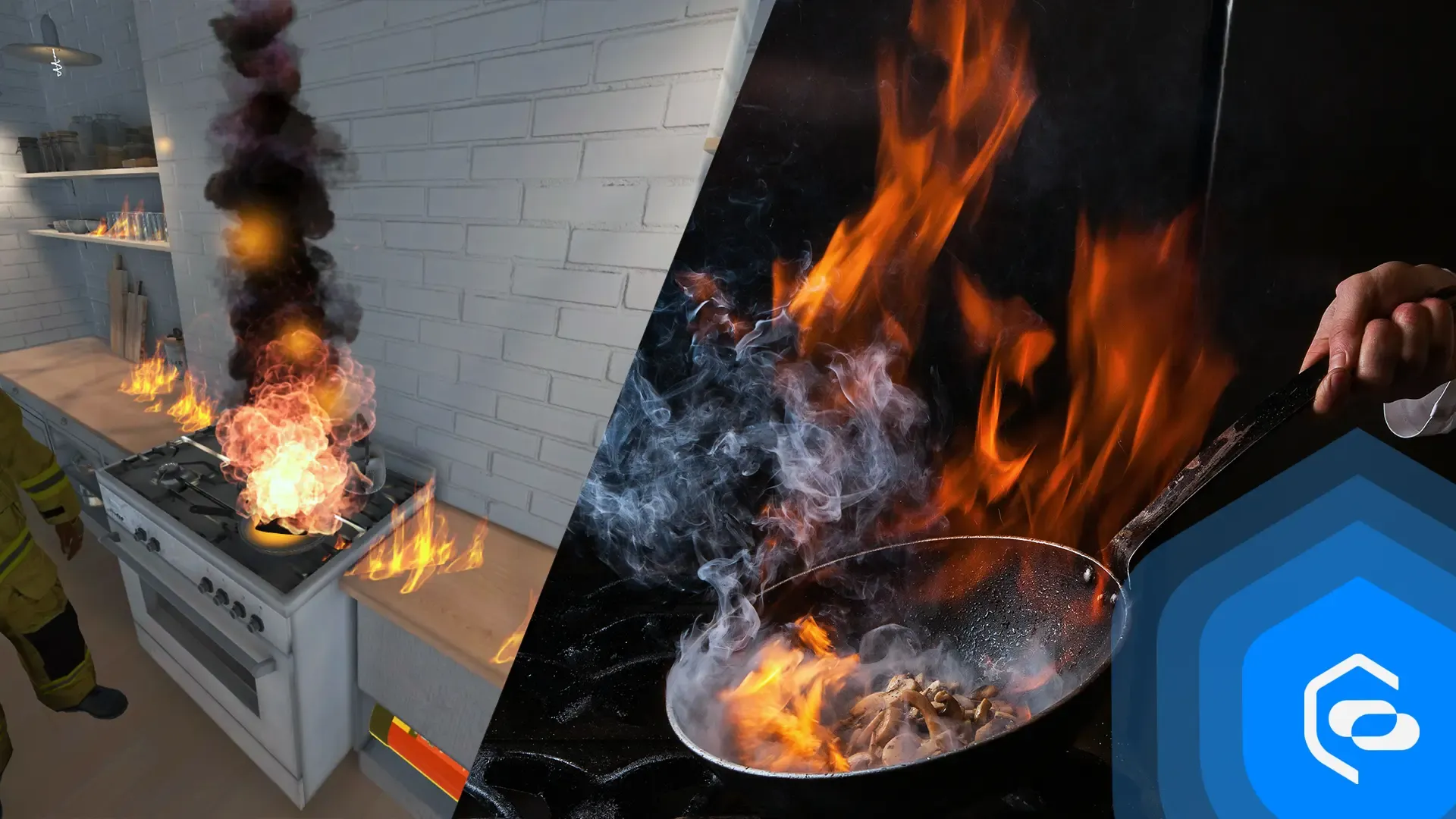
When it comes to fire hazards, being prepared to respond safely and effectively is crucial. This is where virtual reality (VR) comes in. VR has changed the way companies prepare their employees for emergencies, including fires. Fire simulations in immersive VR environments create realistic threat scenarios without exposing participants to any real danger.
In this article, you will learn:
what virtual reality brings to fire safety training,
how VR fire safety training changes crisis preparedness,
how VR supports a comprehensive approach to crisis situations,
how effective VR-based training is,
how to introduce VR training in your workplace.
What is virtual reality? A breakthrough in fire safety training
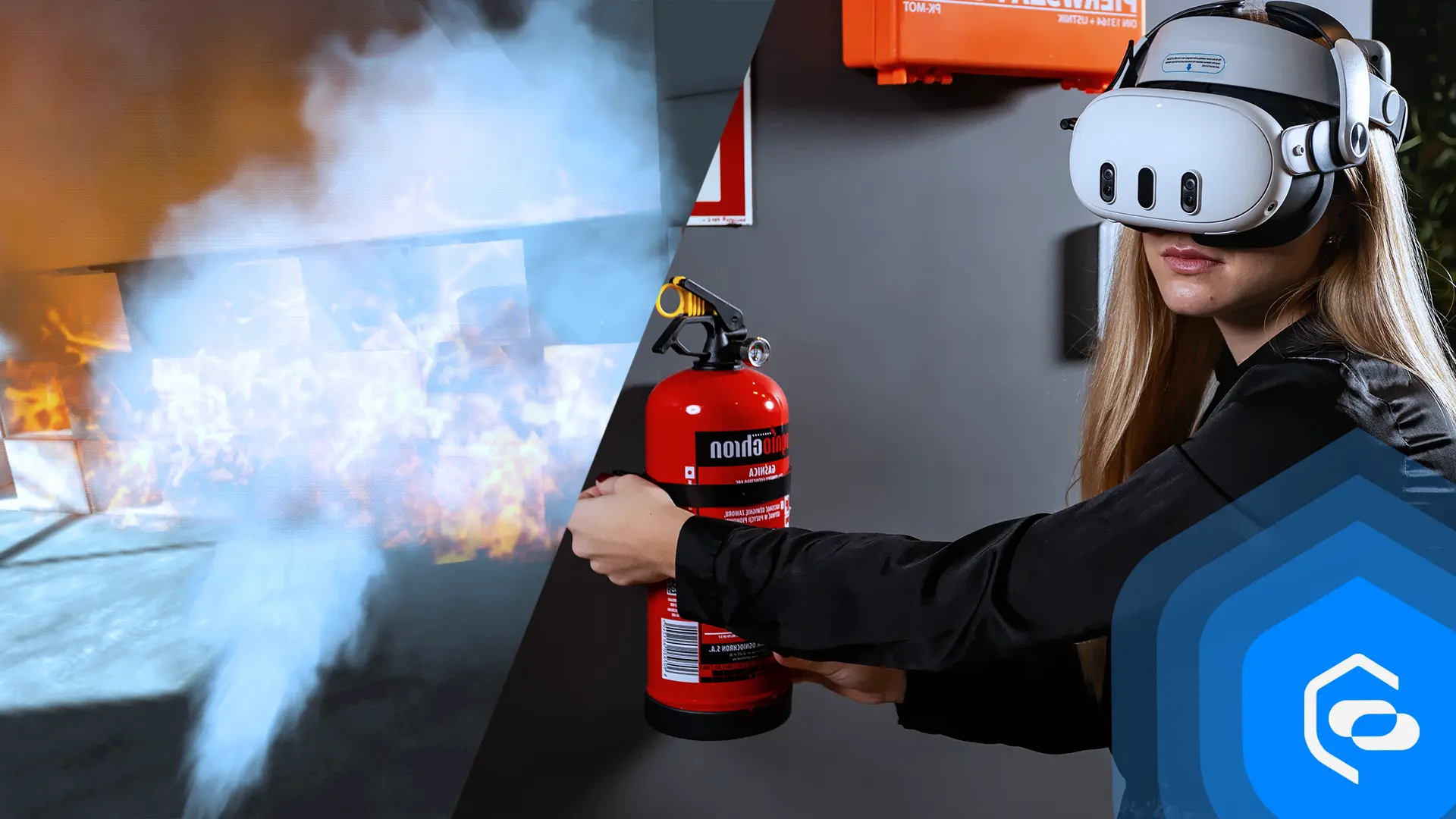
Traditional fire safety training often consists of theoretical presentations and fire extinguisher drills under controlled conditions. These methods do not prepare employees well for the stress and chaos of a real fire. VR removes these limits by letting participants:
experience realistic fire scenarios with spreading flames,
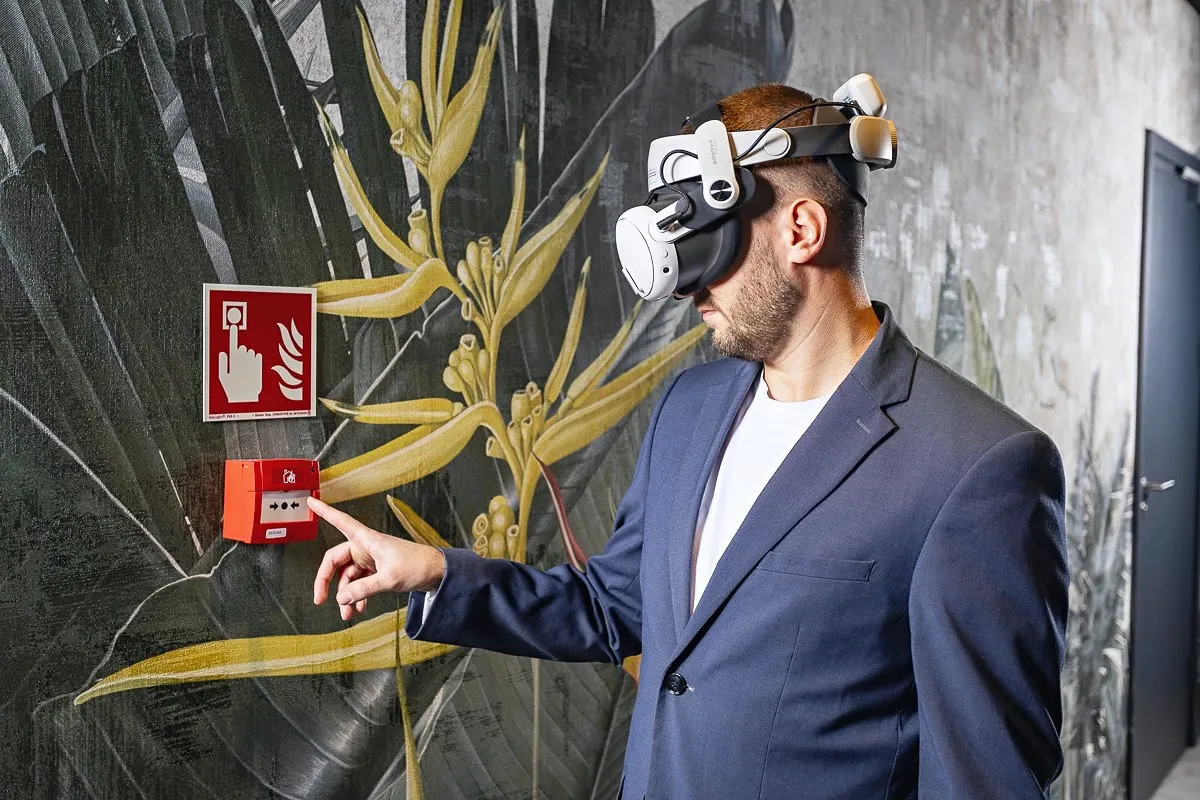
practice evacuation procedures in virtual recreations of their own workplaces,
train with firefighting equipment in a variety of emergencies,
make decisions under time pressure and get instant feedback.
This gives employees hands-on experience that can prove invaluable at a critical moment.
VR fire safety training: a new dimension in crisis preparedness
With VR, fire safety scenarios can be practiced again and again without extra material costs. This matters especially for extinguisher training, where traditional methods use up extinguishing agents and require cleanup afterwards. VR-based training offers:
better retention of procedures, learned through experience rather than theory,
fewer errors caused by lack of practice,
scenarios that can be tailored to a specific workplace,
measurable results and analysis of each participant’s progress.
So what is VR in the context of fire safety training? Above all, it is a tool that builds muscle memory and automatic responses for high-risk situations.
VR training: a comprehensive approach to crisis situations
Responding to a fire takes more than putting out the flames: it also means helping injured people. VR first aid training is a natural addition to fire safety programs, with simulations of fire-related injuries such as burns, smoke inhalation or mechanical injuries. A comprehensive crisis preparedness program should include:
evacuation from smoke-filled rooms,
procedures for alerting the emergency services,
first aid for fire victims,
teamwork under stress.
VR training brings all these elements together in one coherent program.
The effectiveness of VR training
Participants in VR training programs show up to 75% better retention of procedures than with traditional methods, and the time needed to complete the full training can be cut by up to 40%. VR training also brings tangible financial benefits:
less employee downtime during training,
no need to travel to training sessions,
lower costs of organizing practical fire drills,
a lower risk of accidents during real emergencies.
VR-based health and safety training meets the need for more effective safety programs while keeping costs under control.
Introducing VR training in your workplace
Introducing VR training requires the right equipment and a well-designed training program. For fire simulations, it is important to reflect the real conditions in your company, from the layout of the rooms to the location of the fire extinguishers.
VR training can be introduced gradually, starting with basic modules and adding more as needed. This flexible approach makes the best use of the training budget while getting the most out of the training. Preparing employees for a crisis can be both cost-effective and engaging. To see how it works, request a free trial.
With your consent we use cookies and similar tools from Google and Meta to measure traffic and improve our ads, and we load the Pipedrive chat. You decide: the site works fully without them. Privacy policy
 Artur Kamiński