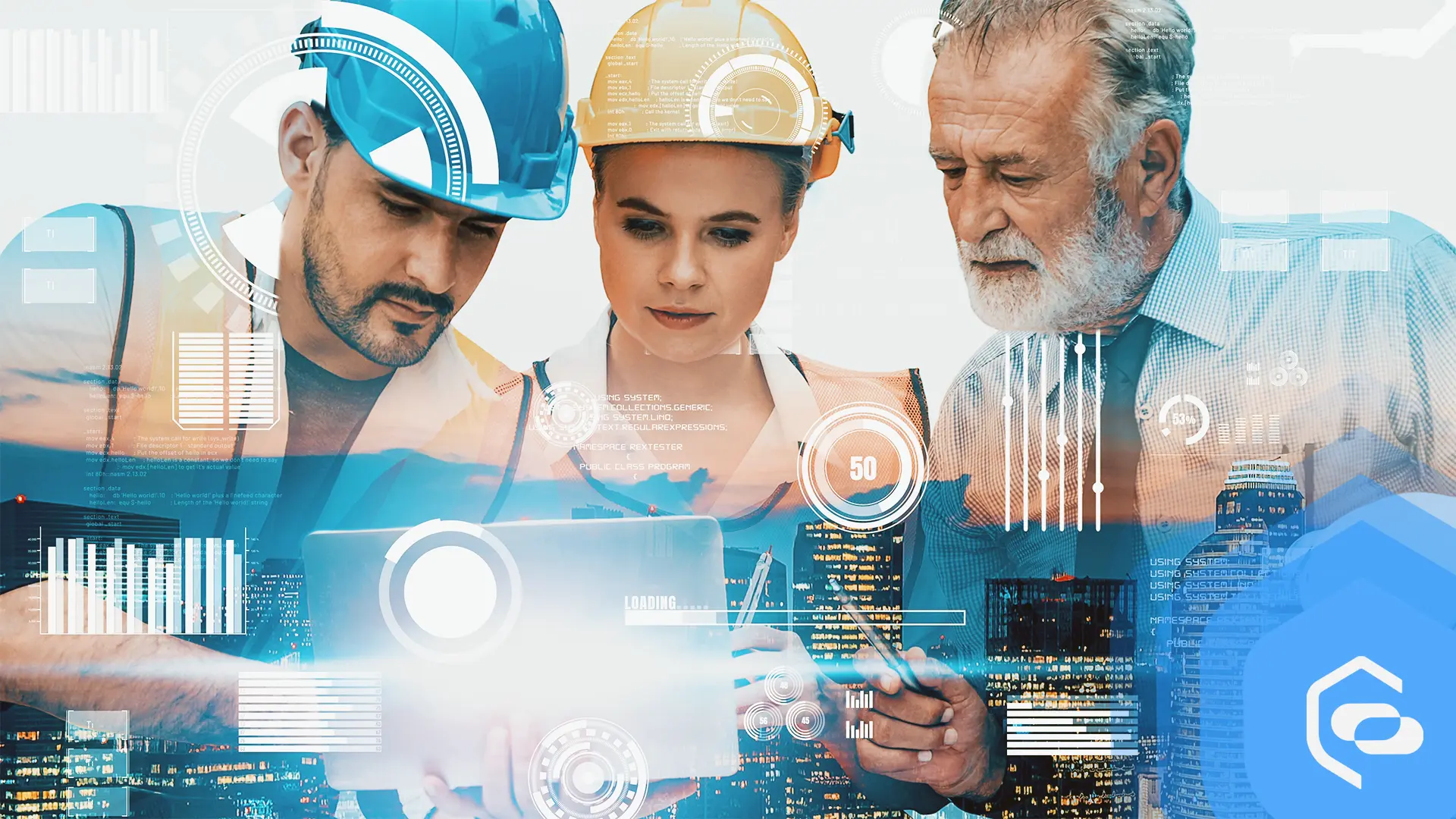
Digital Transformation in Occupational Health and Safety: A Topic That Specialists Will No Longer Escape
Artur Kamiński6 min read
For years, occupational health and safety (OHS) was a relatively stable field, built on traditional methods of risk assessment, training and procedures. In recent years, however, OHS has been changing quickly, like many other areas, as digital technologies develop. As companies around the world see the benefits of modern tools, there is a growing awareness that digitalization can not only streamline processes but also significantly improve safety at work.
Global changes in the labor market, such as automation, increasingly complex projects and a stronger focus on regulatory compliance, mean that companies must adapt quickly. Technologies such as the Internet of Things (IoT), big data, virtual reality (VR), augmented reality (AR) and predictive analytics have become a key part of the strategy of companies that want to protect their employees’ health and reduce the risk of accidents.
Imagine that working at height, operating heavy equipment or training in dangerous environments could be practiced with no risk to anyone’s health. This is no longer the future: digital tools make it possible today. Employees can simulate difficult and risky tasks and monitor hazards on an ongoing basis, using technologies that were once associated mainly with science fiction.
The COVID-19 pandemic accelerated this change in OHS training. When personal contact was limited and traditional training was hard to organize, VR and AR solutions allowed companies to keep training employees in an effective and engaging way. Virtual training delivered knowledge flexibly, without the need for everyone to be in one place, which significantly reduced the cost and time of organizing traditional courses.
In this article, we look at how modern technologies are changing the approach to occupational safety and at the benefits of digitalization in OHS for both employers and employees. We show how IoT, big data, VR, AR and other innovations help companies manage risk more effectively while making training and operations more efficient.
1. IoT and real-time monitoring of working conditions
One of the key trends in the digital transformation of OHS is the use of the Internet of Things (IoT). With a network of connected sensors, employers can continuously monitor working conditions in places that are particularly exposed to hazards. Sensors can measure noise levels, temperature, humidity or the concentration of hazardous gases and send the data in real time to a central monitoring system.
This data makes it possible to react to threats immediately and supports long-term planning and analysis that help to understand the conditions in which accidents happen. For example, sensors worn by workers (e.g. on helmets) can monitor vital signs such as heart rate, so that action can be taken when a worker shows signs of exhaustion or heat stress.
2. Big data and predictive analytics
Digital tools make it possible not only to monitor current working conditions but also to predict hazards before they occur. Big data and predictive analytics collect large amounts of data from various sources (such as IoT sensors, inspection reports and accident history) and analyze it to find patterns that could lead to accidents.
For example, by analyzing data from past incidents, AI-based systems can predict when a dangerous situation is likely in a specific location, for instance because of employee overload or approaching bad weather. Employers can then take preventive measures, such as strengthening protection, moving employees to other tasks or introducing additional safety procedures.
3. Cloud and mobility in OHS management
Digitalization in OHS also means easier access to data and documentation, thanks to cloud technologies. Paper forms and spreadsheets are gradually being replaced by cloud-based management systems. Data can be accessed from anywhere and on any device: a tablet, smartphone or computer.
This is especially useful for companies with distributed teams or several locations, such as construction sites and factories. OHS inspectors can easily report their observations, and managers can monitor compliance in real time without having to be on site.
4. Automation and robotics in hazardous work environments
Automation and robotics are increasingly used in OHS, especially where work poses a high risk to employees’ health. Robots can handle hazardous substances, work at height or carry out inspections in hard-to-reach places where the risk to human life is high. Drones monitor large work areas, such as oil rigs, mines and warehouses, with minimal risk to people. This allows companies to reduce the number of workers doing dangerous tasks while making these operations more precise and efficient.
5. VR and AR training: a new era of OHS education
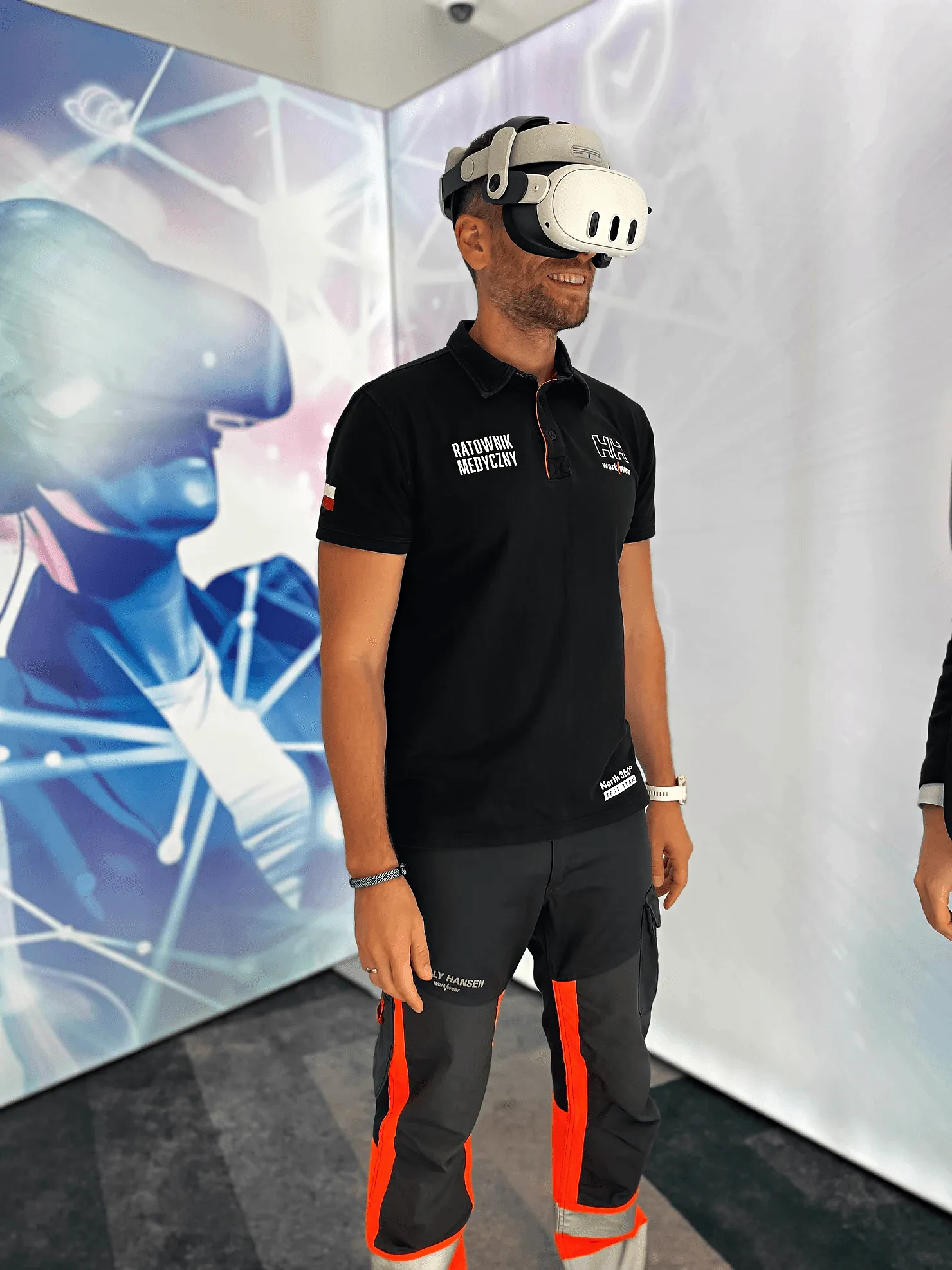
One of the most interesting and fastest-growing trends in the digitalization of OHS is the use of virtual reality (VR) and augmented reality (AR) for training. At EHS VR, we specialize in this type of solution: training that allows employees to gain knowledge and practical skills in a safe, controlled environment. Our VR training covers general occupational health and safety, first aid and fire safety, as well as more specialized topics such as:
forklift operation
working at height
lockout/tagout (LOTO) procedures
health and safety on construction sites
Participants practice realistic virtual scenarios that simulate real hazardous situations. For example, a forklift operator course can take place in a realistic warehouse, and working at height training puts participants in simulations where they must follow the safety rules at height.
Why VR and AR in health and safety?
The benefits of VR and AR in OHS training are hard to overestimate:
More effective learning: VR simulations let you repeat scenarios many times and practice key reactions in a safe environment.
Better engagement: VR engages users more than traditional methods, which improves concentration and knowledge retention.
Lower costs: companies avoid the costs of organizing training in different locations or interrupting work, because VR and AR training can take place anywhere and at any time.
Monitoring results: VR makes it possible to track participants’ progress precisely, recording their actions and reactions in different scenarios, so that training can be better tailored to individual needs.
Theory and practice in one: VR combines theory and practice, and AR supports applying that knowledge during real work.
Scenarios that are impossible in real life: VR makes it possible to train in simulations of dangerous situations, such as jumping onto a firefighter’s jump cushion or falling and being evacuated from height. These scenarios would be too risky, complicated or expensive to carry out in real life.
Is your company ready for the digital revolution in OHS?
Digital transformation in occupational health and safety is not just the future: it is already changing the way we take care of safety at work. Technologies such as VR, AR, IoT and big data are helping companies around the world to make training more effective, reduce costs and lower the risk of accidents.
What about your company? Do you already use modern tools to support occupational safety, or are you just considering them? Could VR and AR help you raise OHS standards in your organization? If you want to see how VR training works in practice, request a free trial.
With your consent we use cookies and similar tools from Google and Meta to measure traffic and improve our ads, and we load the Pipedrive chat. You decide: the site works fully without them. Privacy policy
 Artur Kamiński