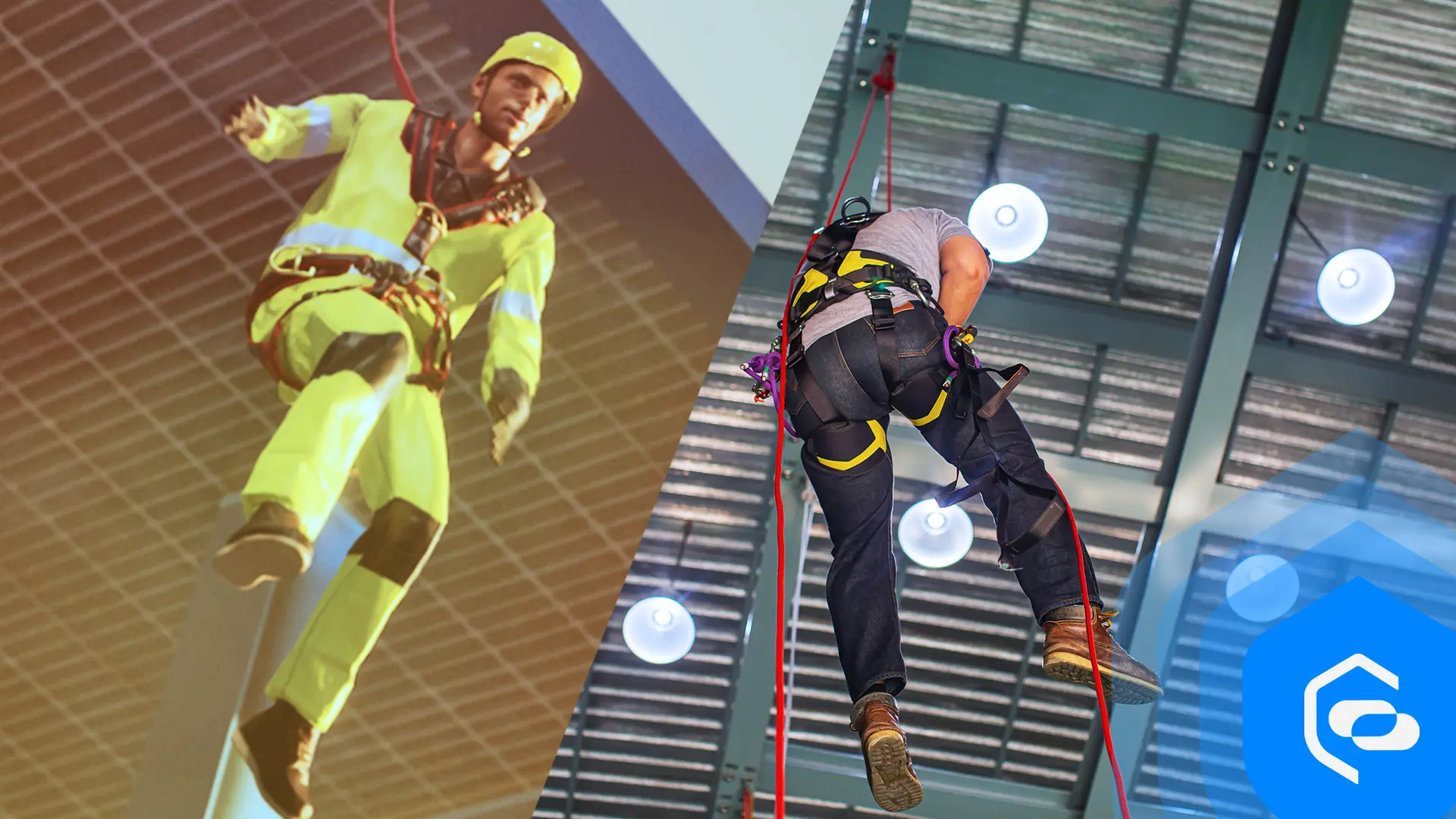
Emergency Evacuation Procedure – Developed by Experts in Safe Work at Heights and Rescue
Łukasz Kamiński7 min read
Under Article 224 § 1 of the Polish Labour Code, every employer whose activities may pose an immediate danger to the health or life of employees must take measures to prevent that danger. Under § 2, in such cases the employer must provide:
rescue equipment and devices suited to the type of hazard, operated by properly trained people,
first aid for injured persons.
In this article, we explain how to prepare for such situations and which tools and procedures can save an employee’s life. It is a ready-made solution for occupational health and safety (OHS) professionals: from the problem many workplaces face, through a complete list of the equipment needed for an evacuation and a procedure developed by Bartosz Suski and Artur Kijanka, to information about the relevant training.
The problem
Do you have plans and procedures for evacuating an employee who has fallen and is left suspended in a safety harness?
The solution
Essential evacuation equipment: we present the devices and accessories needed for an effective evacuation.
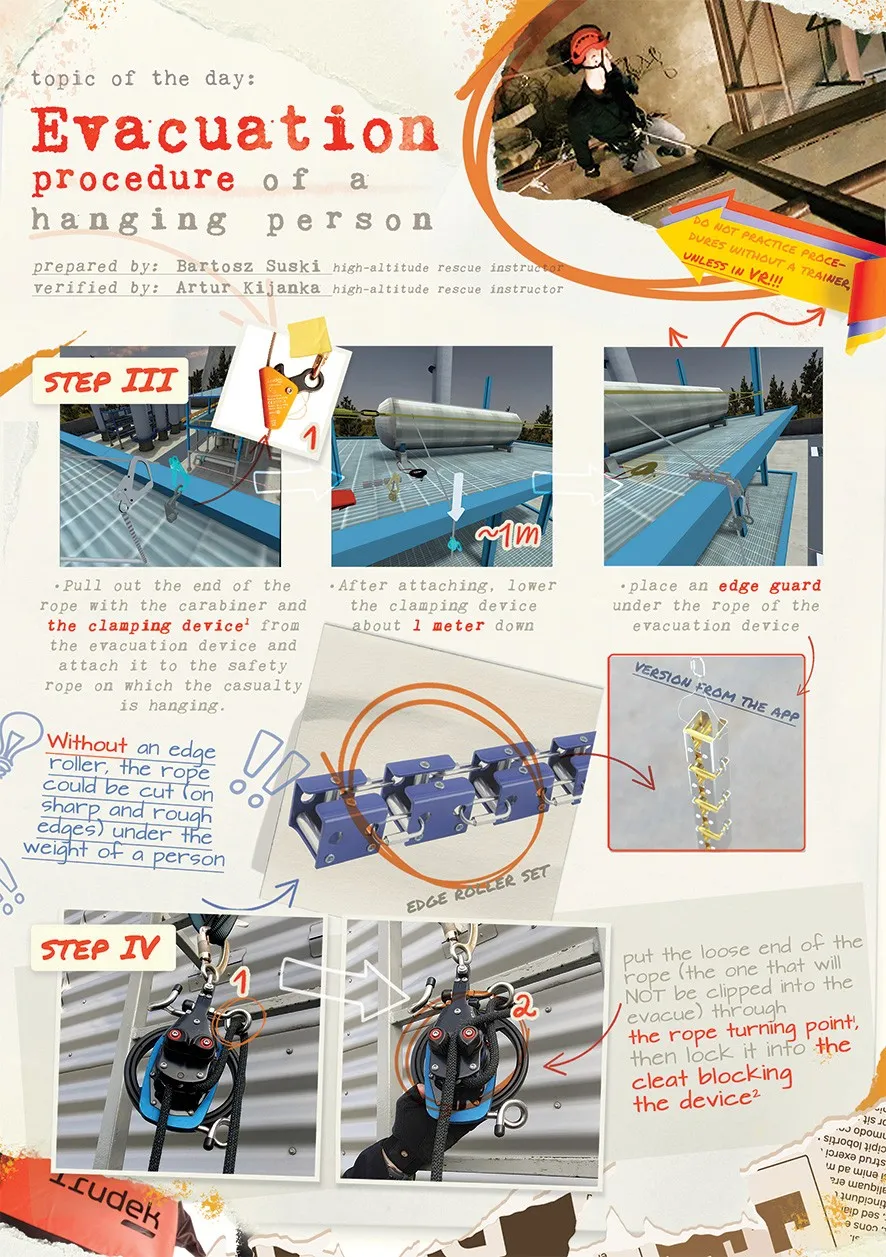
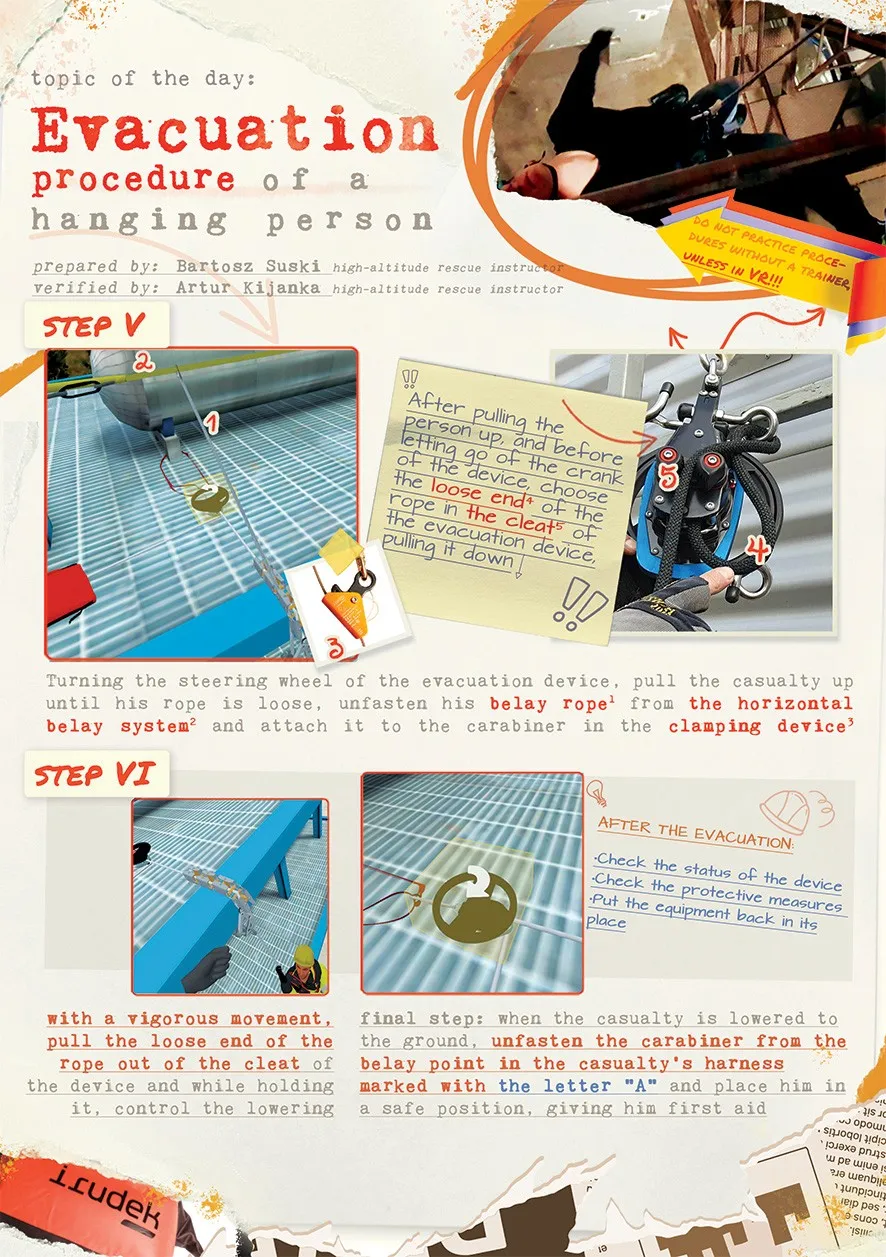
Evacuation procedure: an illustrated, step-by-step guide to a correct evacuation.
Evacuation training: training methods, including VR training and hands-on exercises with the equipment, that reinforce the correct response in an emergency.
The authors
Our goal is to give you reliable information and practical guidance for the highest level of safety at height, from specialists for specialists. That is why we created this guide for OHS professionals together with Bartosz Suski and Artur Kijanka.
Bartosz Suski, CEO of SUSKI
Bartosz Suski is the CEO of SUSKI, a company specializing in consulting on fall protection, safe work at height and related training. As a court-appointed expert in work at height safety within the field of occupational health and safety, he provides independent opinions on accidents involving work at height.
He is a certified technician for the inspection of fall protection equipment and has completed several rescue courses, including wind farm rescue training in Magdeburg, helicopter rescue courses for work at height and confined space evacuation training.
Artur Kijanka, fire protection and OHS specialist
Artur Kijanka is a fire protection specialist with 18 years of experience and an OHS specialist who has worked in the field for 14 years. He is a graduate of the Main School of Fire Service in Poland.
Since 2008, he has served as a height rescue specialist in the National Rescue and Firefighting System (KSRG), and he currently works as a helicopter rescue operator within KSRG. He is also certified at the basic level in rope techniques for aerial operations within the Polish Armed Forces.
Artur has completed Polish Mountaineering Association (PZA) training in traditional rock climbing and caving techniques. He holds IRATA Level 1 certification and is a GWO (Global Wind Organisation) instructor at ASSECURO. Since 2016, he has run his own training company, Artur Kijanka ALPINAK, where he passes his expertise on to future specialists.
1. Essential equipment for rescue at height
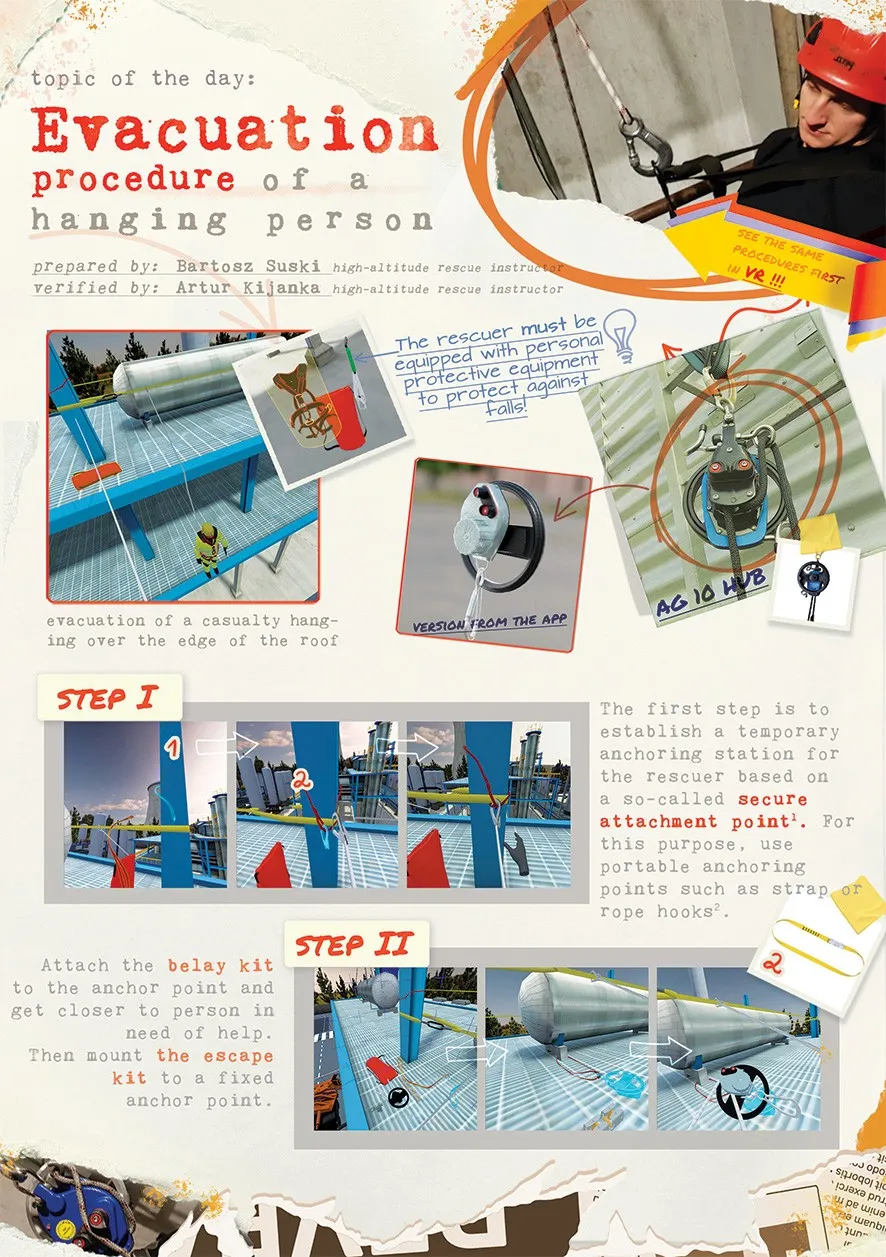
The procedure for rescuing a casualty suspended beyond the edge of a roof was developed using the Irudek Boreas HUB evacuation kit with additional accessories. Below you will find a description of each piece of equipment, with a link to the online store where you can buy it.
A 3D model of each piece of equipment is built into our virtual reality training, which prepares employees to carry out an evacuation from height according to the correct procedure. Read more about the Working at Height VR application.
Testing our training applications is free: sign up for a free trial and we will send you a VR headset with our safety training applications for 5 business days, including occupational health and safety (OHS), fire safety and first aid.
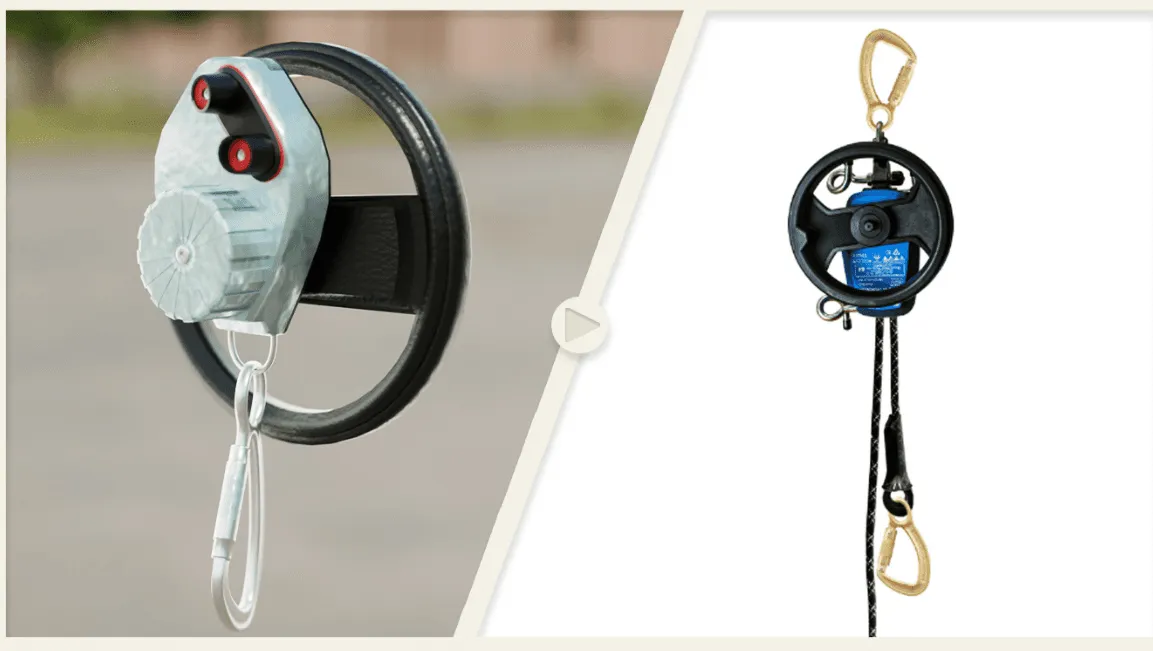
Irudek Boreas HUB evacuation device
An automatic rescue device for lowering a casualty who has fallen beyond the edge of a roof. How it works is shown in our Working at Height VR training.
Compliance with standards:
EN 341-A
EN 1496
EN 12841-C
The Boreas HUB device: VR training view on the left, the real device on the right.
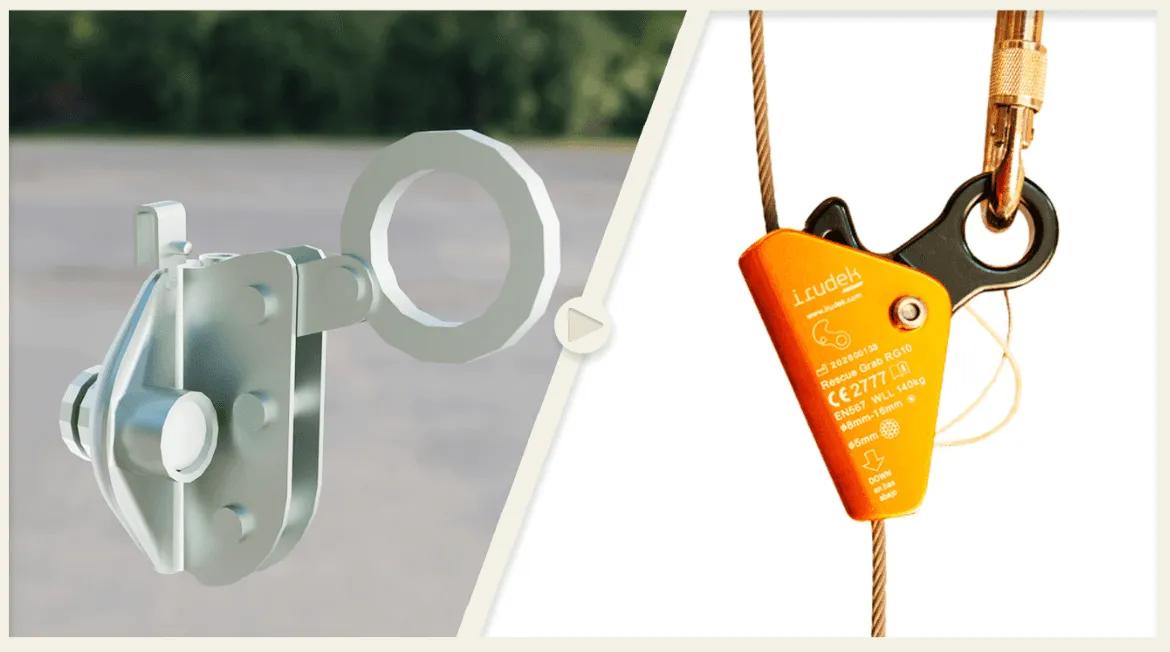
The SALVE clamping device is part of the Boreas HUB evacuation kit. It is recommended as an anchor point on a fastening element and allows lifting or moving upwards during a rescue. How to use it is shown step by step in the Working at Height application.
The SALVE clamping device: VR training view on the left, the real device on the right.
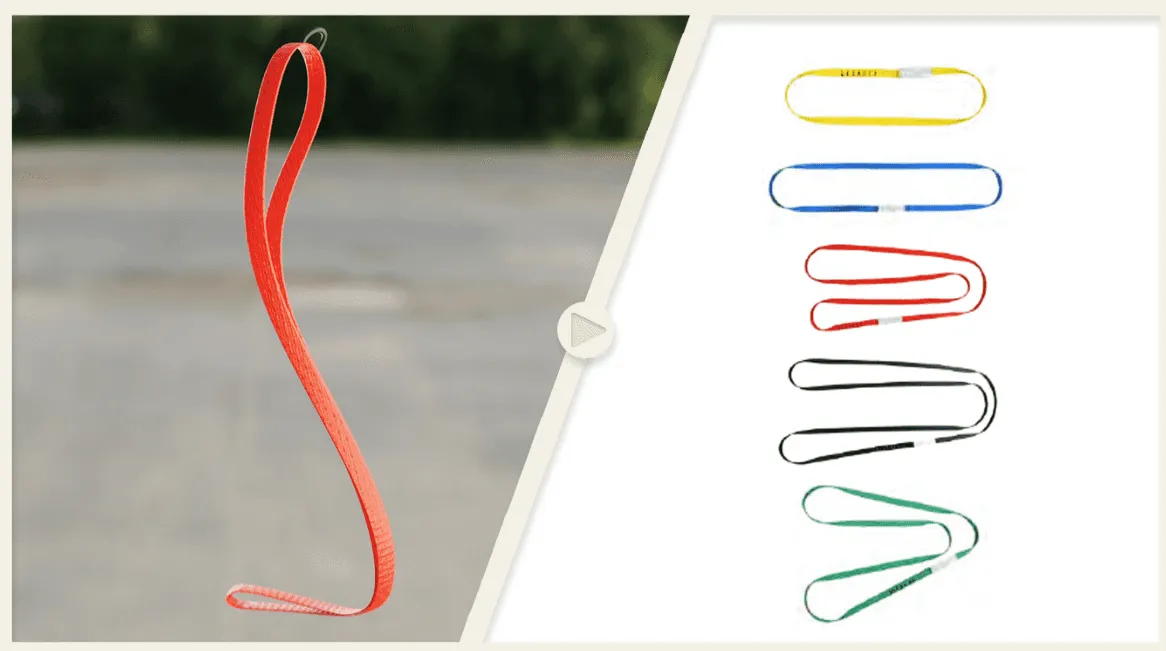
CTA EXPRESS slings are anchor slings made of polyester webbing. They are used to create a secure anchor point on a fixed, reliable structure. Where to place the sling and how to use it is shown in the Working at Height application.
The CTA Express anchor sling: VR training view on the left, the real product on the right.
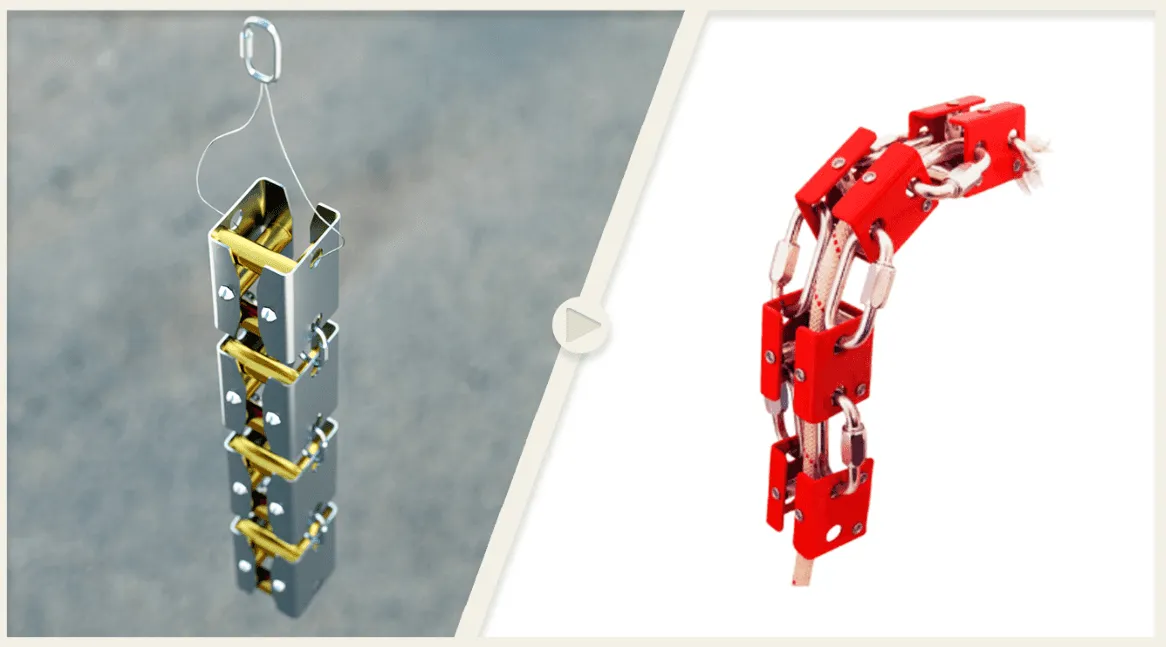
This articulated edge protector prevents the rope from fraying or breaking on sharp or rough edges under the casualty’s weight. The roller is fitted to protect the rope running from the evacuation device to the casualty. How to use it is shown in the Working at Height application.
The ER100 edge roller: VR training view on the left, the real device on the right.
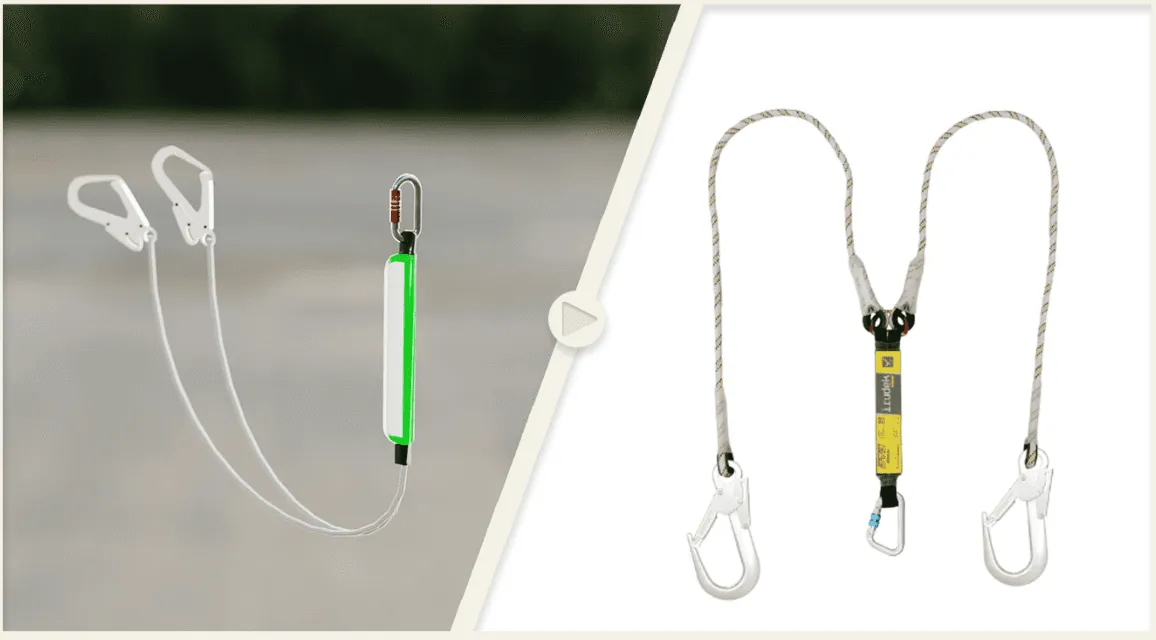
This Y-lanyard with an energy absorber and steel hooks is designed to arrest a fall and reduce the impact force to below 6 kN. How to use it is shown in the Working at Height application.
The ABE 363 dual lanyard: VR training view on the left, the real product on the right.
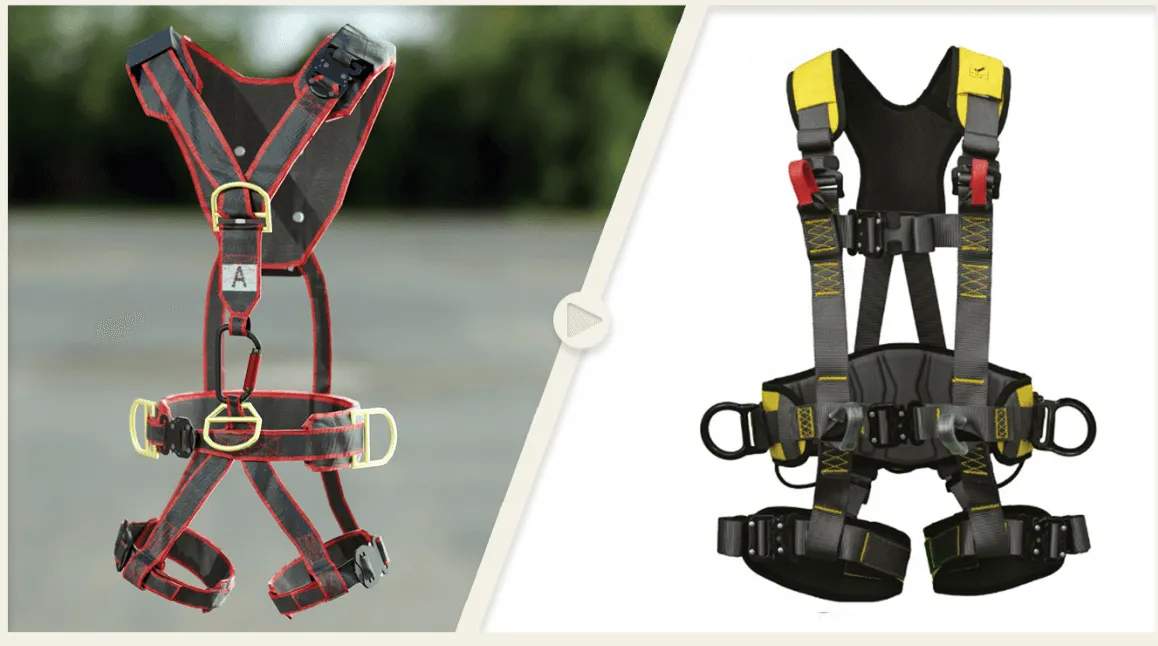
The safety harness has front and rear fall arrest attachment points, marked with the letter “A”. It has adjustable straps on the shoulders, thighs and chest, and automatic leg buckles for a quick, secure fit. Metal rings hold the carabiners on the free ends of a double lanyard. Special polyester padding improves energy absorption and comfort during work. How to use the harness is shown in the Working at Height application.
The Gravity Plus 1 harness: VR training view on the left, the real harness on the right.
3. On-site and VR training, available any time for any workplace
A proper emergency response requires established procedures and regular training. To meet the needs of safety professionals, we developed a working at height training program made up of four modules:
The training is delivered in a virtual reality application, so employees can practice not just once a quarter, but before every task at height. The app reminds users of the key safety rules and shows how to use the real equipment they handle every day. Before climbing, employees can check whether they remember all the critical rules.
Using the app is simple: all you need is a VR headset with theWorking at Heightapplication and a small amount of space. The app does not require controllers: it uses hand tracking, which makes the training more natural and effective.
VR training is a cost-effective addition to expensive in-person training, which should take place at least once a year. In high-risk work, however, annual training may not be enough. VR headsets with on-demand training are a way to keep improving worker safety all year round.
To make training even more effective, employees should attend in-person evacuation training with real rescue equipment at least once a year. Our specialists invite you to train at the Suski Training Center in Wysogotowo, or, on request, we can run the training at your site.
Need a height rescue procedure?
If you have not yet developed a height rescue procedure, order our test VR headset and check whether the procedure designed by our specialists fits your workplace: request a free trial.
New to virtual reality?
Many professionals already use VR to improve training quality and to give employees a tool they can use at any time to refresh critical safety knowledge. Apart from working at height training, we offer many other VR training applications. Sign up for a free trial and test them with your team.
With your consent we use cookies and similar tools from Google and Meta to measure traffic and improve our ads, and we load the Pipedrive chat. You decide: the site works fully without them. Privacy policy
 Łukasz Kamiński