Education is changing faster than ever. New textbooks, modern teaching aids and new tools make teachers’ work easier and help engage students. Schools are increasingly looking for solutions that not only meet curriculum requirements but also appeal to young people who have grown up in a digital world.
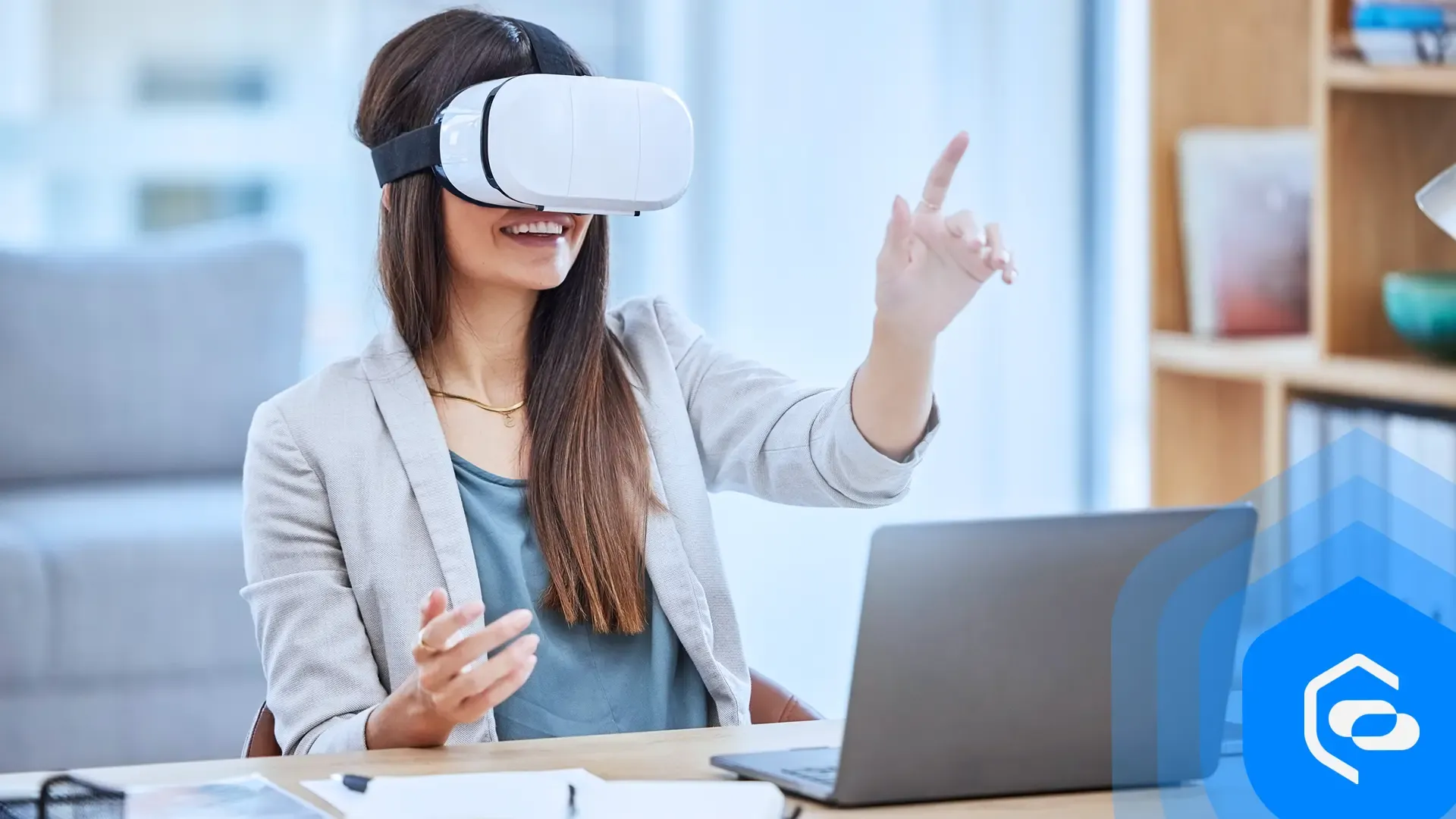
VR training is one of these solutions. It makes learning more interactive, engaging and suited to the needs of today’s students. In this article, we explain how to organize VR first aid training in schools, what it gives teachers and students, and why it is worth investing in.
Traditional first aid training: what are the challenges?
Organizing traditional first aid training can be time-consuming and expensive. The most common challenges are:
Absent students or teachers: on the day of the training, some students or teachers may be absent. Extra sessions then have to be planned, which costs more time and money.
High costs and time: training each class separately increases costs and the time burden on schools and teachers.
Why choose VR training?
VR removes most of the difficulties of traditional training. Schools benefit from:
Flexibility: VR headsets are always available. Training can take place at any time, so students who were absent can catch up without extra sessions being scheduled.
Time and cost savings: buying VR headsets is a one-off investment that serves the whole school. Any teacher can use them to train different classes whenever needed.
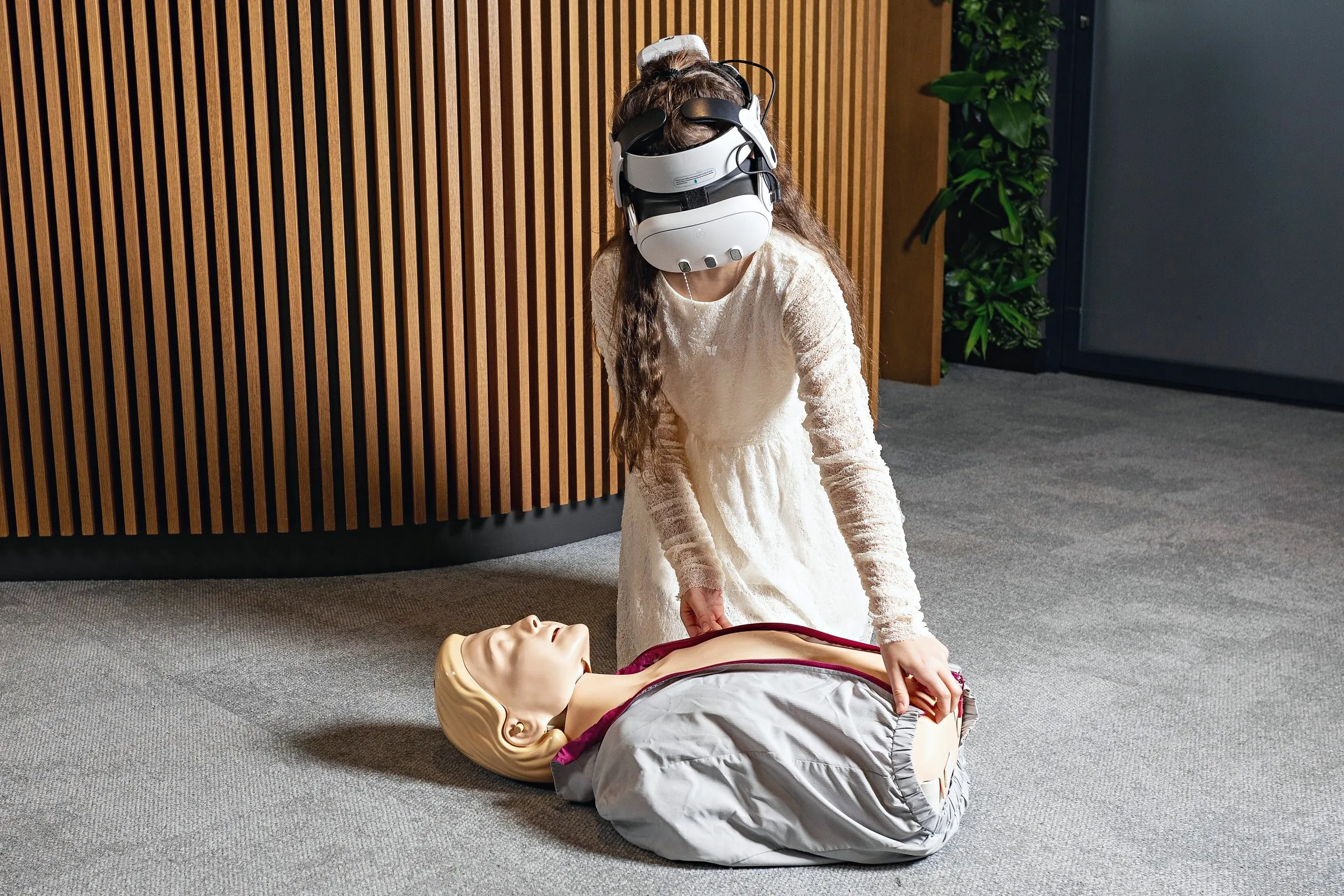
Intuitive operation: a virtual instructor guides participants through the training step by step. No controllers are needed: actions are performed with natural hand movements, which makes the training simple and accessible, even for younger children.
Screen sharing: the VR view can be shared on a computer or projector, so other students and teachers can follow the training in real time.
VR training aligned with the curriculum
Our VR applications are aligned with the official curriculum requirements, so students receive high-quality education that meets the required standards.
A realistic experience with a manikin
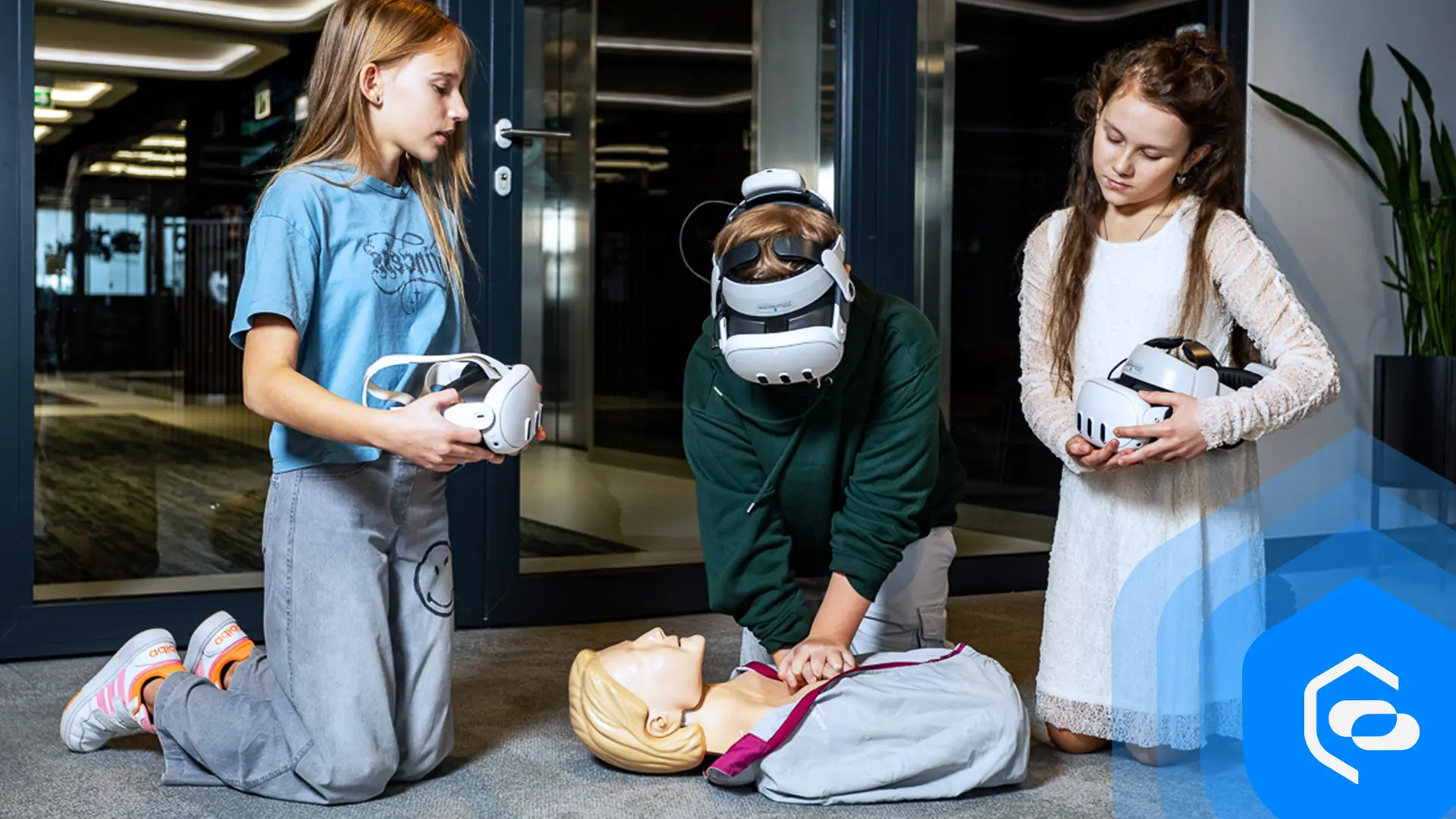
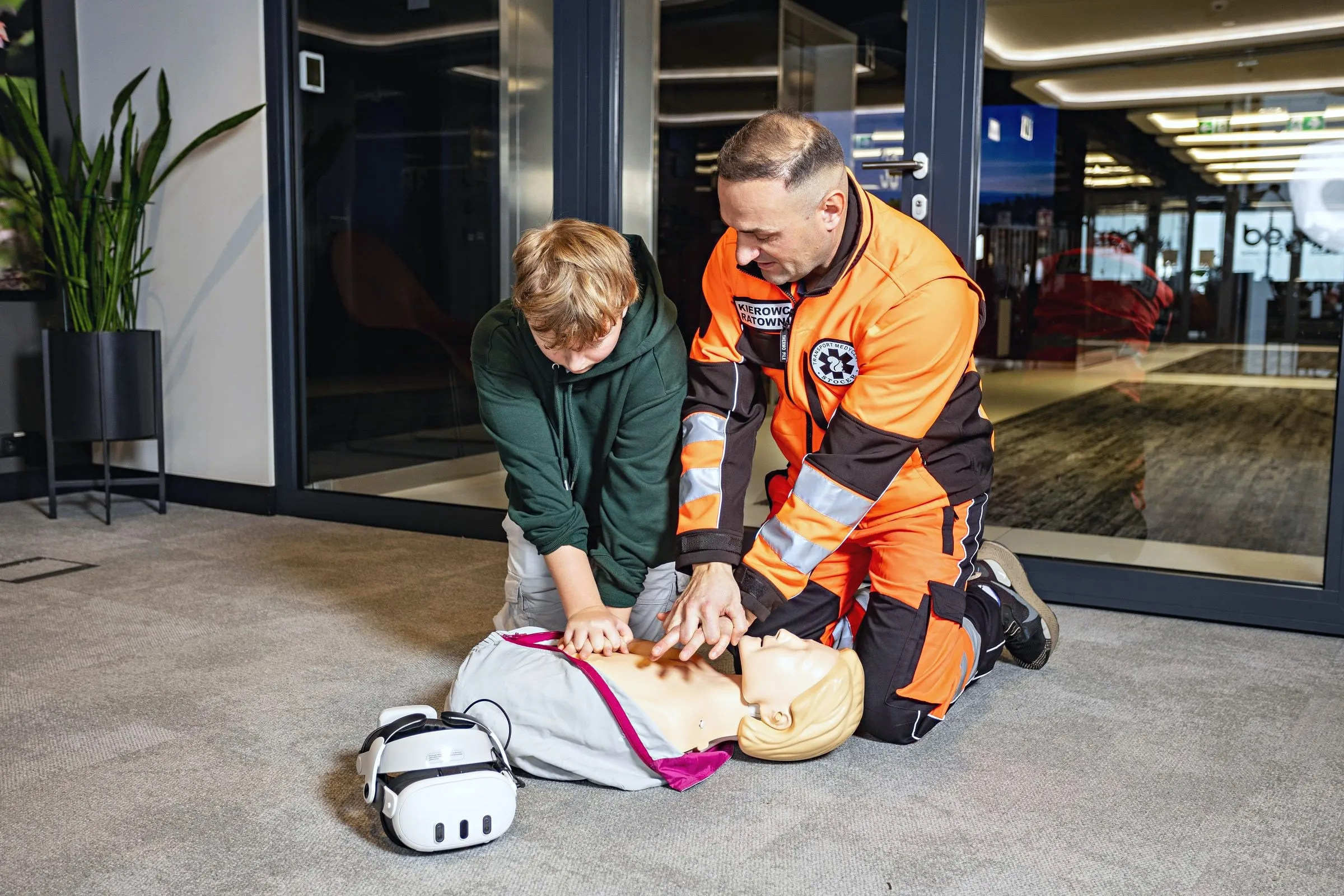
Our VR applications work with standard first aid manikins. When a student performs chest compressions on a real manikin, they see a virtual casualty in VR and the effect of their actions in real time. This realistic experience shows how much correct technique matters.
VR: a modern approach that engages students
Bringing VR into schools is not just about meeting curriculum requirements: it makes learning exciting. VR training is far more engaging for students than traditional methods. For many, it may be their first contact with this kind of technology, which makes it both an effective lesson and a memorable moment to share with classmates.
VR training builds first aid skills and also familiarizes students with technology that will play an ever larger part in their lives, which further increases their enthusiasm for learning.
Diverse scenarios for comprehensive learning
VR training includes a range of first aid scenarios, such as CPR, treating burns and wound care. This prepares students for different emergencies and helps them remember how to respond at a critical moment.
Support with introducing VR
We understand that new technology in a school may raise questions and concerns. That is why we offer full support throughout the implementation, from choosing the right equipment and accessories to training teachers and providing technical assistance. Our goal is to make VR an intuitive and convenient tool for every school.
Conclusion
VR is already available to schools today. It makes teachers’ work simpler, increases student engagement and delivers high-quality training in a safe environment. If you want your school to lead the way in modern education, contact us. Together, we can make learning a real pleasure.
With your consent we use cookies and similar tools from Google and Meta to measure traffic and improve our ads, and we load the Pipedrive chat. You decide: the site works fully without them. Privacy policy
 Artur Kamiński