Today we take a closer look at how virtual reality can solve problems that would be very expensive and time-consuming to solve in the traditional way. When time and resources are this valuable, VR is becoming a key tool for companies that want to optimize their processes.
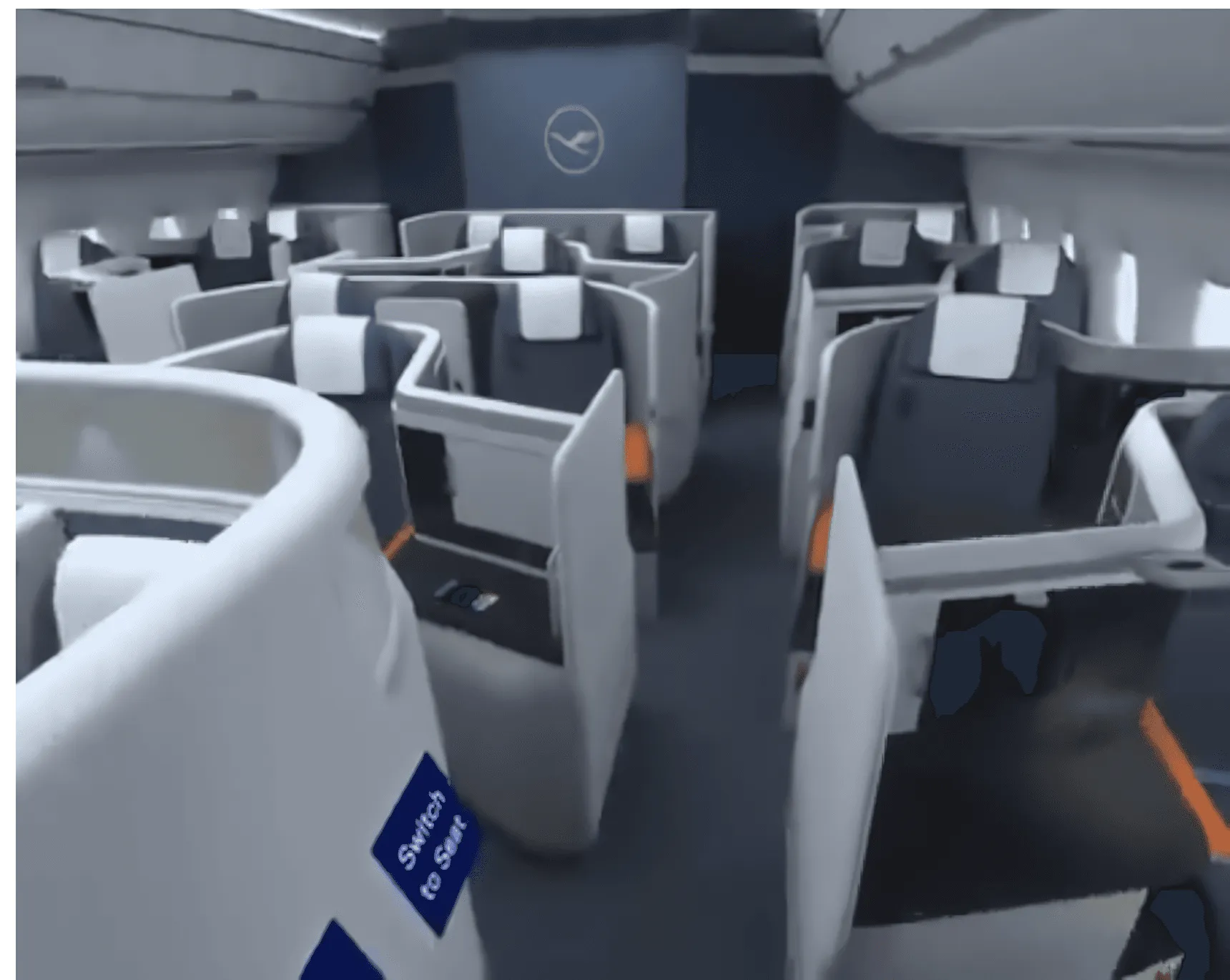
A good example is Lufthansa, which decided to use VR to introduce its new long-haul travel concept, Allegris. Because the concept was to be rolled out on around 150 aircraft, Lufthansa faced the challenge of promoting it and training staff effectively. Traditionally, this would have meant building physical replicas of the cabin interior, with huge costs for parts, transport and labor. Training on board real aircraft would not only be expensive but would also mean losing revenue while the aircraft stayed on the ground.
Lufthansa chose a different route: a VR app that lets users interact with a digital replica of the aircraft interior. This allowed the company to cut costs by 80% while extending the reach of its training program. Instead of being limited to physical models at trade shows, Lufthansa can now send VR headsets to its partners around the world, so they can try the new product without leaving the office. The success of this solution led Lufthansa to use VR in other areas too, such as engine maintenance and customer service. It shows how much potential VR has, especially for specialist training.
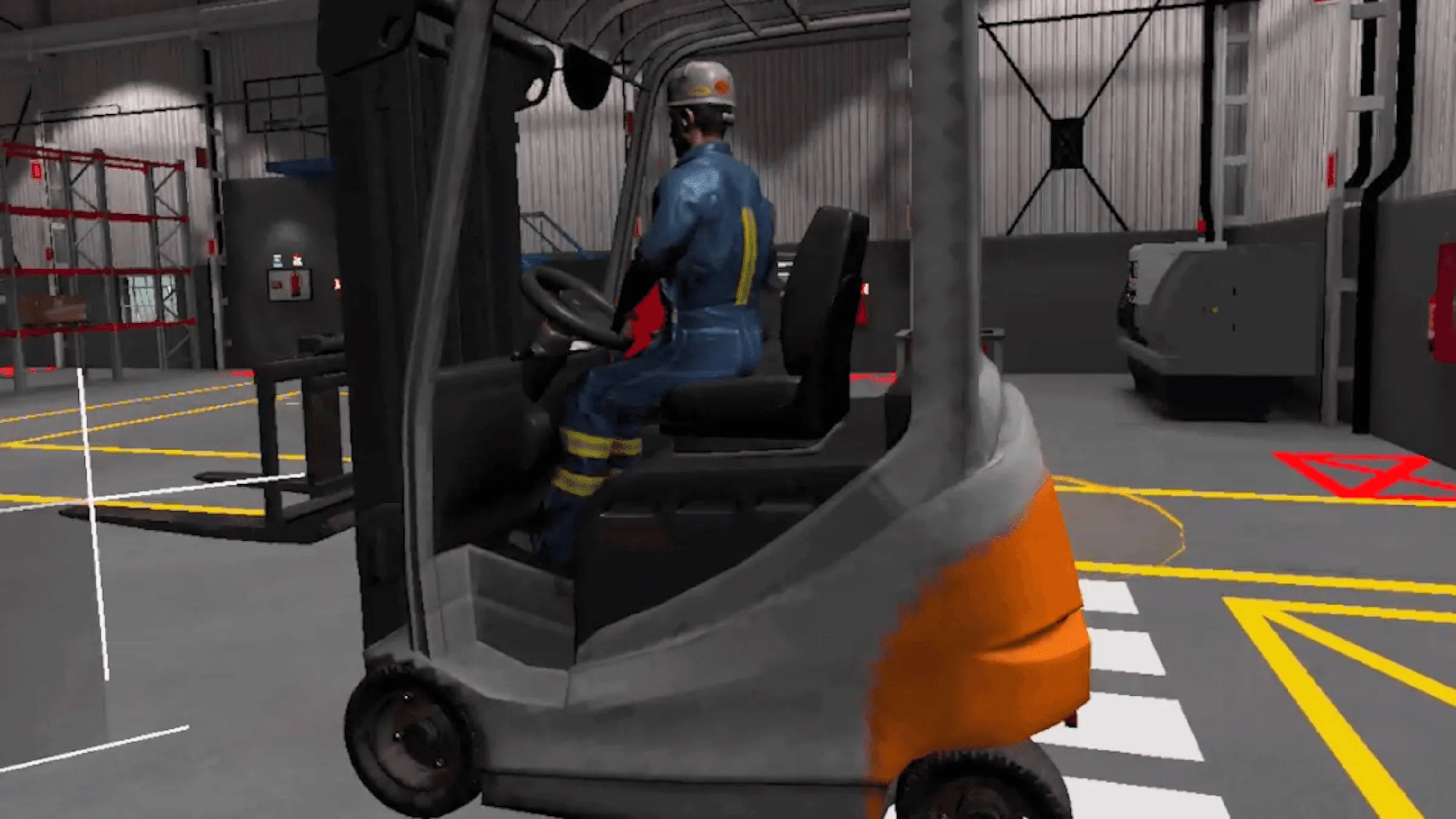
Our VR training meets the same need: training that is difficult to organize in real life. This applies in particular to specialist training such as working at height, lockout/tagout (where traditional training would require stopping production), forklift operation, hand and voice signals on construction sites, and firefighting training.
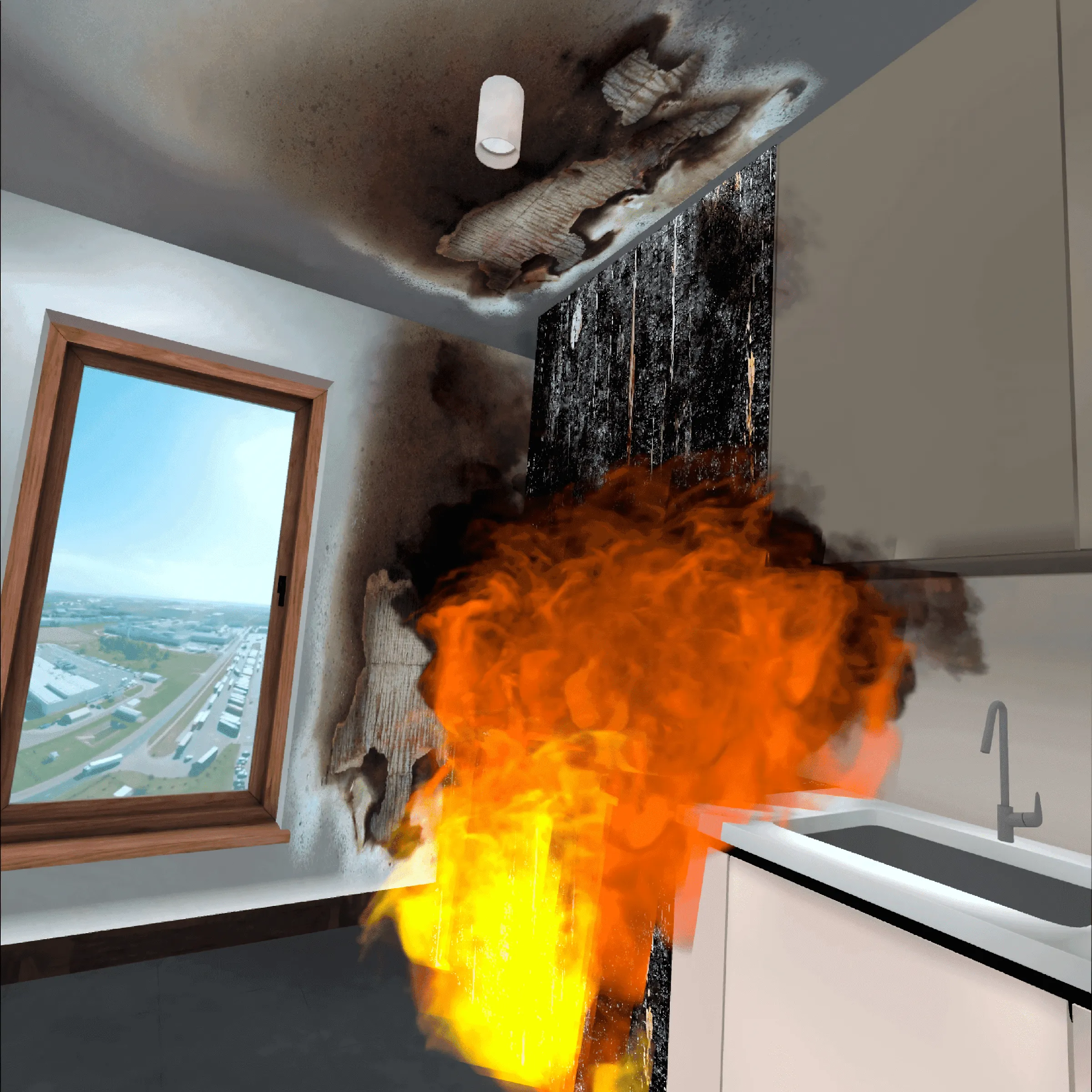
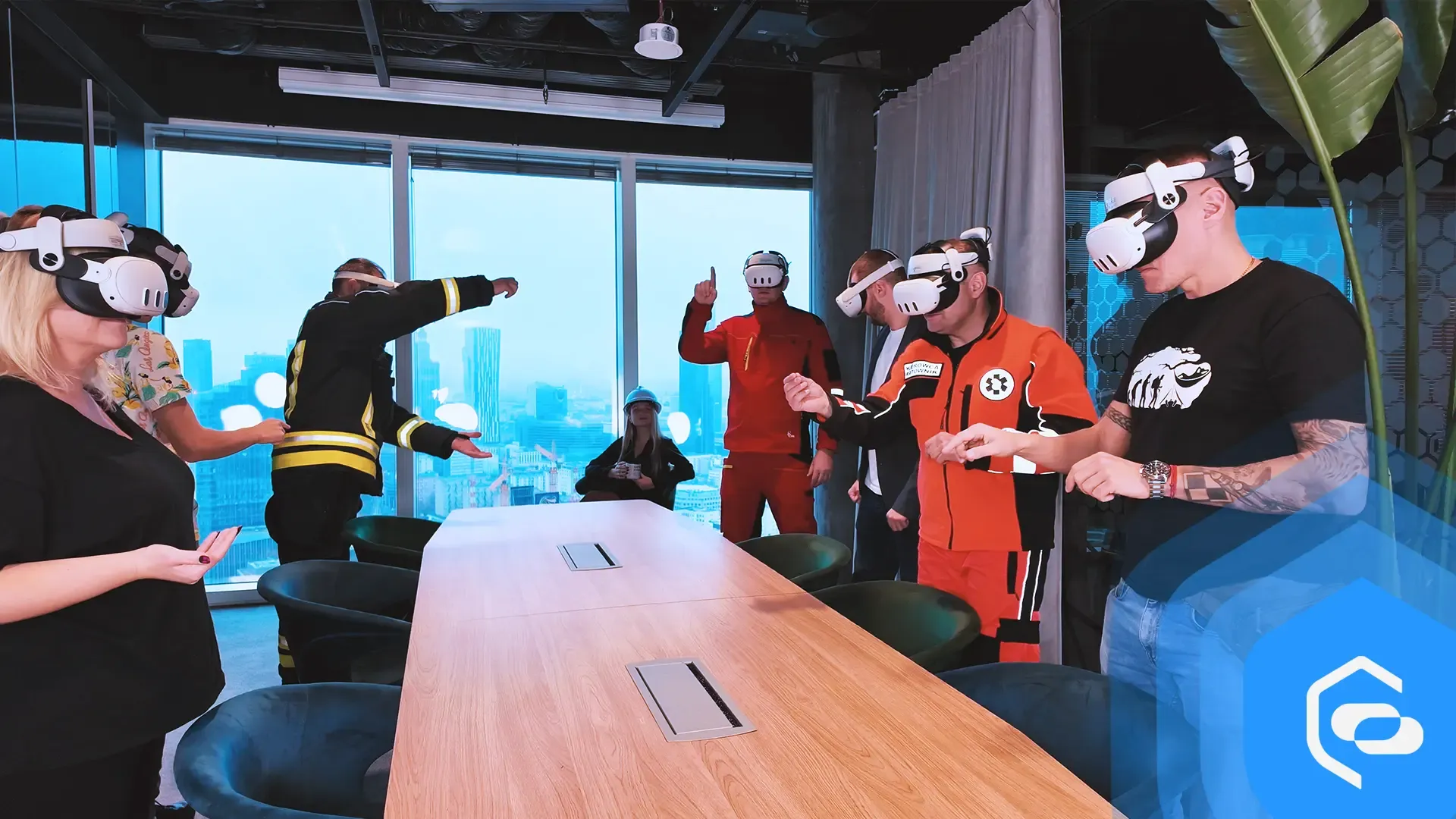
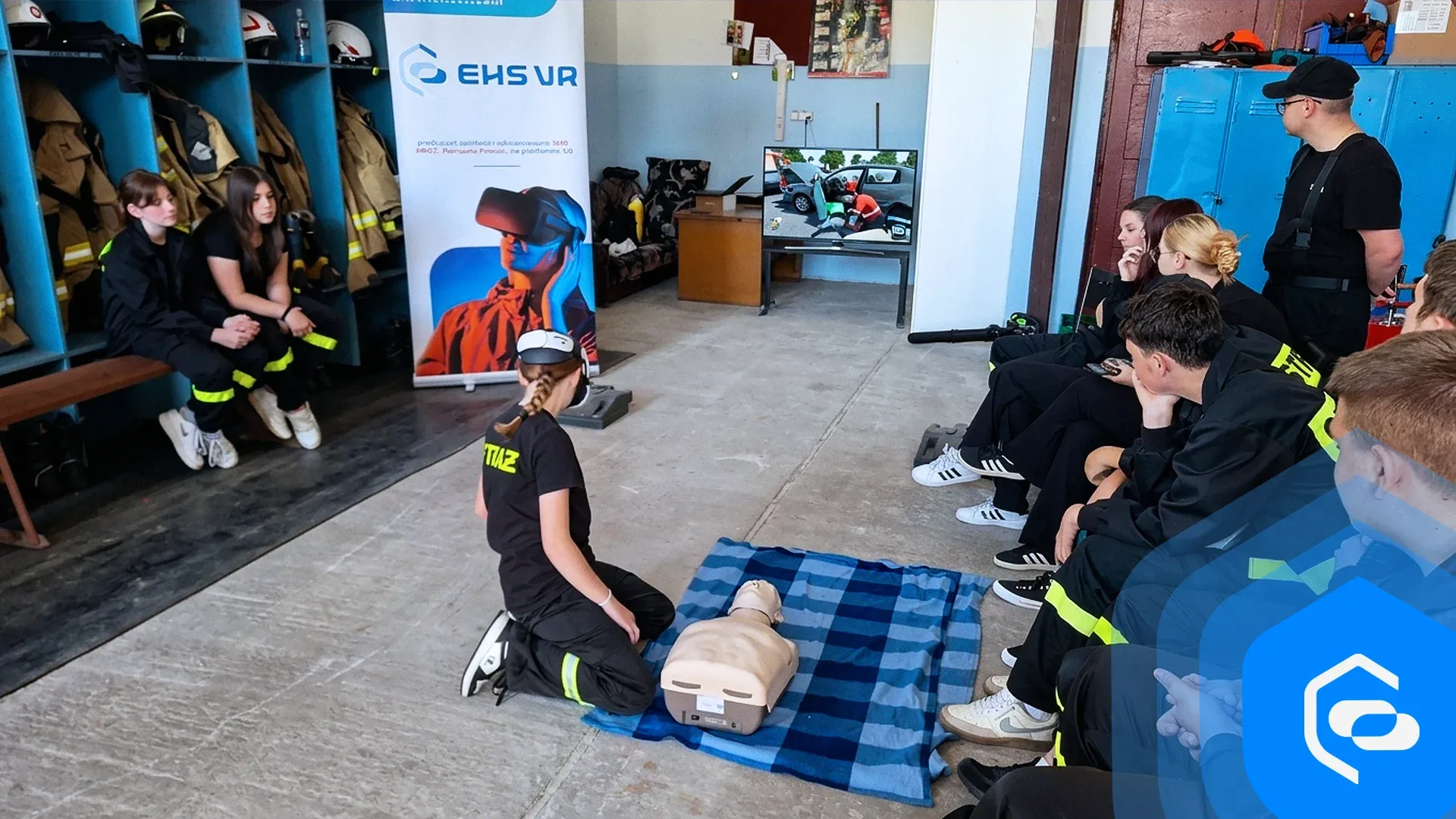
With VR, participants enter realistic simulated environments where they can test their skills in a crisis, such as entering a burning building, climbing a fire ladder or jumping onto a jump cushion. Organizing this kind of training in the real world would be logistically complicated, very expensive and risky.
A view from an EHS VR training application.
A view from an EHS VR training application.
Virtual reality opens up new possibilities for training. It can make training more effective and safer while reducing its cost, so it is worth using these tools to raise standards in your organization. We look forward to the next opportunities that virtual reality will bring.
Łódzkie Voivodeship’s 2026 call offered volunteer fire departments up to PLN 10,000 for children and youth fire protection education. Submissions closed on 6 March 2026.
How would you like to start?
I don’t have a headset
We send you a headset with all the apps. You test for 5 business days, and we cover shipping both ways.
With your consent we use cookies and similar tools from Google and Meta to measure traffic and improve our ads, and we load the Pipedrive chat. You decide: the site works fully without them. Privacy policy
 Adam Stachowski