Onboarding
Onboarding that covers OHS, first aid and fire protection without scheduling a live session for every new hire.
- Hands only
- 2 × 2 m space
- Hands only
- 2 × 2 m space
Safety training is part of every onboarding
Onboarding is a crucial stage in every company. Besides introducing new employees to the company culture, it includes training in occupational health and safety (OHS), first aid and fire protection.
Traditional training means organizing live sessions, which takes time and effort, especially in companies that hire all year round. Trainers’ and new employees’ schedules also have to match, which is not always possible.
Live onboarding sessions do not scale with hiring
Without VR
- New hires join at different times, so you run many small, costly sessions.
- Every session needs an OHS specialist and a booked room.
- Theory without interaction is quickly forgotten.
- Hybrid and remote teams make mandatory OHS training harder to organize.
- Onboarding at several sites is hard to standardize.
With EHS VR
- Train at any time, even at home if you send the employee a headset.
- Hands-on scenarios keep people engaged and help them remember.
- The same content for everyone, so knowledge is uniform.
- Results are tracked automatically, so the OHS specialist sees progress.
- Lower costs and faster onboarding into the job.
Apps that solve this problem
 Fire safety
Fire Training Evacuation
Train fire evacuation in VR - alarm response, firefighting, and testing.
 First aid
BLS & AED in the Factory
BLS & AED in VR - life-saving response to emergencies at the factory.

 HSE
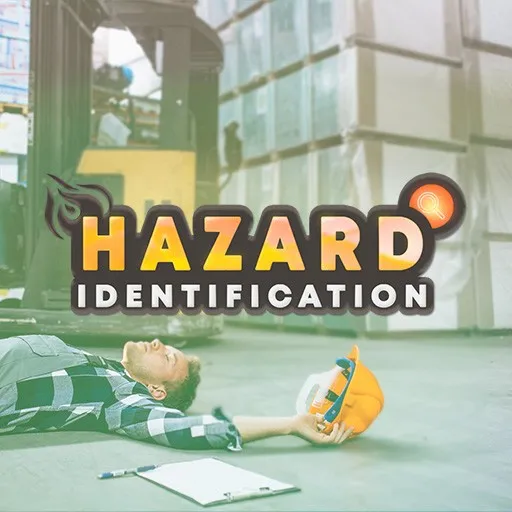
HSEErgonomic Home & Office
Improve health and efficiency - learn modern ergonomics at home and office in VR.
How to organize it
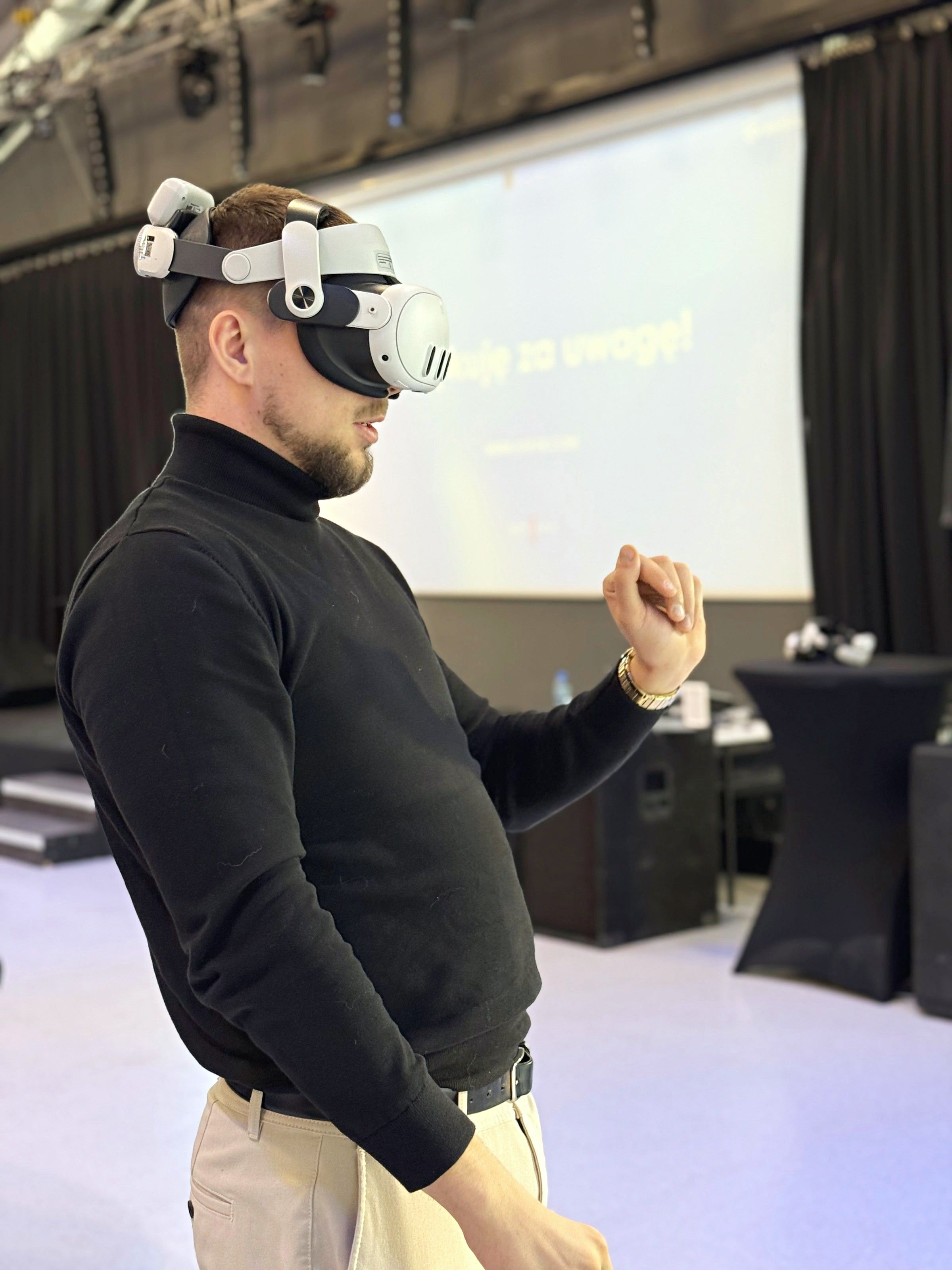
VR lets people practice procedures hands-on, in a realistic but safe environment. Here is what you need to run it in your organization.
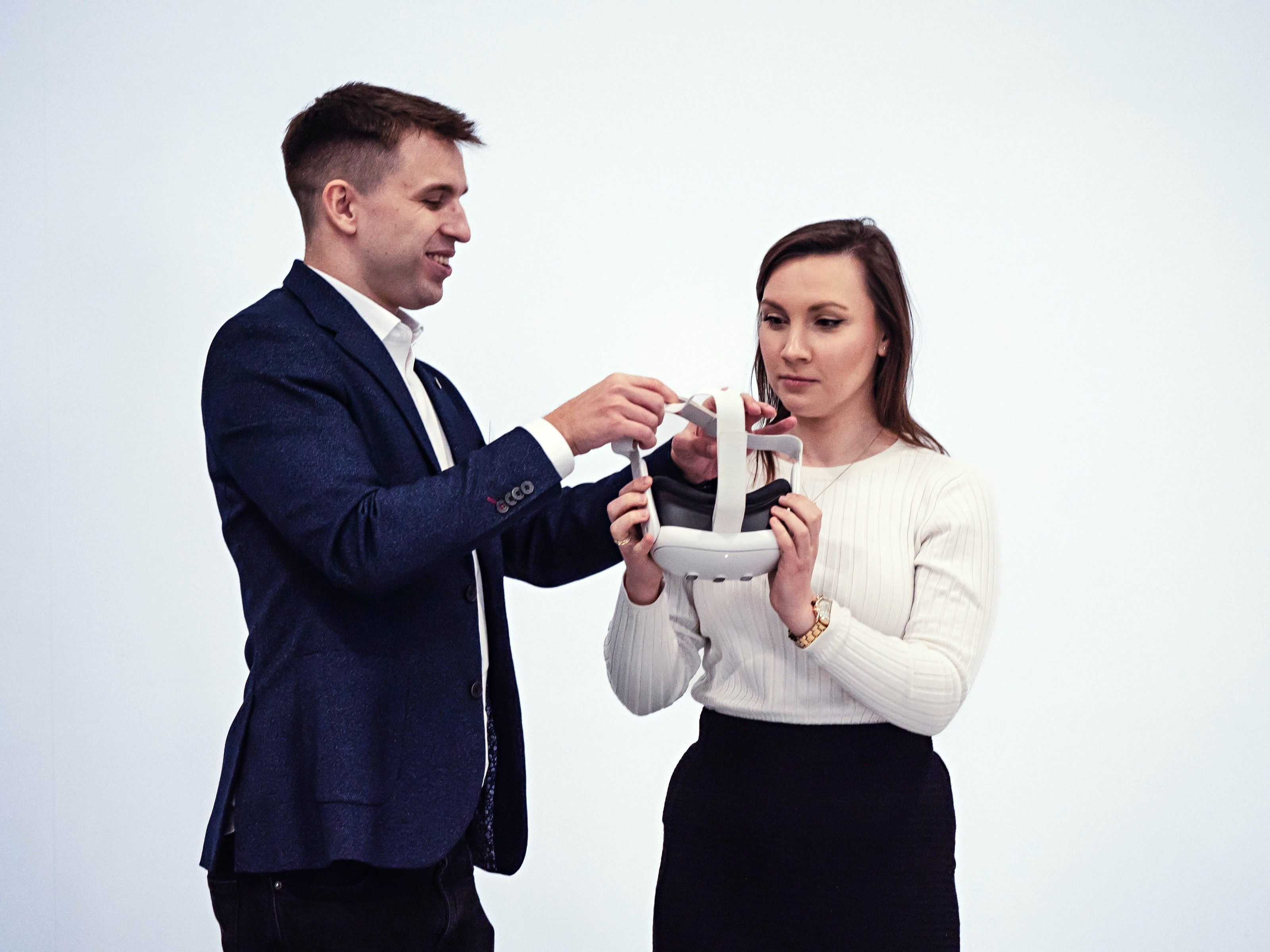
Easy setup
All you need is VR headsets and a subscription to our apps. Each package gives unlimited access to its training modules. The apps run on Meta Quest headsets; selected apps also run on Pico and HTC.
Hands-on learning
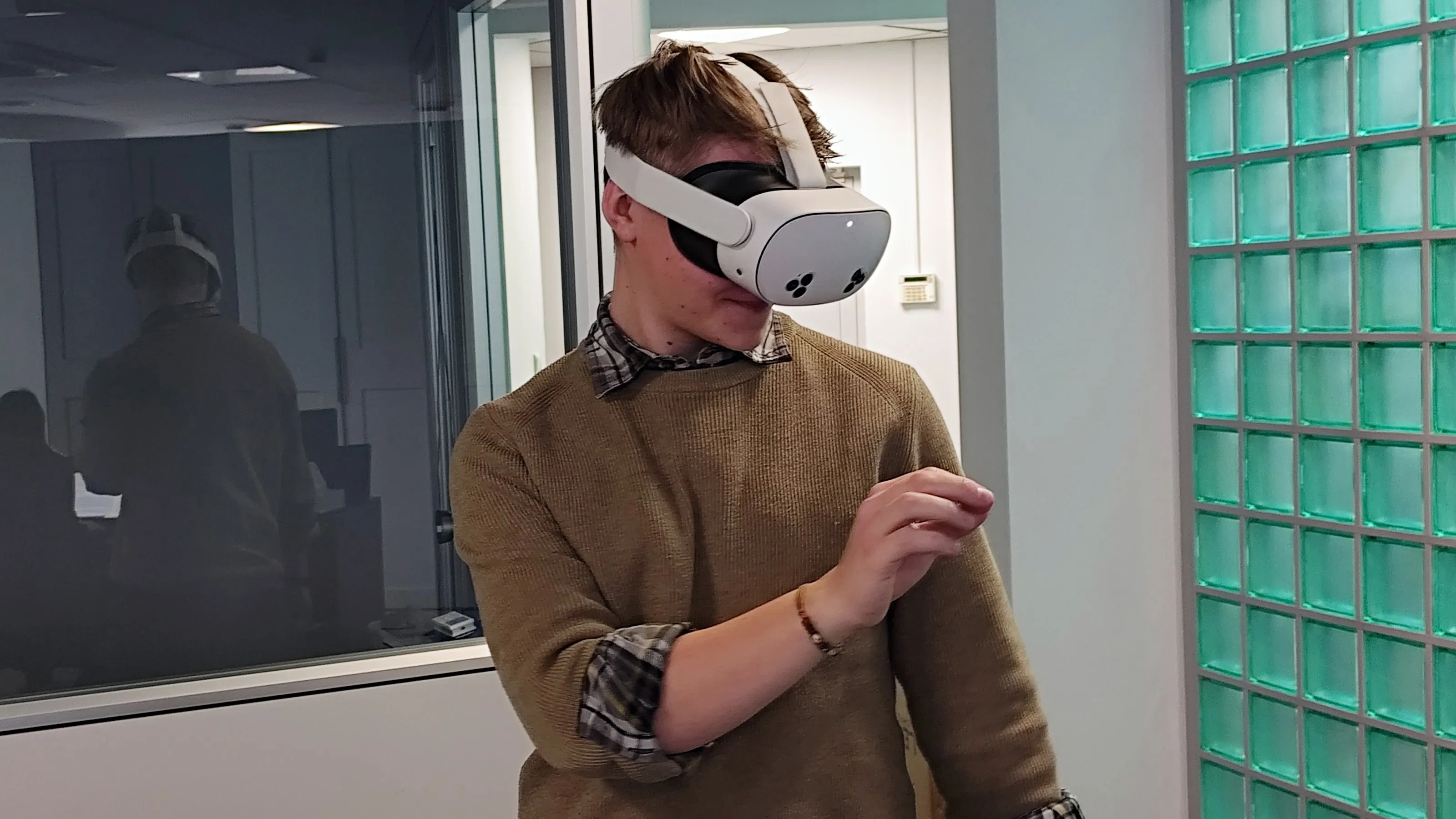
Employees train in realistic scenarios with their own hands, no controllers needed. The apps work offline, except SAMPLE AI, which needs an internet connection for its AI-driven conversation.
Indoors or outdoors
Each participant needs about 2 × 2 m of free space. Several trainees can share one headset by taking turns, while the others follow the session on a shared screen.
How many headsets you need
We recommend one headset per 4–5 participants trained on the same day. If employees rotate over a longer period, 1–2 headsets are enough. Extra batteries and straps are available for longer sessions.
Trackable progress
Follow each employee’s results and progress, and see where people need more practice.
Customizable and cost-effective
VR reduces the need for external trainers, physical setups and complex logistics. Modules can be tailored to your industry and to specific safety and operational needs.
Other use cases
Initial training
Initial OHS training that keeps quality consistent, engages new employees and documents results.
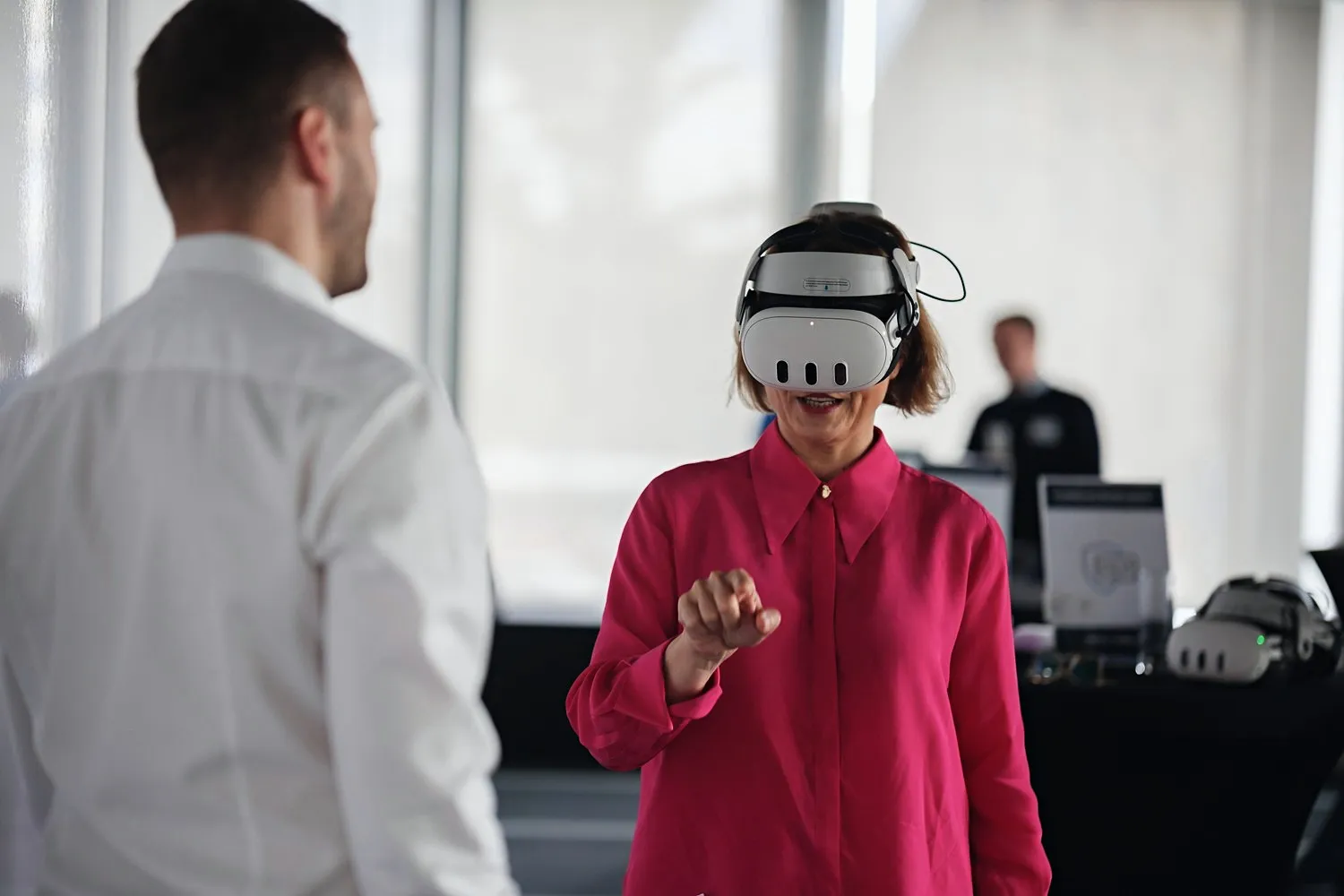
Training companies
VR for training providers: stand out, win high-value clients and offer premium, customizable training.
Schools and universities
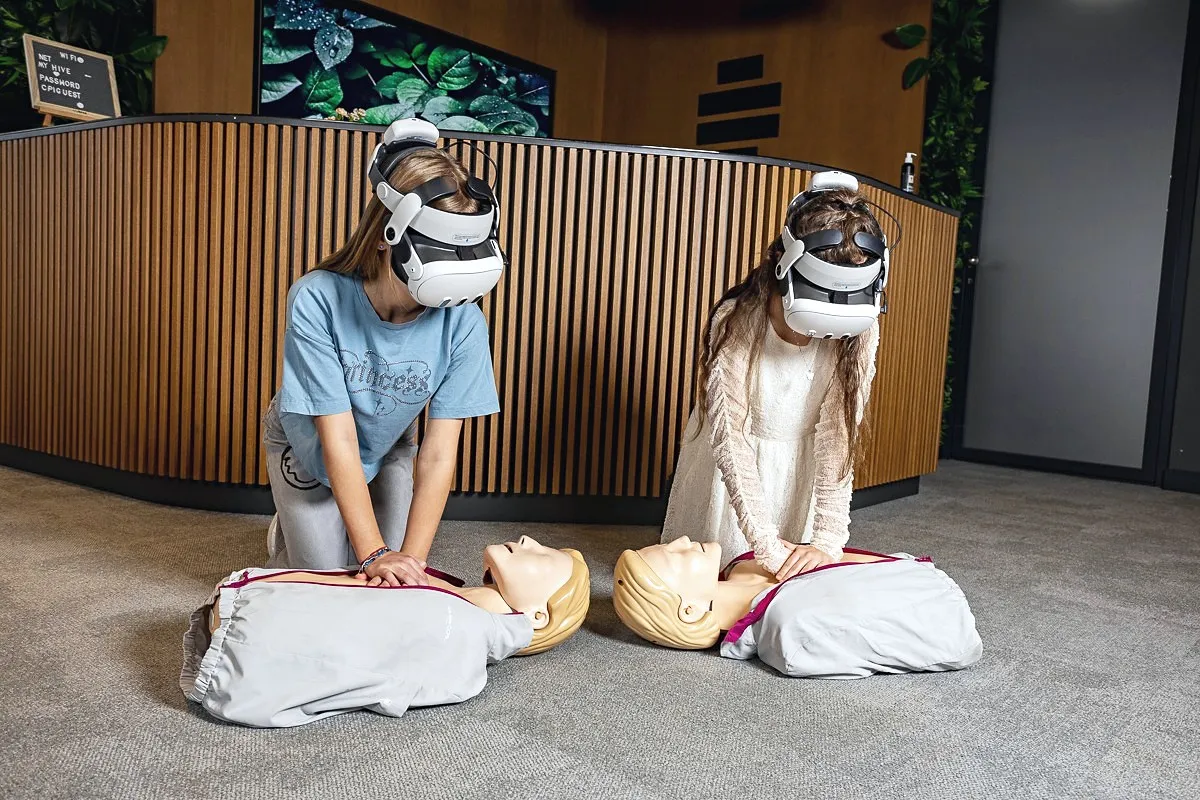
VR in education: first aid and fire safety training without logistics or risk, plus practice for technical fields.
How would you like to start?
I don’t have a headset
We send you a headset with all the apps. You test for 5 business days, and we cover shipping both ways.
Get a test headsetI have my own headsets
Install in a few minutes and test all the apps for 7 days. No card, no commitment.
Test on my headsetsI’d rather talk
30 minutes online: we show you scenarios for your industry and answer your questions about rollout.
Book a call