Did you know that 📊 according to estimates, as many as 80% of accidents in the processing industry are related to operating machines? ❓ This is a serious risk to employee safety, and it is often overlooked.
Lockout/tagout (LOTO) training is crucial to reducing the risk of accidents at work. It helps workers understand how to safely isolate and control energy sources so that machines and equipment cannot start unexpectedly.
But organizing this training is a challenge for the people responsible for occupational health and safety (OHS). Why?
Complex subject matter: LOTO procedures are complex and employees must understand them thoroughly. It can be difficult to explain them simply and clearly.
Production stops: training often means stopping work, which affects production.
Large numbers of employees: training many employees at once is logistically difficult and makes an individual approach hard.
Different levels of experience: employees have different levels of experience and knowledge of LOTO, which makes it difficult to create one training that works for everyone.
Safety during training: demonstrating LOTO procedures on real equipment can be risky, especially for new or less experienced employees.
Training costs: traditional training can be expensive, especially when it requires specialist trainers or extra equipment.
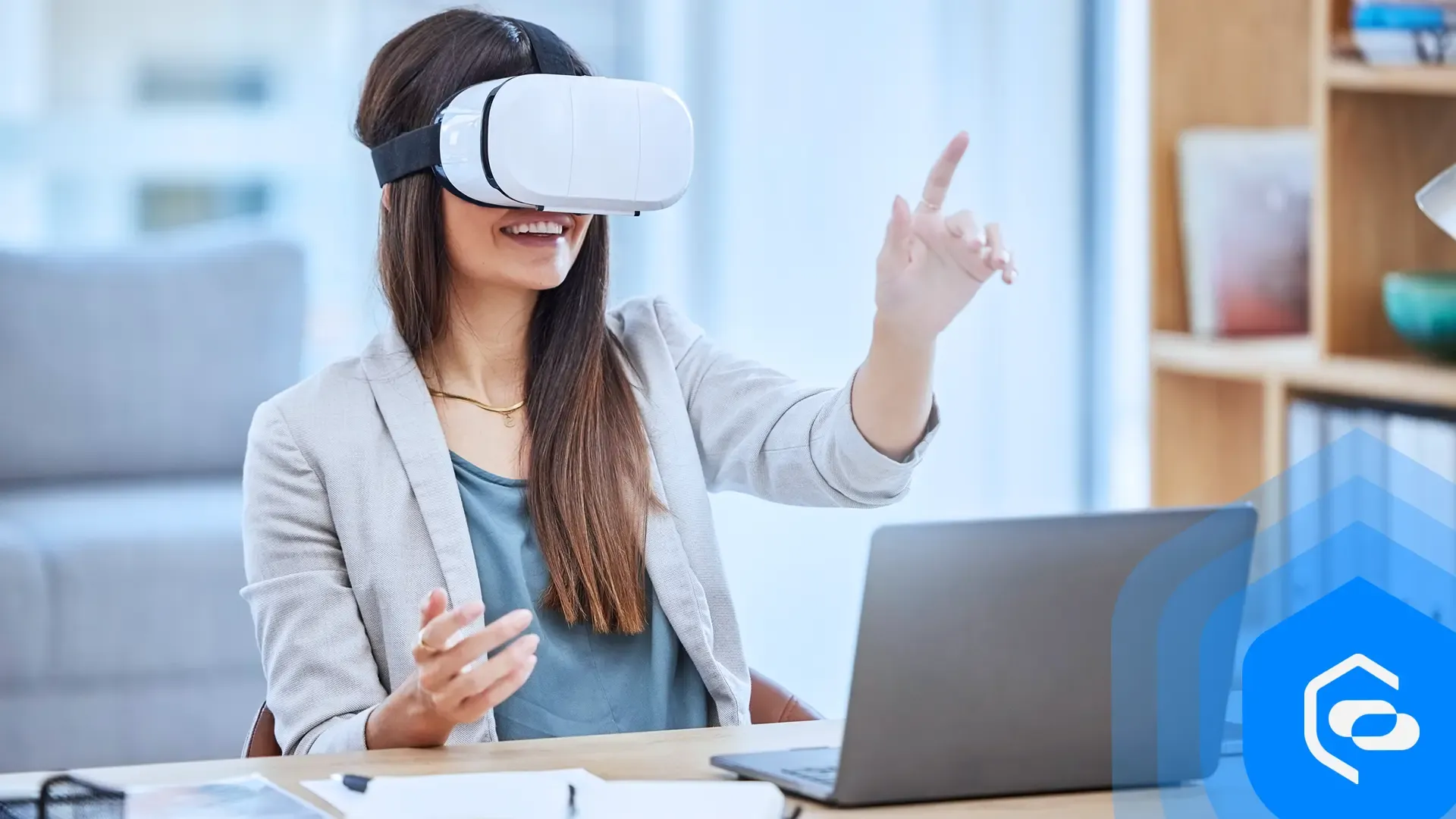
All these challenges make organizing effective LOTO training difficult. Virtual reality (VR) offers a solution to each of them: see our Lockout Tagout VR Training application.
How VR solves these problems
1. Complex subject matter
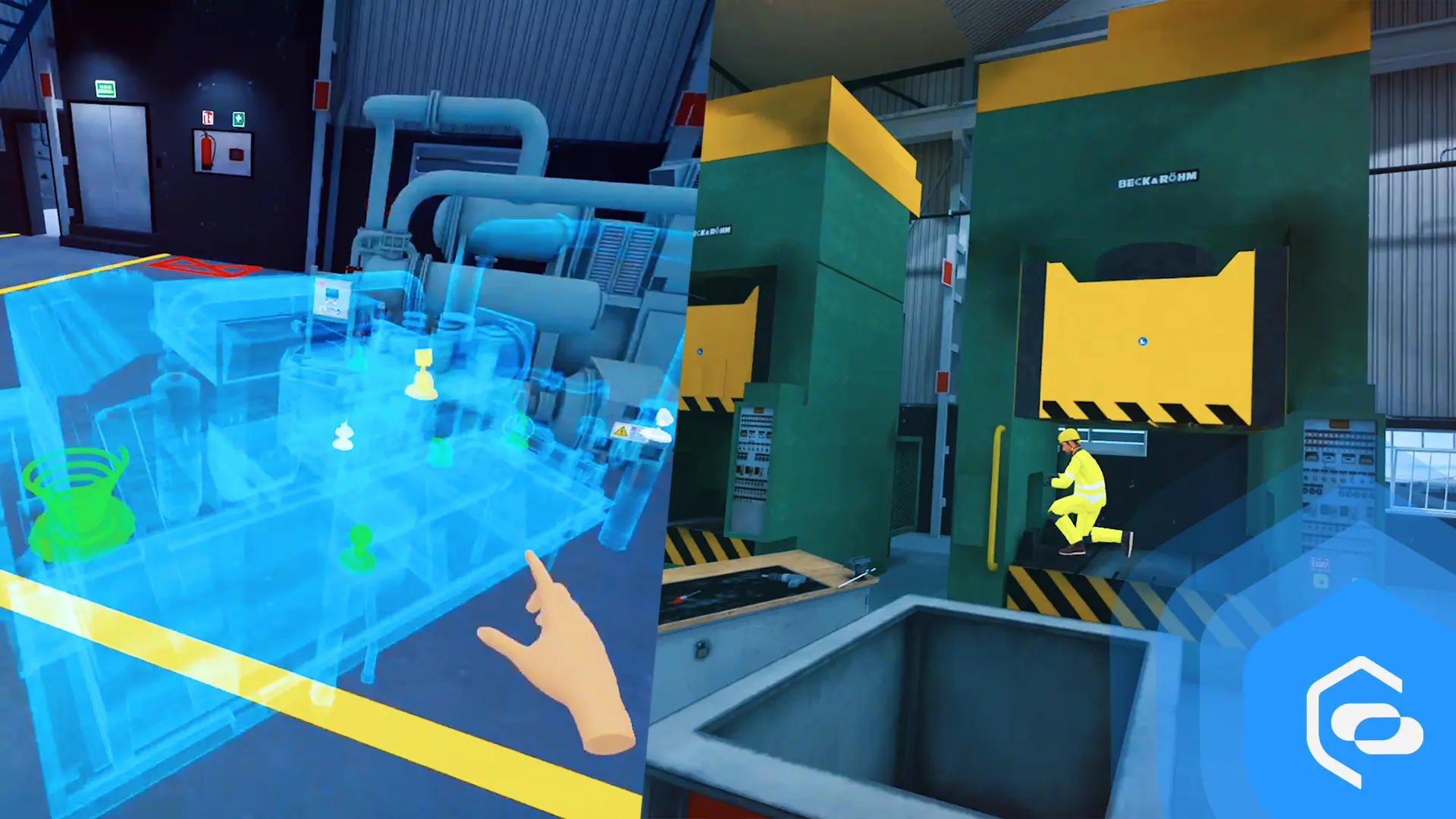
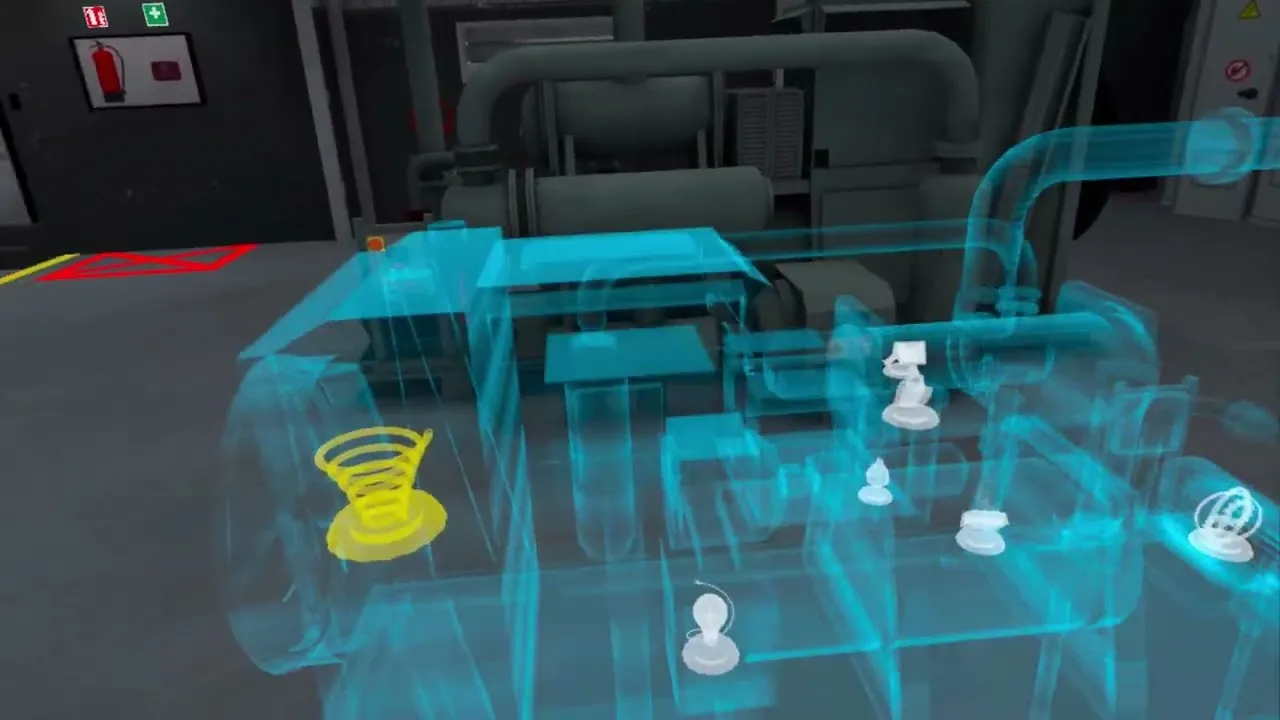
In the virtual reality experience, each participant learns at their own pace about different types of energy and the rules for securing equipment. This hands-on, engaging approach helps people not only understand LOTO procedures better but also remember them. As the saying often attributed to Confucius goes: “Tell me and I will forget. Show me and I will remember. Involve me and I will understand.” This kind of training focuses on the practical involvement of participants instead of the traditional transfer of information.
Types of energyYouTube
2. Production stops
Traditional training often means stopping work, which affects production. With our VR application, this problem is easy to solve. With one VR headset at the workplace, you can organize training on the spot: during planned breaks, or when the production line has stopped for another reason, employees can use the time to build their LOTO skills. The virtual trainer is always available, day or night. Downtime can be used for employee development, and production does not have to stop for training.
Automating VR training: CLEANBOX and kiosk modeYouTube
3. Large numbers of employees
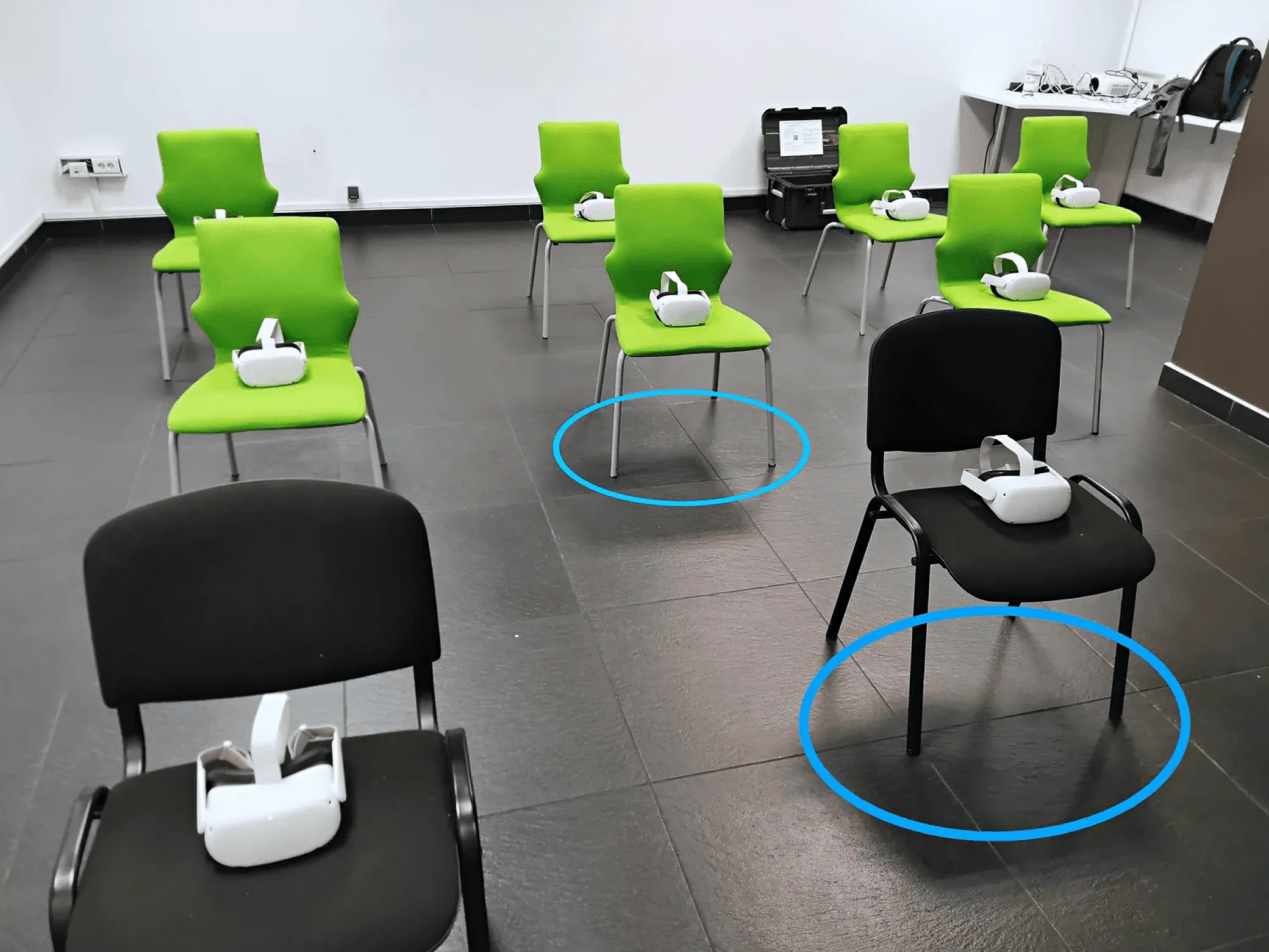
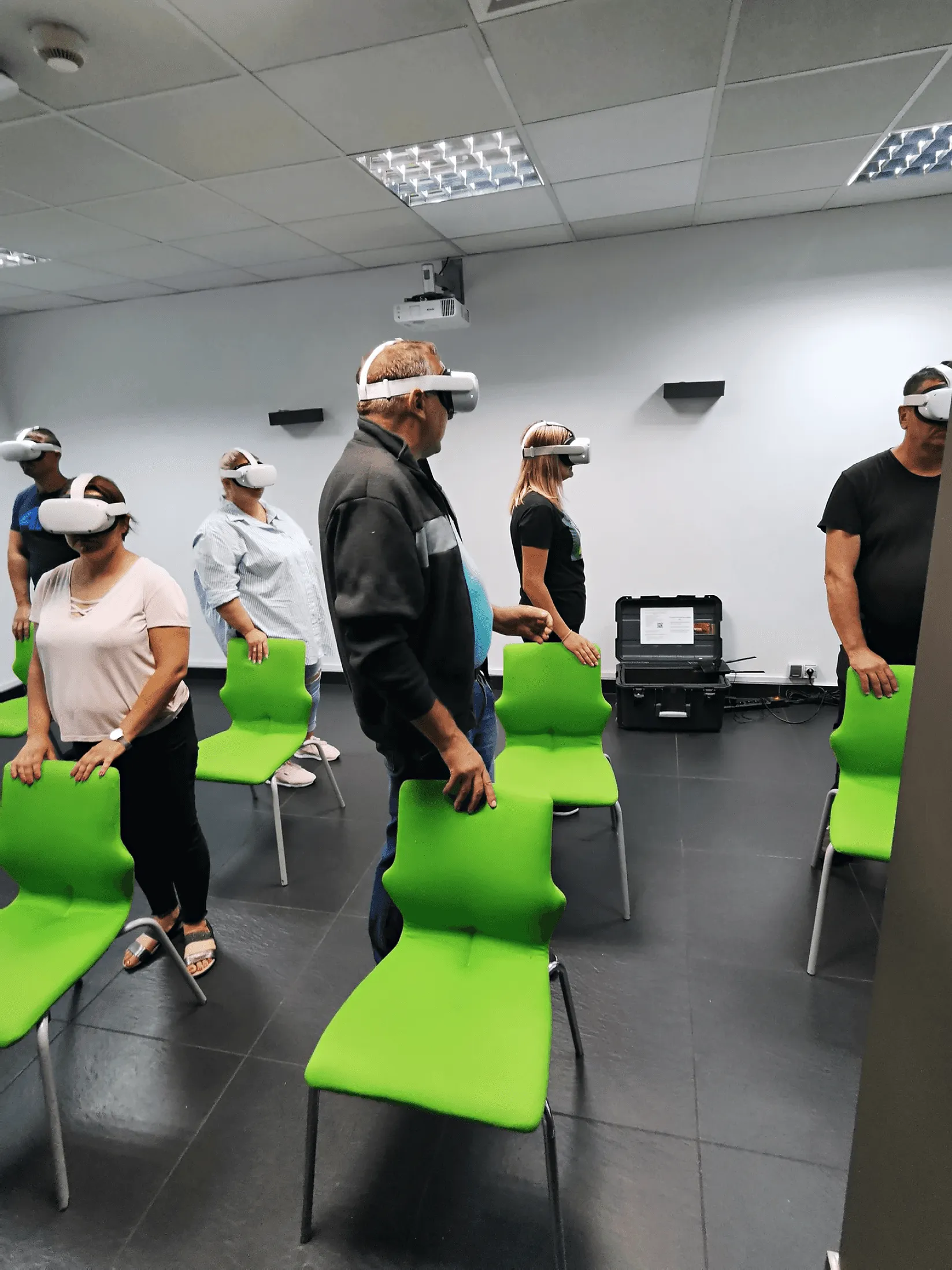
Training many employees at once is a logistical challenge and makes it hard to give each participant individual attention. Traditionally, large groups can only be trained during periodic OHS training. Our lockout/tagout application solves this: it can run with a stationary boundary, the smallest play area available, so many participants can train in one room. The application is also divided into modules of about 10 minutes each, so many people can be trained in one session. With 10 VR headsets and the Professional package, you can train about 40 people in one 45-minute session. This is an efficient way to give every employee a solid foundation in lockout/tagout procedures.
Stationary boundaries: the chairs make it easy to mark where each participant’s boundary is.
The chairs also connect each participant with the physical world.
4. Different levels of experience
Employees have different levels of experience and knowledge of LOTO procedures, so it is a challenge to create training that is uniform and still effective for everyone. The VR application offers the flexibility to meet this challenge: it includes a training lesson and a test lesson. Employees who already know the basics take the test lesson, and less experienced employees are recommended the training lesson. Each employee goes through the training at their own pace, with material suited to their experience.
A summary of the training results is available in your account on Skillsive, our platform for managing VR training, so you can track the progress and effectiveness of the training from anywhere, on any computer with internet access.
Demonstrating LOTO procedures on real machines carries serious safety risks, especially for new or less experienced employees. This is where our VR application excels. In virtual training, participants “secure” the machine in a safe, controlled environment. A wrong action does not lead to a real accident, but to a virtual one: a painful but safe reminder of the consequences of mistakes. This strong lesson reinforces the importance of applying LOTO procedures correctly, without putting participants in any real danger.
Lockout Tagout VR TrainingYouTube
6. Training costs
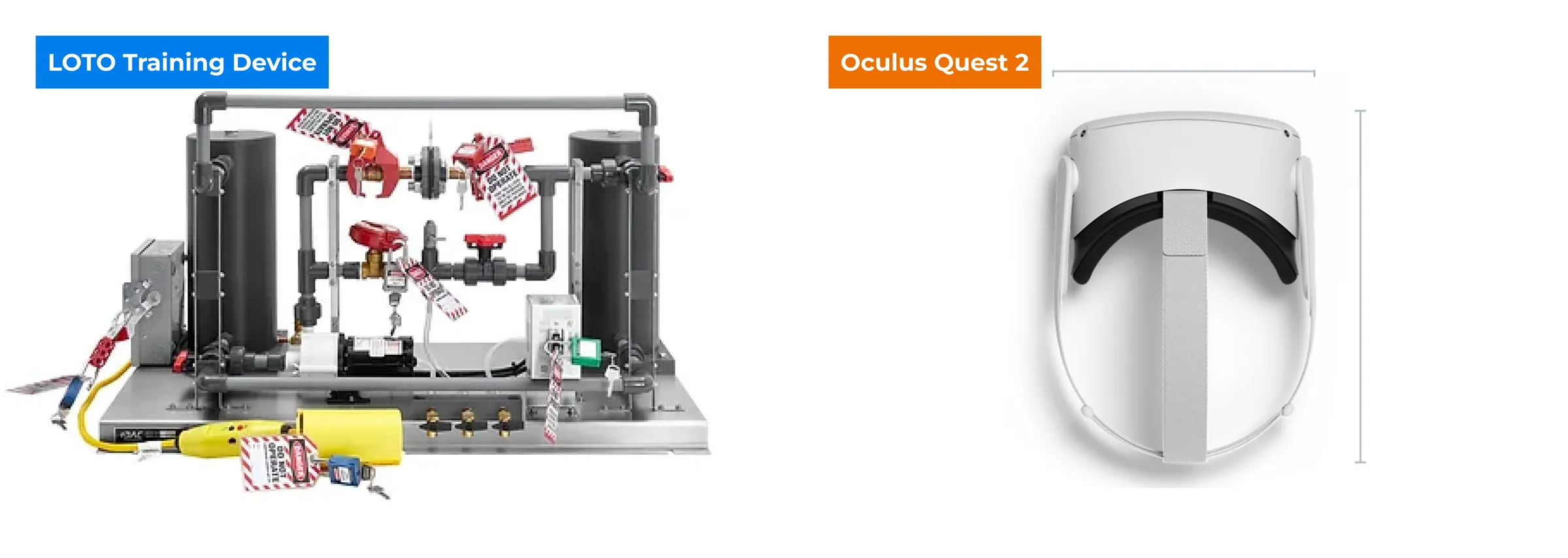
Traditional training can be expensive, especially when it requires specialist trainers or extra equipment. Let’s compare the cost of the equipment needed to run lockout/tagout training.
For traditional LOTO training, you need to buy suitable training rigs, lockout devices and a range of other equipment. The cost can grow significantly if you need different training rigs to cover the different types of machines used in your workplace.
Prices at the time of writing (2024):
LOTO training rig
Dimensions: 49 x 91 x 51 cm
Weight: 44 kg
Price: approx. PLN 40,000
Oculus Quest 2
Dimensions: 22 x 17 cm
Weight: 0.5 kg
Price: PLN 1,900 per headset x 10 = PLN 19,000
The cost of virtual reality training is a set of VR headsets and a license for the training software. These costs are much lower, and the same headsets and software can be used to run many other kinds of training, which makes VR a more cost-effective solution.
Summary
Providing effective and safe lockout/tagout (LOTO) training is a challenge for companies. Our VR training application offers a practical, engaging and accessible solution.
In the virtual reality experience, employees learn LOTO procedures in a safe, controlled environment, without stopping work or facing real hazards. All employees, whatever their experience, receive training suited to them and learn at their own pace.
Our approach also offers significant cost advantages over traditional training, both in the equipment you need to buy and in how efficiently training time and resources are used.
To return to the saying: “Tell me and I will forget. Show me and I will remember. Involve me and I will understand.” This is exactly what our VR training does.
With your consent we use cookies and similar tools from Google and Meta to measure traffic and improve our ads, and we load the Pipedrive chat. You decide: the site works fully without them. Privacy policy
 Łukasz Kamiński