Will the VR Application Replace a Paramedic During First Aid Training?
Natalia Kiełczykowska9 min read
Technology is developing at an unprecedented pace, changing not only how we perceive reality but also how we learn and train. Virtual reality (VR) applications are taking over part of the education process, including first aid training. As the technology develops, these applications do more than simulate scenarios: they also bring in elements of reality and give participants a level of interactivity that is hard to achieve in traditional training.
Do companies actually use VR applications in first aid training?
Let’s start with a few examples of customers who successfully use our VR applications in training. Corning is particularly worth mentioning: its occupational health and safety specialists actively use our applications for first aid training.
Corning x EHS VR, case studyYouTube
You can read how other customers use our VR applications in our success stories.
What does CIOP think about VR training?
The Central Institute for Labour Protection (CIOP) pays particular attention to the benefits of virtual reality (VR) in training. According to CIOP, training is one of the most common uses of VR, especially where training in real conditions puts health and life at risk.
Immersive virtual reality gives trainees a lot of freedom of action and movement, which helps develop muscle memory. This, in turn, helps them learn to do their work efficiently. During the simulation, the trainee can interact with purely virtual objects, for example moving objects or starting machines.
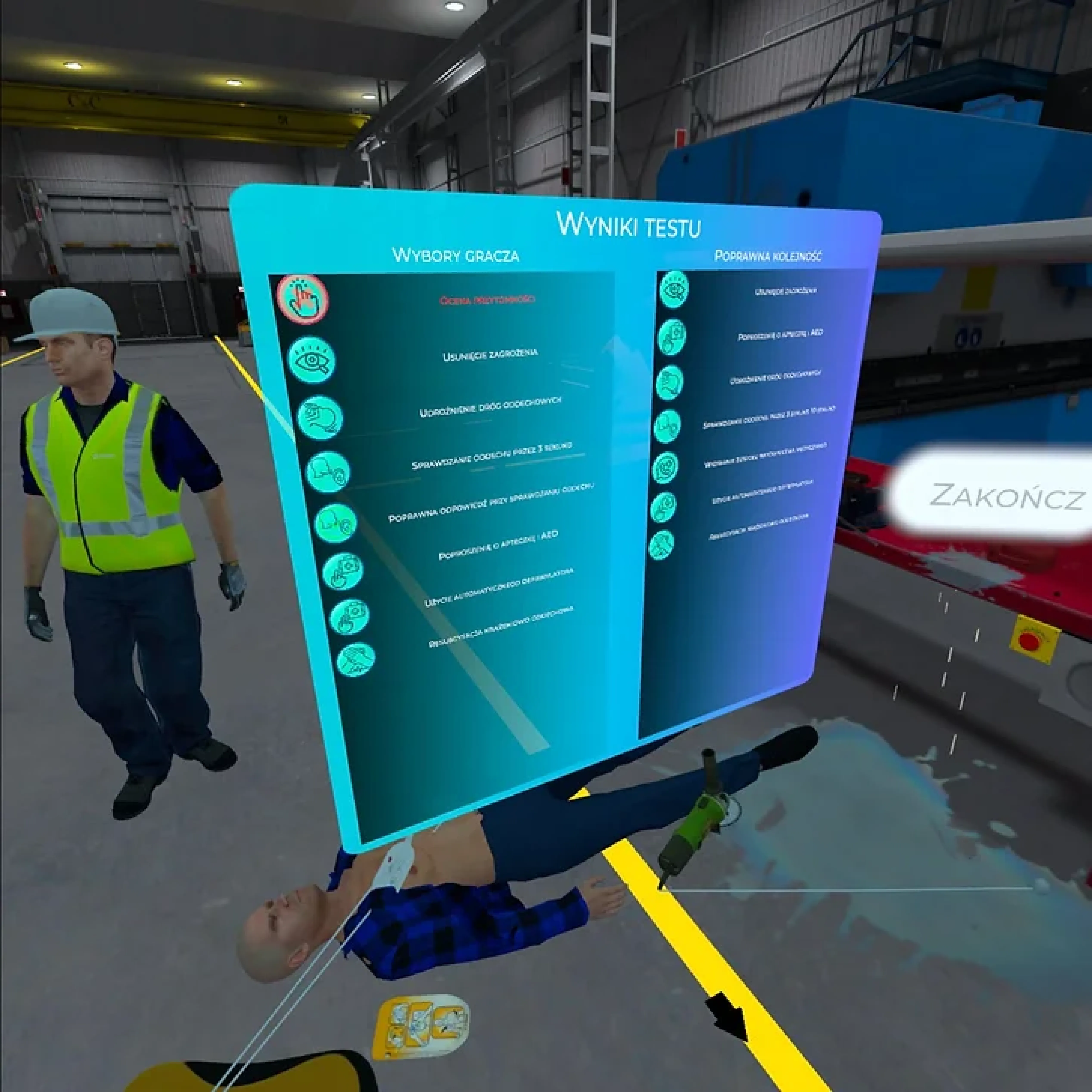
VR is not only ideal for training correct operating procedures but also makes it possible to assess the decisions and actions taken. Software based on freely designed scenarios can detect any deviation from the applicable procedures and immediately show trainees the consequences, such as an explosion or fire.
A particularly important aspect is muscle memory: the movements made in the virtual environment are the same as those made at work in reality. A complete VR training system makes it possible to create scenarios with many people taking part at once, including a commander who directs a whole group, such as firefighters or rescuers.
Let’s take a closer look at VR to better understand the benefits of this approach to first aid training, and the challenges that may come with it.
Advantages
Realistic simulations
VR applications are changing first aid training by recreating the conditions at an incident scene precisely. Simulations of realistic situations prepare participants for different scenarios in an interactive and safe way.
Safe simulation of threats
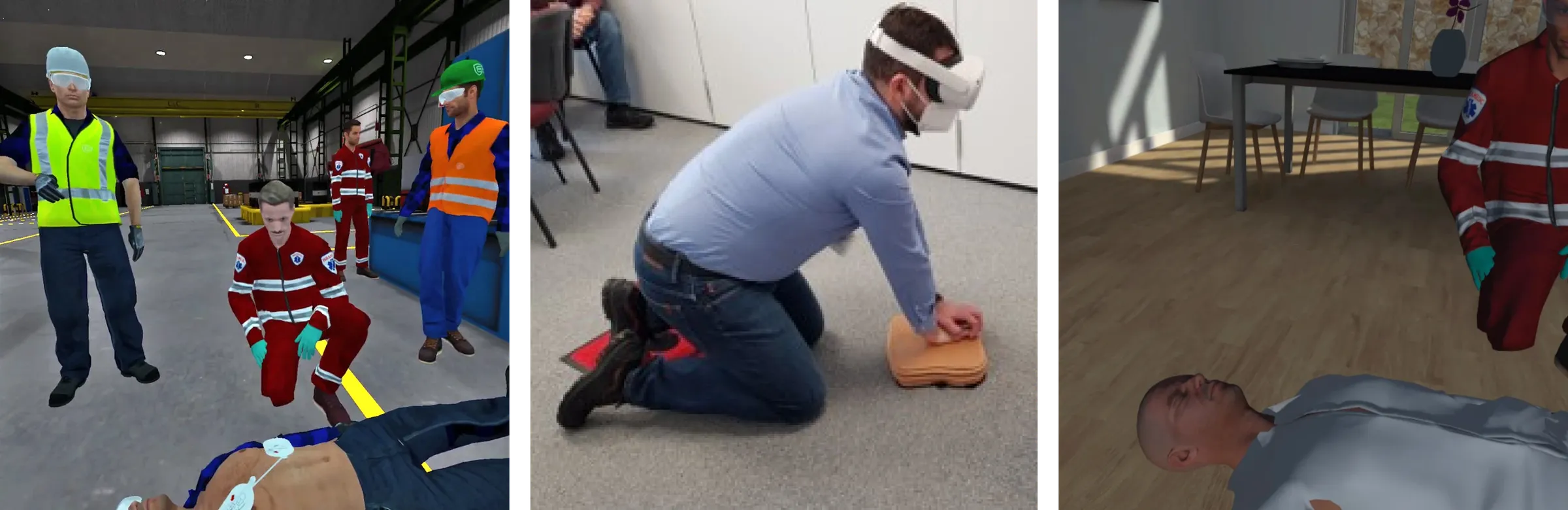
VR makes it possible to simulate threats and emergencies safely, with no risk to participants. Elements of reality, such as manikins and touch, make the training more authentic.
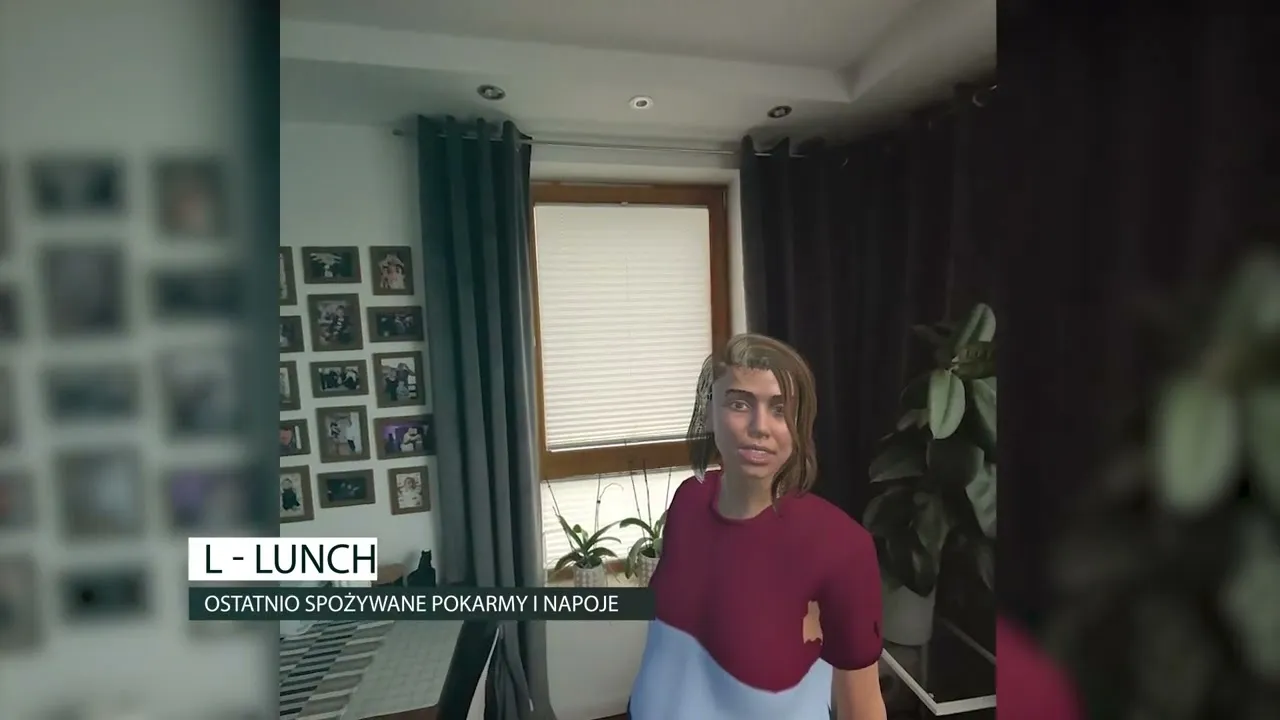
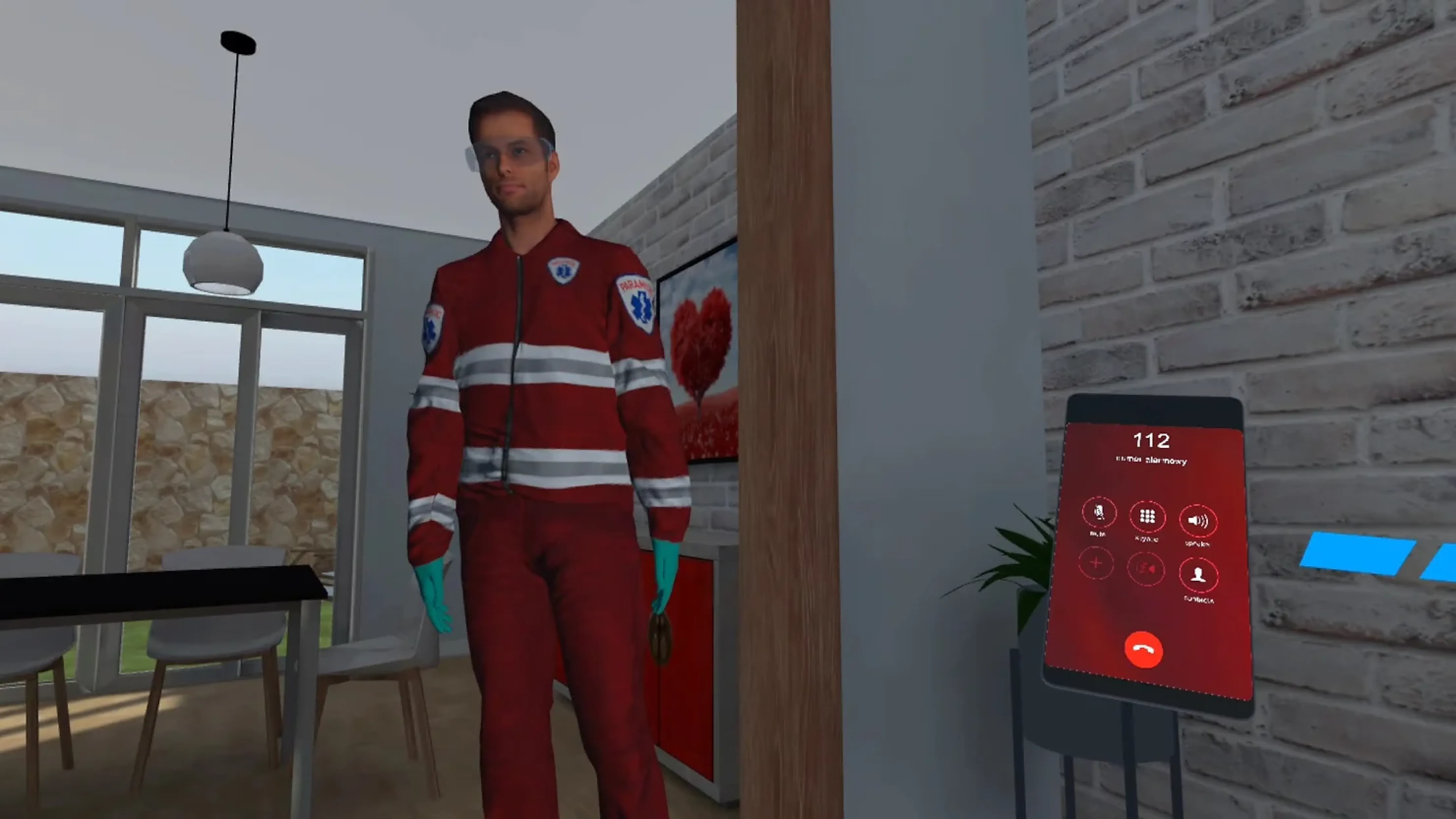
There is no need to stage scenes in VR training. Not every participant or rescuer has acting skills, and some may feel uncomfortable playing a witness or an injured person. With intelligent virtual characters, participants can hold conversations, collect medical information and carry out a rescue. The characters answer specific questions, which makes the training more realistic and effective.
SAMPLE history with AIYouTube
Availability and flexibility
VR training is a ready-made tool for running training anywhere and at any time. Not depending on a paramedic’s availability means lower costs and more training opportunities. We do not mean specialist first aid training here, but initial or periodic training, where the scope is limited and based on specific procedures.
Motivation and engagement
As VR training grows in popularity, more and more research looks at how effective it is. PricewaterhouseCoopers (PwC) analyzed this question too, with very interesting results.
The virtual training environment was found to increase participants’ motivation by providing attractive, interactive experiences. In PwC’s study, VR learners felt 3.75 times more emotionally connected to the content than learners in a classroom. Read more in the PwC study.
Greater involvement leads to greater confidence in real rescue situations. VR learners in the study reported being up to 275% more confident to act on what they had learned after the training (PwC study).
Individual training
VR allows training to be tailored to each participant. A virtual trainer explains medical procedures step by step, each participant completes the training at their own pace, and the results are saved on our platform. VR also helps you assess the general level of knowledge in a given area across your organization.
Personalized training makes teaching more effective and efficient.
Lower costs and less time
VR opens new possibilities for remote training, with no need to travel and no travel costs. With multiplayer, a first aid instructor can take part in the training from hundreds of kilometers away, from home or another office, and work actively with the participants. At the time of writing (2024), the application that enables joint training is SAMPLE AI, and we are working to make this functionality standard.
Preparing simulations for first aid training is often time-consuming and expensive, including making artificial wounds and paying helpers. How repeatable the simulation is also depends on the make-up skills of the rescuers or the people working with them. VR reduces the amount of equipment and the number of people needed to run a simulation. Of course, VR headsets also cost money. But using them requires no artistic skills, they run many different scenarios, and the scenarios are easy to repeat. There is also no need to pay people to take part in simulations: helpers are paid for every training session, while VR headsets are a one-off purchase, which means long-term savings.
Shorter, intense and focused VR sessions can make learning considerably more effective. According to the PwC research mentioned above, people learn four times faster in VR than in a classroom.
Innovations
AI speech recognition: with speech recognition based on artificial intelligence, the system responds to participants’ voice commands. This makes interaction easier and allows practical exercises using voice commands.
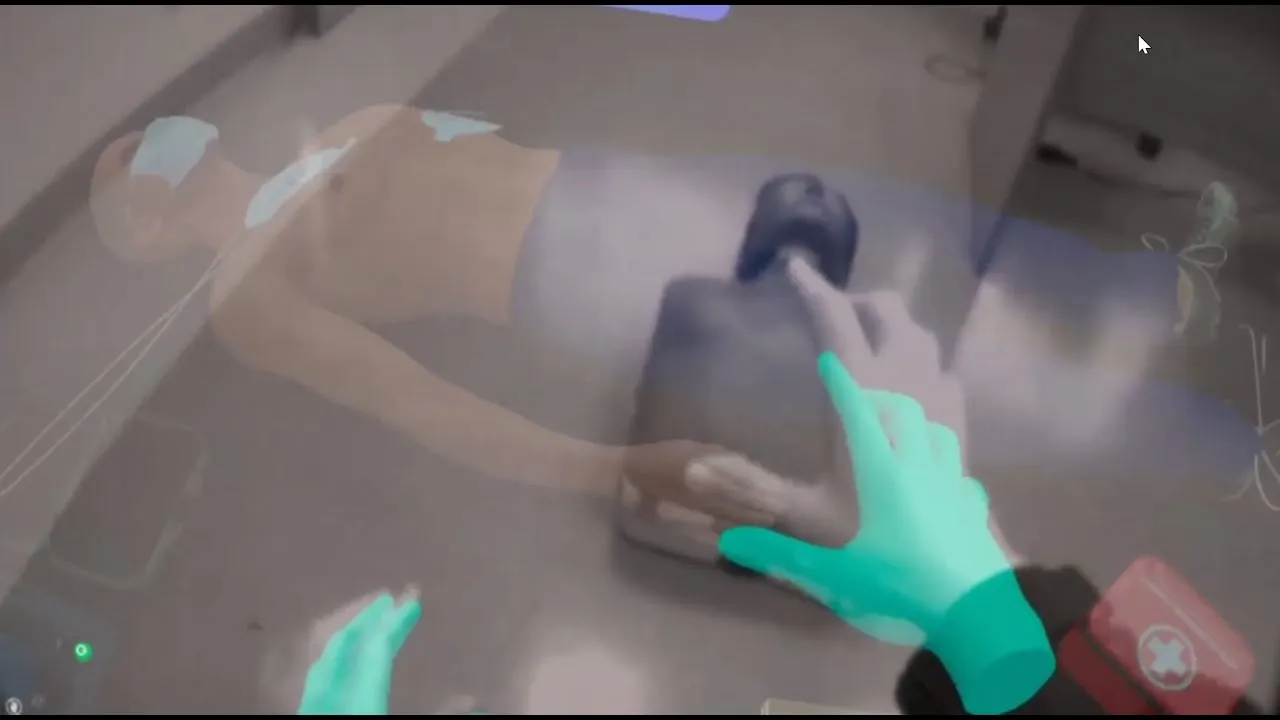
Works with manikins: our VR training works with medical manikins, so participants can practice a rescue on a real manikin in a safe virtual environment.
Setting up a manikin for first aid training (tutorial)YouTube
Disadvantages
Equipment failures
An equipment failure can disrupt the training and require extra technical support.
Network access
Earlier versions of our applications required Wi-Fi, which could be a limitation in places with a poor network. Our applications can now also be used offline.
Problems with the application
Problems with how the application works can disrupt the course of the training.
Technique not fully shown
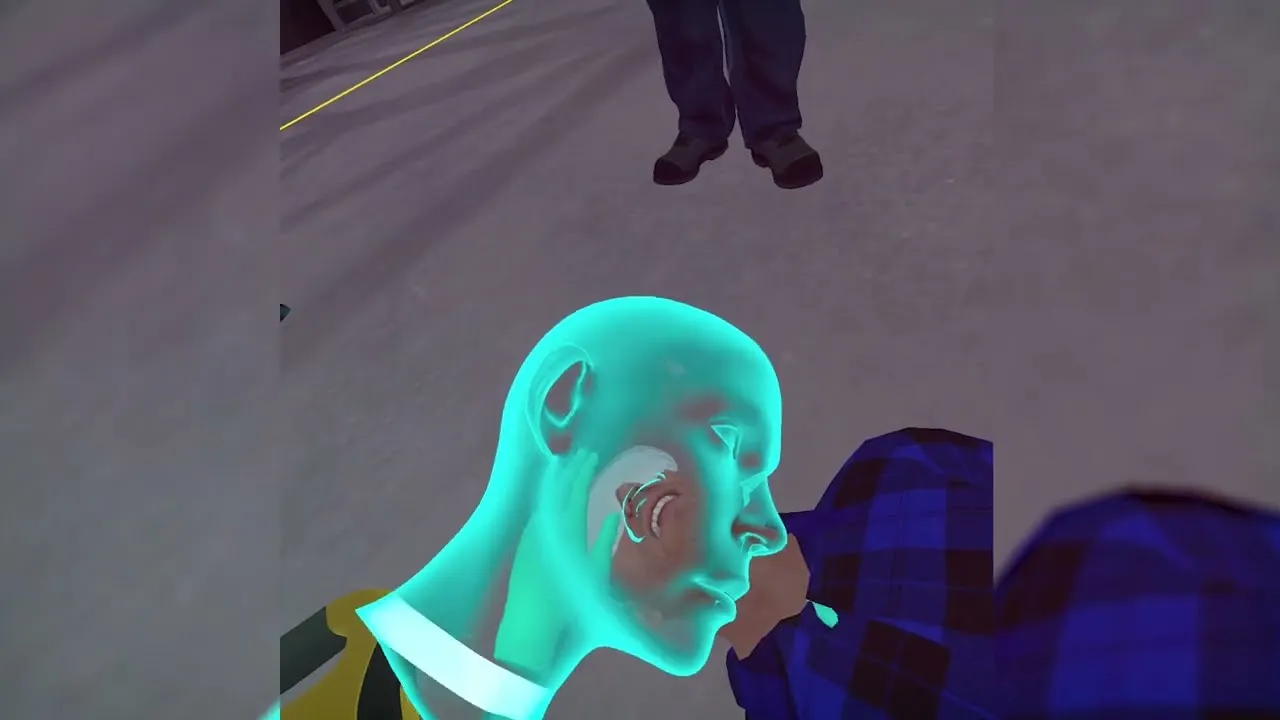
Some applications do not fully show how to position the hands on the casualty.
It is worth having the first aid instructor fill this gap with practical demonstrations of hand position on the participants.
Our first aid training
We have made every effort to ensure our application is not only a complete solution for initial and periodic training but also supports professionals in specialist training.
When to use VR applications as a first aid training tool
In initial and periodic training, when a paramedic does not have to be present and the training can be run by the employer or a person the employer appoints, our training can serve as a ready-made, complete solution for the first aid module (rules of conduct in the event of an accident at work and in hazardous situations, including first aid). Our offer includes eight first aid training courses, including first aid, wound dressing, burns and the SAMPLE history. You can find all our first aid training courses, with descriptions, in our VR training applications.
How our applications help when a paramedic must be present
Lower costs: our technology removes the need for extra people to take part in the training, which significantly reduces the cost of paying helpers or organizing a simulation.
Maintaining focus: moving part of the training into the virtual world brings variety and new perspectives, which keeps participants interested for longer. Interactive elements require active participation and focus, which counters the monotony of training.
Realistic scenarios: our application uses advanced visual technology to give participants realistic, immersive experiences. The virtual scenarios take participants into an environment full of realistic situations, casualties and injuries, presented in a way that imitates real conditions. This helps them understand the nature of injuries better and learn emergency care skills more effectively.
Fewer social barriers: the VR application removes the need to take part in staged simulations or role-play. This is particularly helpful for participants who are shy or feel uncomfortable in traditional simulations.
Symbiosis between technology and people
To sum up, VR greatly expands the possibilities of education and engages participants in ways that were not possible before. Its interactivity and realism change the training process. Still, the role of an experienced paramedic cannot be ignored: their empathy and skills cannot be replaced by technology.
The greatest value lies in combining both forms of learning. Technology combined with human interaction produces the best results. Used well, VR together with real paramedics can be the key to excellent first aid training, where knowledge goes hand in hand with practical experience, preparing us for unpredictable situations in life.
When choosing a VR application for first aid training, trainers should make sure participants also receive the information the application does not provide. Pay attention to first aid techniques, such as hand position on the casualty, and to covering all emergency scenarios.
Try our applications for free
We believe the best way to understand what our VR first aid applications can do is to try them yourself. That is why we invite everyone interested to take part in our free trial.
During the trial, you can judge for yourself whether our applications provide enough practical skills and whether the knowledge they offer is complete. Your opinion is very valuable to us, so please share your observations on usability, intuitiveness and the overall effectiveness of our training tools.
Our VR applications have been carefully designed so that training can be run without a paramedic. However, as the person running the training, you are free to decide whether to bring in a professional.
With your consent we use cookies and similar tools from Google and Meta to measure traffic and improve our ads, and we load the Pipedrive chat. You decide: the site works fully without them. Privacy policy
 Natalia Kiełczykowska